REVIEW · KRAKOW
Krakow: Jewish Ghetto Guided Tour
Book on Viator →Operated by excursions.city · Bookable on Viator
History hits hardest in the ghetto streets. This Jewish Ghetto guided walk turns a few city blocks into clear, human-scale WWII lessons, with Ghetto Heroes Square and its Chair Memorial leading the way. I love that the route covers three essential sites that car tours miss, and I also love that a guide handles the walking and directions so you don’t waste time getting oriented. One thing to consider: the area looks different today, so you’re not seeing a preserved WWII scene—you’re seeing the real present-day city over a painful past.
The tour also keeps things practical. You’ll be moving for about an hour, it’s offered in English, and the group stays small (up to 20 people). The mobile ticket makes check-in easy, and the walk runs in rain or shine—so bring real walking shoes and plan to stay present.
In This Review
- Key things to know before you go
- Why this one-hour Jewish Ghetto walk is such good value
- Meeting point at Lipowa 4, and where the tour ends
- Stop 1: The Ghetto Wall Fragment (a boundary you can see)
- Stop 2: Ghetto Heroes Square and the Chair Memorial
- Stop 3: Eagle Pharmacy (Under the Eagle) and Tadeusz Pankiewicz’s rescue work
- How the guides shape the experience (and why pace matters)
- Price and value: what $15.60 buys you in real-world terms
- Timing, weather, and what to wear on a ghetto walking route
- Who should book this Jewish Ghetto guided tour
- Should you book it or not?
- FAQ
- How long is the Krakow Jewish Ghetto guided tour?
- What language is the tour offered in?
- Where do I meet, and where does the tour end?
- Do I need separate tickets for the stops?
- Is the tour a walking tour?
- What’s the group size?
- Can I cancel for a refund?
Key things to know before you go
- A short, focused 1-hour route that hits the wall remnants, the deportation site area, and the Eagle Pharmacy stop.
- Walking access to places a bus can’t reach, so you actually experience the neighborhood streets.
- Ghetto Heroes Square with the Chair Memorial, a simple but powerful way to picture loss.
- Eagle Pharmacy / Under the Eagle Pharmacy, tied to Tadeusz Pankiewicz and his staff’s help for people in hiding.
- Small group size (max 20), which helps the guide keep pace and answer questions.
- Weather-ready in rain or shine, so the tour isn’t derailed by a bad forecast.
Why this one-hour Jewish Ghetto walk is such good value
If you want the fastest path to understanding Krakow’s WWII Jewish Ghetto area, this is the kind of tour that makes sense. It’s not long, and it doesn’t try to cram in everything. Instead, it gives you a clean sequence of places: the remaining wall fragment, the heart of the ghetto at Ghetto Heroes Square, and then the Under the Eagle Pharmacy area.
That approach matters. When you’re standing in a place like this, your brain needs anchors. The tour gives you those anchors in the right order, so you don’t just “see sights.” You connect the dots between confinement, deportations, and rescue efforts.
And I really like the practical setup: you meet at a specific spot, walk with a guide, and end at another exact point. No map wrestling. No wandering. No awkward half-seeing things while you try to figure out what’s next.
You can also read our reviews of more guided tours in Krakow
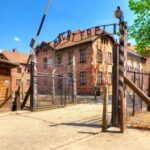
Meeting point at Lipowa 4, and where the tour ends
You start at Lipowa 4, 32-051 Kraków, Poland. The tour ends at Apteka pod Orłem, Plac Bohaterów Getta 18, 33-332 Kraków (you can find it on Google Maps).
Plan to arrive early. The tour asks you to show up about 10 minutes before the start time, because once the group leaves, latecomers can’t join and tickets can’t be refunded. This is one of those “the guide won’t wait forever” rules—fair and also a good reason to get there calmly, not sprinting from the tram.
Also note the basics that affect your day:
- English only (the tour is one-language).
- Near public transportation.
- The group stays at up to 20 travelers.
If you like your tours orderly—meet, walk, learn, done—this fits your style.
Stop 1: The Ghetto Wall Fragment (a boundary you can see)
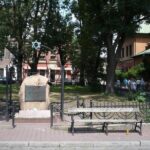
The walk begins at the remains of the Ghetto Walls. This is the first stop for a reason. Before you talk about deportations or resistance, you need to understand confinement—what it meant when walls literally defined who belonged where.
Even if you know the WWII facts already, seeing the physical remnants changes the feeling. The location isn’t trying to recreate a past street. Instead, it offers a reminder that the ghetto wasn’t an idea. It was a built structure that pushed lives into a smaller world.
This stop is quick—around 20 minutes—and admission is free for this particular viewing point. That means you can spend your time absorbing the guide’s explanation rather than worrying about an extra ticket.
Practical tip: bring a moment of quiet to this stop. It’s not the kind of location where you want to chat loudly, take speed-photos, or treat it like a typical photo-op. Let the guide set the tone.
Stop 2: Ghetto Heroes Square and the Chair Memorial
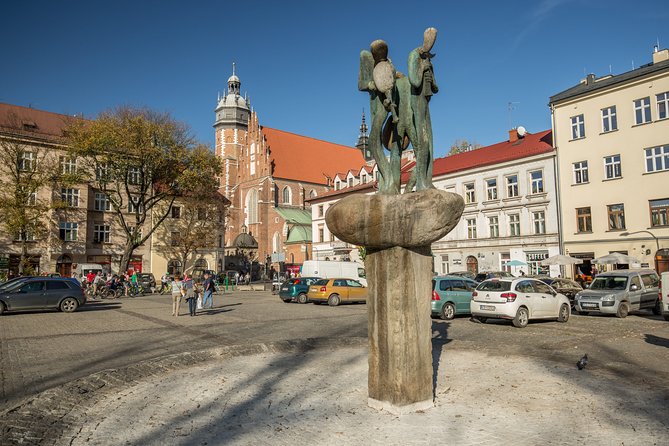
From the wall remains, you continue to Ghetto Heroes Square, described as the heart of the ghetto where deportations to extermination camps took place. This is the emotional center of the route.
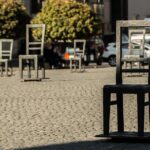
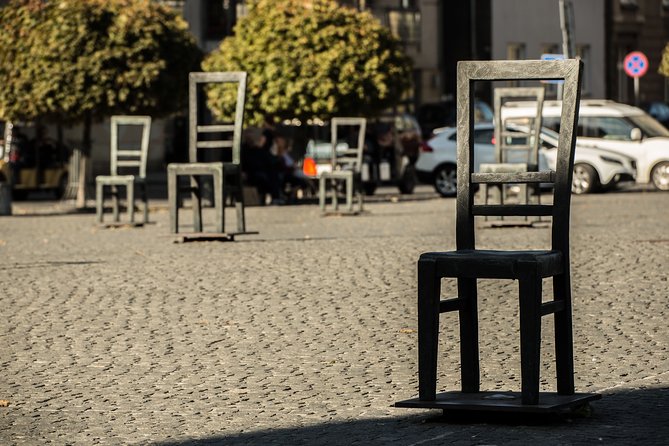
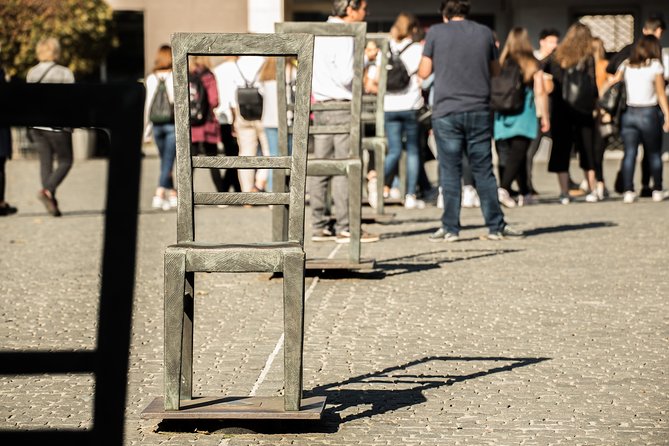
Today, the square uses symbolism to hold memory—especially the Chair Memorial, where chairs represent lives lost. It’s one of those designs that doesn’t need a lot of background to hit you. Still, the guide’s context makes it more than a visual. You learn what the place meant, why deportations were organized the way they were, and how ordinary people were pushed into an unimaginable system.
This stop is also about 20 minutes, and admission here is free.
Here’s my advice for this stop: don’t rush it. Chairs are simple objects, and that simplicity is the point. If you give yourself a few minutes, you’ll feel the contrast between something everyday (a chair) and something catastrophic (what it’s representing).
Stop 3: Eagle Pharmacy (Under the Eagle) and Tadeusz Pankiewicz’s rescue work
The third stop is the Under the Eagle Pharmacy area, often referred to as the Eagle Pharmacy / Museum. This is where the story expands beyond confinement into courage and help.
The tour focuses on Tadeusz Pankiewicz and his staff, who aided ghetto residents by preserving medicine and supporting people trying to survive. That medical angle matters. In a ghetto system built to crush people, access to basic survival needs—like medicine—became a form of resistance.
This stop lasts about 20 minutes. Important practical note: the museum admission is not included in the tour price. So if you want to go inside and fully use the museum space, plan for a separate ticket.
What I like about ending here is balance. The first two stops deal with the machinery of oppression. This one shows how people still found ways to act—sometimes quietly, sometimes at serious personal risk.

How the guides shape the experience (and why pace matters)
A walking tour lives or dies by the guide. In this case, you’ll hear the story delivered with real care and energy. Names that show up in experiences include Olga, Anna, Phil, and Phillip, and the consistent theme is delivery: clear explanations, a steady pace, and a tone that treats the subject with respect.
You’ll likely notice three guide strengths as you go:
- Clear pacing: the tour doesn’t drag, and it doesn’t feel rushed.
- Good navigation: you’re not scanning street corners for clues—you’re walking with someone who already knows the route.
- Human storytelling: you don’t only learn dates and place names. You hear about individuals and actions tied to the sites you’re standing in.
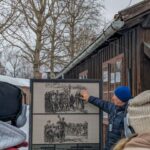
One small thing that can make a big difference: some guides use printed images to help you visualize what the area meant in the WWII setting. Even if you’re not a “picture person,” this helps your brain connect past and present.
And if you’re taking other Holocaust-related sites in Krakow (like Schindler’s Factory), this tour works well as a pairing. The walking format gives your day texture.
Price and value: what $15.60 buys you in real-world terms
At about $15.60 per person for roughly 1 hour, this tour is priced for value—especially for a topic this heavy.
Here’s why it feels like a bargain rather than a cash grab:
- The stops at the Ghetto Wall Fragment and Ghetto Heroes Square have free admission.
- You’re paying mainly for guided context and route planning, not for a long “museum-ticket marathon.”
- The group stays small (up to 20), which helps the experience feel controlled and organized.
- You get a route that includes areas a car tour can’t realistically cover.
The one cost caveat is the third stop: museum admission isn’t included at the Eagle Pharmacy. So your total day cost depends on whether you choose to enter the museum space. If you do, you’ll add that ticket on top of the tour price. If you don’t, you’ll still get the core guided explanation from the stop itself.
Bottom line: for a short, focused introduction, the value is strong.
Timing, weather, and what to wear on a ghetto walking route
This tour runs in all weather, rain or shine. That’s good because it removes the stress of waiting for perfect conditions. It’s also a reminder to dress like you’ll actually be walking for a while.
Wear:
- Comfy walking shoes (you’ll be on your feet, and these are not “pretty shoes only” streets).
- A rain layer if needed, since the tour still goes ahead.
Also, come prepared for the tone. This is not a casual neighborhood stroll. It’s a respectful walking lesson. Keep conversations low-key during the stops, and give the guide room to explain.
If the weather is bad, you might find your time at each stop shifts slightly. But the structure stays the same: wall fragment, Heroes Square, Eagle Pharmacy stop.
Who should book this Jewish Ghetto guided tour
This tour is a great fit if you:
- Want a short and well-structured introduction.
- Prefer a walking route over a bus ride.
- Like having a guide handle navigation and timing.
- Want context at key WWII sites without piecing together multiple tickets and maps.
It’s also smart for first-time visitors to Krakow who feel overwhelmed by how much there is to learn around WWII sites. In a single hour, you get a concentrated set of locations tied to confinement, deportation, and rescue.
Who might want to look elsewhere: if you need a longer tour that covers more neighborhoods and more sites in depth, this may feel short. It’s built to be focused, not exhaustive.
Should you book it or not?
Yes, I’d book it—especially if you want your time in Krakow to be efficient and meaningful. The route hits major points: the remaining ghetto wall, the Ghetto Heroes Square Chair Memorial, and the Under the Eagle Pharmacy story connected to Tadeusz Pankiewicz.
Book it if you want:
- A clear, guided route you can’t easily improvise on your own.
- A small-group experience with a steady pace.
- A respectful walk that doesn’t treat the subject like a checklist.
Skip (or pair differently) if:
- You’re looking for a full-day museum-style program.
- You’re sensitive to walking outdoor areas in bad weather.
For many people, this is the best “hour you won’t regret” in Krakow.
FAQ
How long is the Krakow Jewish Ghetto guided tour?
It’s about 1 hour (approximately).
What language is the tour offered in?
The tour is offered in English only.
Where do I meet, and where does the tour end?
You meet at Lipowa 4, 32-051 Kraków, Poland. The tour ends at Apteka pod Orłem, Plac Bohaterów Getta 18, 33-332 Kraków.
Do I need separate tickets for the stops?
The Ghetto Wall Fragment stop and the Ghetto Heroes Square stop are free to enter. The Eagle Pharmacy / museum admission is not included, so you may need a separate ticket if you want to go in.
Is the tour a walking tour?
Yes. It’s a walking route through key sites, including places car tours can’t reach.
What’s the group size?
The tour has a maximum of 20 travelers.
Can I cancel for a refund?
Yes. You can cancel up to 24 hours before the experience for a full refund. If you cancel less than 24 hours before, the amount paid is not refunded.