REVIEW · KRAKOW
Auschwitz-Birkenau: private or group & Schindler’s Factory option
Book on Viator →Operated by Krakow4you · Bookable on Viator
A day that changes how you see history. A private drive from Kraków plus guided time at Auschwitz-Birkenau makes this trip more than a ticket drop. I like the hotel pickup and the way guides such as Alicja bring clear context to a site that can feel chaotic on your own. One thing to consider: Auschwitz timing can feel tight because the memorial site runs on set tour schedules.
You’ll spend about 7–9 hours total, with entrance fees and refreshments included, and you have unlimited time to explore at Auschwitz-Birkenau. If you add the Schindler’s Factory option, you also get Kraków’s occupation story in Podgórze—useful if you want the human scale behind the famous film locations.
In This Review
- Key points before you go
- Private Car to Auschwitz: Comfort, Timing, and Control
- Auschwitz I Museum: How the Official Parts Shape Your Day
- Birkenau Grounds: Unlimited Time, Real Walking, and Quiet Moments
- Schindler’s Factory in Podgórze: Optional, But Often Worth It
- Pace, Group Size, and the Guide Factor (Alicja, Dariusz, and Others)
- Practical Stuff: What’s Included, What’s Not, and How to Pack
- Should You Book This Auschwitz-Birkenau + Schindler’s Factory Day?
- FAQ
- Is hotel pickup and drop-off included?
- Does the price include entrance fees?
- What language is the tour offered in?
- Is lunch included?
- How long is the tour?
- Is there a bag size limit at Auschwitz?
Key points before you go
- Private transportation from Kraków: you’re not wrestling trains, buses, or transfers for a full day
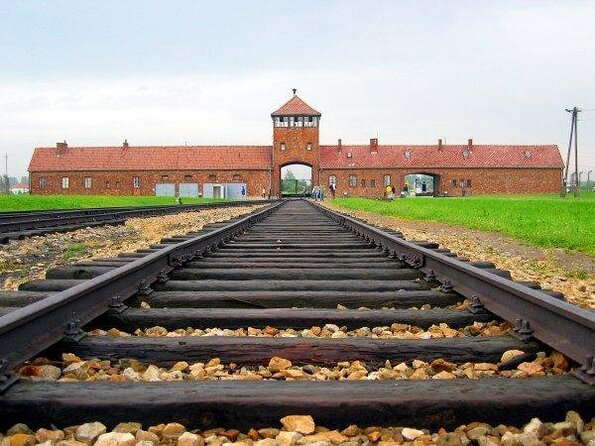
- Auschwitz I + Birkenau with guidance: original camp features, museum exhibits, and survivor-focused context
- Unlimited time on site: you can slow down and reflect instead of rushing
- Schindler’s Factory in Podgórze (optional): adds occupied Kraków context and connects to Schindler’s List filming locations
- Bag limit inside Auschwitz museum: bring only what fits the 20 x 30 cm rule
- You choose group vs private guidance at Auschwitz: helps you match your day to your comfort level
Private Car to Auschwitz: Comfort, Timing, and Control
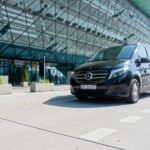
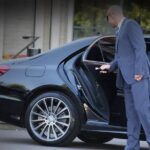
The biggest practical win here is the door-to-door setup. You’re picked up at your Kraków hotel and driven to the memorial site in a private vehicle with a driver. For many people, that’s the difference between a day that feels heavy and stressful, versus one that feels heavy but manageable.
This also matters because Auschwitz-Birkenau is remote enough that you don’t want to waste energy guessing schedules. With pickup included, you can show up calmer, dress for walking, and use the ride time to get oriented. One repeat theme from good experiences: guides start setting the day up right away, so when you arrive, you’re not trying to piece the story together from signage alone.
Expect the trip to run roughly 7–9 hours. That’s long, but it’s realistic for two major areas (Auschwitz I and Birkenau) plus driving. The tour price is $239.65 per person, and for that you’re getting more than entry tickets: hotel pickup and drop-off, private transportation, bottled water and local snacks, and a local guide (and private guide for the optional Schindler’s Factory add-on).
Possible drawback: no matter how private your transport is, Auschwitz itself has rules and staffing that can shape how “private” the museum experience feels.
You can also read our reviews of more private tours in Krakow

Auschwitz I Museum: How the Official Parts Shape Your Day
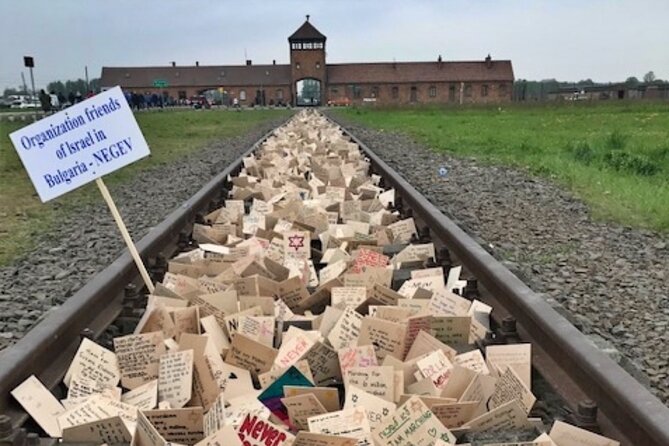
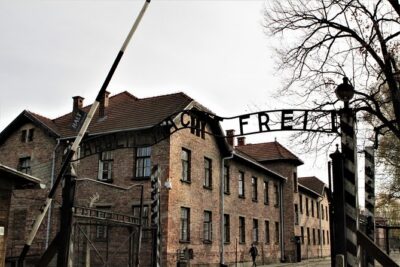
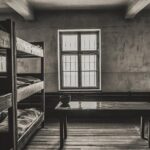
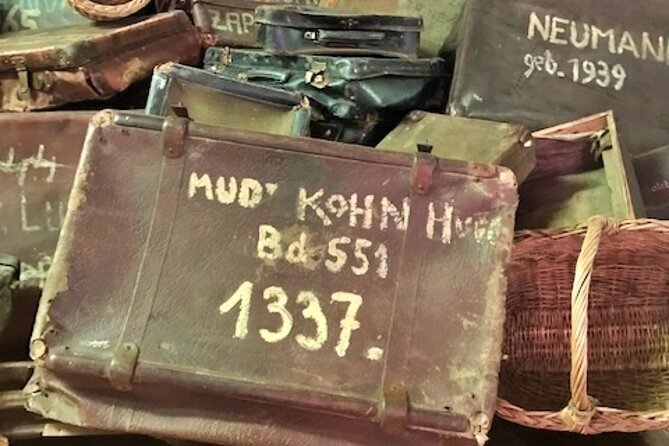
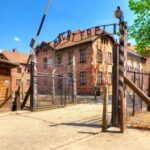
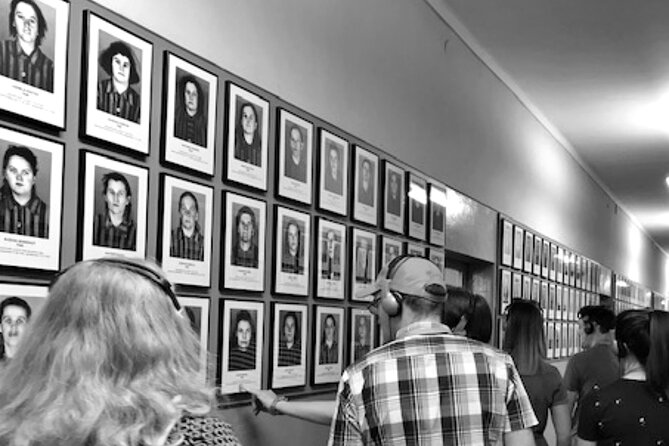
Auschwitz I is where you start—museum first, then onward to Birkenau after a short break. In the Auschwitz museum portion, you’ll see original camp features preserved as memorial elements, plus exhibits that focus on personal possessions taken from prisoners. That detail is important. It turns history from a timeline into individuals—what was kept, what was stolen, and how the machinery of persecution worked.
One thing you can’t fully control: the museum tour component is run by museum guides. So even if your day includes private guiding, you may still spend time in the official museum flow. That’s not a dealbreaker—it’s actually part of what keeps the presentation consistent and respectful—but it can be surprising if you’re expecting a totally custom, one-on-one museum walk.
You’ll likely notice the museum screening process too. You should plan for security checks at entry and follow restrictions. The tour data specifies a strict bag limit in the Auschwitz museum: maximum size 20 x 30 cm (7.8 x 11.8 inches). If you bring a large daypack, you may have to store or limit what you take in, which can slow you down.
This is also where language considerations come into play. The general tour is organized in English. A different language option is only possible when visiting Auschwitz I. If language matters a lot for your group, prioritize Auschwitz I for those needs.
Birkenau Grounds: Unlimited Time, Real Walking, and Quiet Moments
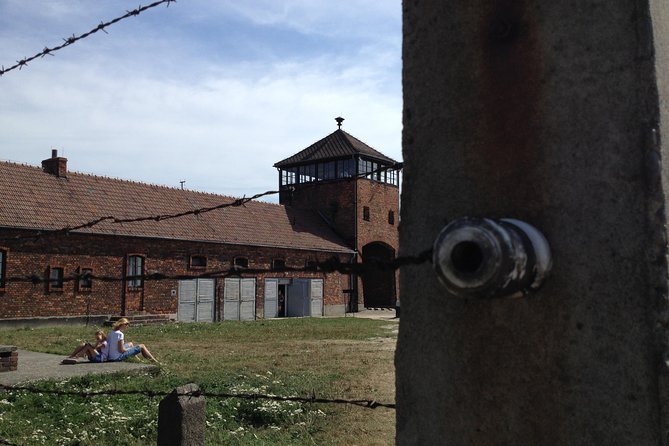
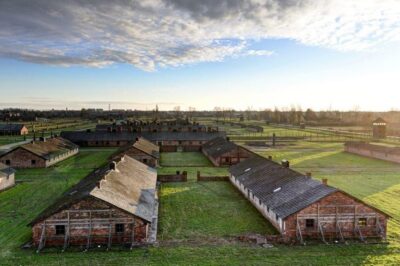
Birkenau (Auschwitz II) is the bigger death camp area, and it demands both time and walking. Even when the route is well planned, you should expect uneven ground and a lot of open space. Your comfort matters here: wear shoes you trust, keep your bag small, and pace yourself.
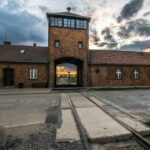
The good news is that your time in Auschwitz is described as unlimited, which gives you a rare chance to slow down. That can be especially helpful at Birkenau, where seeing preserved watchtowers, fences, and barracks areas can hit harder than you expect. With unlimited time, you’re not forced into a tight circuit where you barely absorb what you’re looking at.
I also like that some guides add context beyond the standard walking path. In real examples, guides such as Dariusz or Alicja have used extra explanation time—sometimes driving or tailoring the route—so you get more meaning per step. The memorial is huge, and without context, it’s easy to feel like you’re just crossing ground rather than learning how the camp system functioned.
A practical consideration: unlimited time doesn’t mean the whole day is unlimited. If your day includes set official components, the rest of the schedule can still be compressed. One negative theme in experiences was that the Auschwitz portion sometimes felt rushed due to time constraints. If you want the most measured pace possible, plan to arrive early in the day if you have control over time slots when booking.
Schindler’s Factory in Podgórze: Optional, But Often Worth It
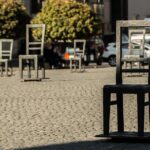
If you add the Schindler’s Factory option, it becomes a second storyline beyond the camps. You’ll travel to Podgórze in Kraków and visit Schindler’s Factory, now a museum. This part is designed to show occupied Kraków through the lens of the people who lived there—something many visitors miss if they focus only on the camps.
This museum option lasts about 2 hours and includes admission, plus a private guide in English. You’ll also visit a neighborhood context linked to Schindler’s List filming locations, which helps connect the famous screen story to the real urban geography.
Here’s why I think this add-on can be a smart value choice: it turns the trip from a single-location tragedy into a broader understanding of how persecution affected normal daily life across Kraków. The camps explain the system. Podgórze helps explain what it meant for a city—who had choices, who helped, and what survival looked like in real neighborhoods.
If your group is only interested in Auschwitz-Birkenau with maximum time there, you can skip this. But if you want the day to include at least one portion that doesn’t feel like constant heaviness, Schindler’s Factory can give you a different kind of emotional intensity—grounded in survival, help, and the moral complexity of occupation.
Pace, Group Size, and the Guide Factor (Alicja, Dariusz, and Others)
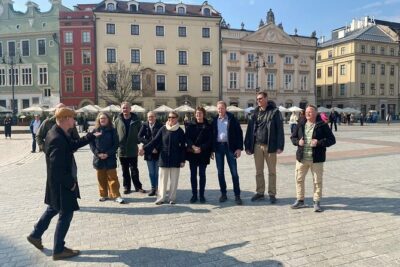
This tour offers a choice: you can go with a group tour or select a private guide option in Auschwitz. That choice is more than comfort—it affects how much you can ask, how much time you get to stop, and how well the day fits your pace.
The strongest praise across experiences consistently points to the guiding style. People describe guides like Alicja and Dariusz as caring, attentive, and flexible. In several accounts, guides didn’t just recite facts—they made space for questions and adjusted to the group’s level, including families and people with personal connections to survivors.
I also like that the best guiding tends to come with thoughtful planning: one set of experiences noted reduced crowd pressure and more quiet moments at Birkenau. That can be the difference between feeling swallowed by a busy memorial and feeling able to properly reflect.
Now, here’s the realistic part. Even with a private day, Auschwitz museum sections are still organized and staffed by the memorial site. So if you expect a fully private, custom walkthrough from start to finish, you might feel disappointed. One experience described an official museum tour group size of around 20 people, despite private transport—again, because Auschwitz itself controls the museum component.
So I’d frame it like this: transport and coordination are private. The official museum rules still apply. Your best bet is to treat the private part as the context and pacing layer, not a guarantee of solitary time inside every building.
Practical Stuff: What’s Included, What’s Not, and How to Pack
For $239.65 per person, you get a lot of the hidden day-costs handled. Entrance fees are included, and bottled water plus local snacks are provided. That means you’re not hunting for tickets or scrambling for drinks halfway through a solemn day.
Lunch is not included. Plan for a meal on your own or follow your guide’s suggested timing, especially because the day is long and sites can eat up time fast. If you’re sensitive to hunger during intense portions, consider bringing a small snack even though local snacks are included.
Temperature can be another factor. One experience noted hot heating on the drive (and others noted the weather can be cold). Dress in layers so you can adjust in the car and at the camps.
Here’s what I would pack based on the stated bag restriction and the walking realities:
- Small bag only so you stay within the 20 x 30 cm limit at Auschwitz museum
- Comfortable walking shoes (Birkenau involves a lot of ground)
- A light layer for wind and changing temperatures
- Minimal essentials. The less you carry, the easier it is to focus
Children: it’s not recommended for kids under 14. If you’re traveling with teens, decide based on your group’s maturity and readiness for extremely heavy content.
Finally, language: the general tour is in English. If your group needs another language, that option is limited to Auschwitz I visits.
Should You Book This Auschwitz-Birkenau + Schindler’s Factory Day?
Book it if you want a smooth, guided, English-forward day that removes the hassle of transport and planning. The best version of this tour is when your guide actively shapes your understanding—especially if you choose private guidance in Auschwitz or you’re adding Schindler’s Factory to broaden the story.
Skip it or look for a different format if you need truly private time inside Auschwitz museum spaces. Because official museum tours run on the site’s structure, you may end up in a standard group tour even with private transport. Also, if your priority is maximum time inside Auschwitz with no schedule pressure, do your homework on timing and consider choosing an earlier start when possible.
One more value tip: the tour is commonly booked about 33 days in advance on average. If you want a specific time or want to pair Auschwitz with Schindler’s Factory, book sooner rather than later.
Overall, I think this is a strong choice for most people doing Kraków and wanting one essential day handled correctly: pickup, context, entry, and a logical flow from Auschwitz I to Birkenau, with an optional add-on that shows Kraków’s occupation story.
FAQ
Is hotel pickup and drop-off included?
Yes. You’re picked up from your Kraków hotel and returned after the tour, using private comfortable transportation.
Does the price include entrance fees?
Yes. Entrance fees are included, and refreshments (bottled water and local snacks) are part of the tour.
What language is the tour offered in?
The general tour is organized in English. Another language option is only possible when visiting the Museum in Auschwitz I.
Is lunch included?
No. Lunch is not included.
How long is the tour?
The tour runs about 7 to 9 hours in total.
Is there a bag size limit at Auschwitz?
Yes. In the Auschwitz museum, each person is allowed a maximum bag size of 20 x 30 cm (7.8 x 11.8 inches).