REVIEW · KRAKOW
Segway Tour Krakow: Jewish Quarter Kazimierz- 2-Hours of Magic!
Book on Viator →Operated by Segway Point Krakow - City Tours & Rental · Bookable on Viator
Krakow is way more fun on wheels. This 2-hour Segway tour turns the Jewish Quarter into a fast, hands-on history walk, starting with a short practice session before you roll. You’ll also hear stories tied to the places you pass, and guides such as Tom and Zee are known for keeping things friendly and question-friendly.
I love that you get Segway training first, so even a first timer can feel comfortable without slowing the group. I also like the route’s mix: major landmarks plus the everyday streets of Kazimierz, so you get both context and atmosphere in a short time.
The main thing to watch is English. A few explanations can be hard to catch if an accent is strong, so plan to ask questions or request repeats when you need them.
In This Review
- Quick reasons this tour works
- Segway training first: how this tour keeps you confident
- Riding Kazimierz: the Jewish Quarter as a living map
- Old Synagogue and Plac Wolnica: the stories start early
- Market Square: repeating stop, different angles
- Corpus Christi Church and Church on the Rock: faith landmarks in motion
- Szeroka Street: seeing the neighborhood scale
- Remuh Cemetery: a quieter stop that changes the mood
- Father Bernatek Footbridge: ending with a view
- Guides, pacing, and what “good” feels like
- Price and value: what $57.81 buys you in real terms
- Practical tips before you go
- Who this Segway tour is best for (and who should skip it)
- FAQ
- Is the tour about 2 hours long?
- Do I get training before riding?
- Is the tour offered in English?
- Where does the tour start?
- Are there weight limits?
- Is alcohol allowed before the tour?
- Is the group size capped?
- Is it near public transportation?
- Should I budget for attraction tickets?
- Should you book this Segway tour of Kazimierz?
Quick reasons this tour works
- 15-minute practice so you’re not guessing once the sightseeing starts
- Kazimierz in a hurry: big sights plus small corners without a long walk
- Photo stops built in, including the quieter, more reflective moments
- A short, guided loop that’s good for first-time Krakow planning
- Local restaurant and shop tips from your guide after the ride
- Small-ish group (up to 30), which helps the pace stay smooth
Segway training first: how this tour keeps you confident
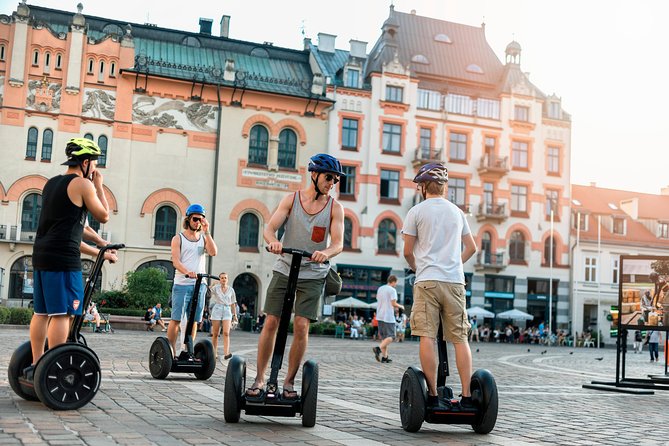
The tour is built around a simple idea: you should feel stable before anyone asks you to think about history. You start with a safety briefing and a short setup period, then you practice riding the Segway until the basics click. Helmets and safety gear are provided, and the guide keeps control of the group so you’re not learning while dodging crowds.
For your peace of mind, this matters more than you’d think. When you’re comfortable, you actually look around—at street views, courtyards, church fronts, and the way Krakow’s neighborhoods sit next to each other. If you’re still nervous, you’ll spend the whole ride focused on your balance. The operator’s approach helps you skip that.
If it’s your first time on a Segway, you’ll likely appreciate the structured start. Families also report that kids around 9–15 can get the hang of it quickly when they’re paying attention during that practice time.
Two practical notes:
- You need to be within the weight limits (30 kg to 135 kg) and follow the staff instructions.
- Alcohol and Segways don’t mix here, so you’ll want to keep the night before calm.
You can also read our reviews of more tours and experiences in Krakow.
Riding Kazimierz: the Jewish Quarter as a living map
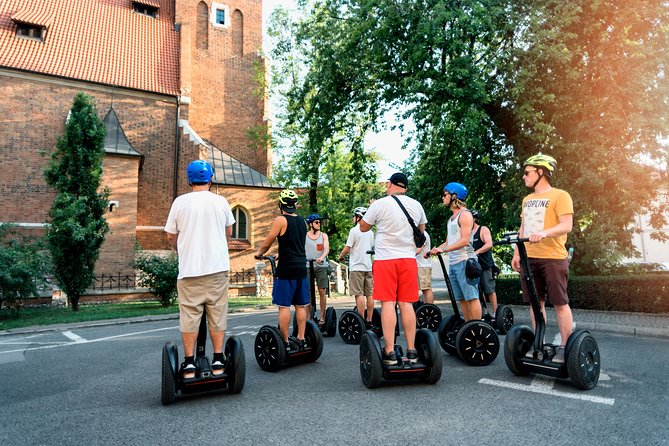
Kazimierz is one of those places where the streets feel layered—medieval edges, 20th-century scars, and everyday city life all at once. A walking tour gives you that, but a Segway gives you something different: range. In two hours, you can cover more ground than most people do on foot, and you can still stop for short looks and photos.
The route is designed to build understanding in chunks. You start with Jewish landmarks and square spaces, then move through street-level life and religious sites, and end with a more quiet stop that changes the mood. Instead of one long lecture, you get bite-size stories paired with where you are.
Also, Kazimierz isn’t just museums. It’s still a neighborhood. Riding through it helps you notice how the city layout shapes memory—where communities gathered, where daily routines happened, and how later eras reused or repurposed spaces.
Old Synagogue and Plac Wolnica: the stories start early
Your first sightseeing moments focus on Jewish institutions and public gathering spaces.
You’ll stop at the Old Synagogue area and hear a story about the synagogues—more than a single building fact. The point here is orientation: the guide connects the synagogue story to the broader Jewish Quarter so the area doesn’t feel like disconnected stops. Even if you’re not a deep history person, you can follow the thread: what these places meant, and why they matter in Krakow’s story.
Then you’ll move to Plac Wolnica, the square area that helps you picture daily life. Squares are where communities meet, trade news, and show up. Seeing it from the Segway route means you also catch the surrounding street grid—useful when you want to return later on your own with a clearer sense of direction.
The pace at each stop is short, so don’t expect a long inside visit. Think of these as guided “why this matters” moments while you’re moving through the neighborhood.
Market Square: repeating stop, different angles
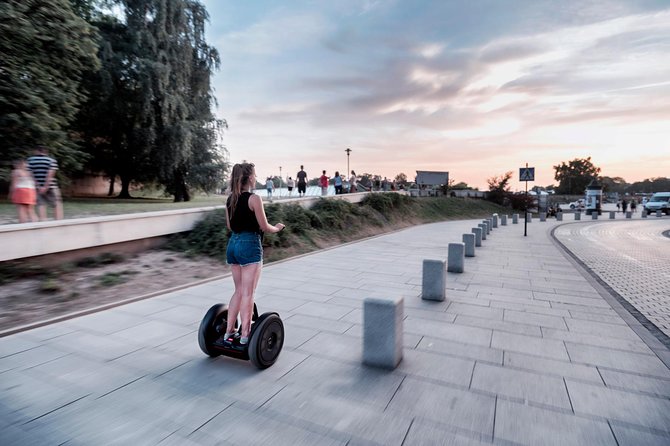
You’ll pass through Market Square more than once. That sounds repetitive, but it can actually help your brain. The first time, you get the big picture: what the square represents and how it fits into the Quarter’s life. Later, you return to re-check details—street alignments, building corners, and how the flow of people and paths works.
This is one of the values of the Segway format. You’re not stuck staring at one façade for an hour. You’re getting multiple looks at the same important urban space, which makes it easier to understand how the neighborhood works when you’re walking it later.
If you’re trying to get oriented for the rest of your Krakow days, this kind of repeat-angle routing is a smart use of time.
Corpus Christi Church and Church on the Rock: faith landmarks in motion
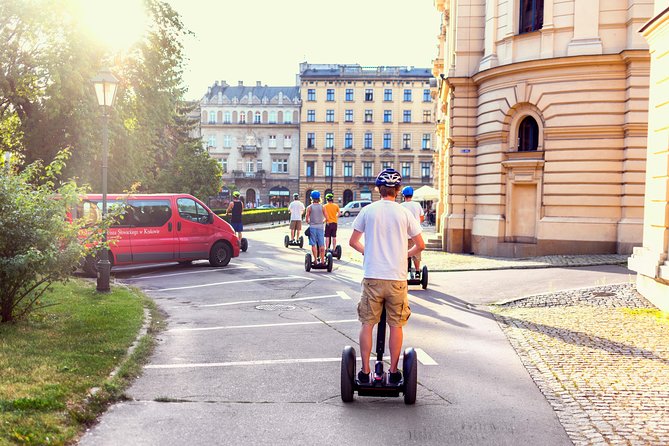
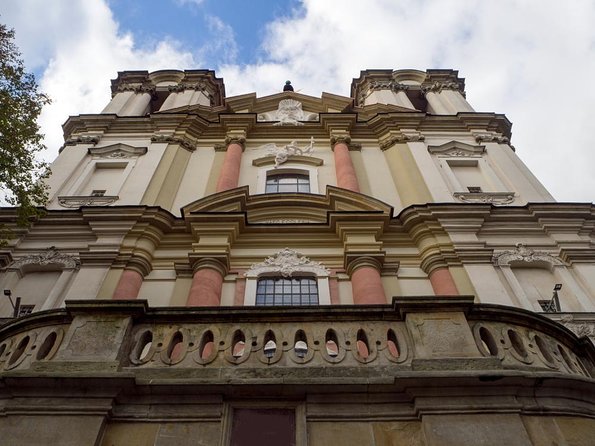
Kazimierz has major Jewish sites, but it also has major Christian landmarks that sit alongside them. You’ll roll by Corpus Christi Church (Kosciol Bozego Ciala) and then go to Church on the Rock (Kosciol na Skalce).
These stops shift the tone slightly—from community life and synagogue focus to religious architecture and local tradition. The guide’s job here is to help you read the buildings without turning every stop into a dry facts contest. You’ll get stories about what you’re seeing, and you’ll also learn how these landmarks sit within the neighborhood rather than feeling like they belong to a totally different Krakow.
The benefit for you: you come away with a more complete sense of how Krakow’s quarters overlap. It’s not only one culture in one bubble. It’s different communities sharing space across time.
Szeroka Street: seeing the neighborhood scale
Then you get to Szeroka Street, which is one of those places where “street” really means “story.” Streets like this are where the architecture, the sidewalk rhythm, and the spacing between buildings show you how people actually moved around.
A Segway keeps you from overthinking every step and lets you take in the corridor feel of the street—where the views open up, where corners narrow, and how the neighborhood transitions from one type of building to another.
If you want a souvenir memory beyond photos, this is the kind of stop that helps you remember how the place felt in real time. You can later use that mental map to choose where to wander on your own.
Remuh Cemetery: a quieter stop that changes the mood
One of the most meaningful stops is Remuh Cemetery. Even in a short guided moment, cemetery visits affect people because they’re about remembrance, not just sightseeing.
On a moving tour, you might think it would feel too rushed. But the Segway format still gives you an advantage: you arrive at the stop with the larger context already in your head. Earlier stories about synagogues and squares make this final reflective point land better, and you’re not going in cold.
Keep your expectations realistic. This isn’t presented as an in-depth, long research visit. It’s a guided pass that gives you context and a respectful glance, then returns you to the tour flow.
If you want one stop to slow down mentally, this is the one.
Father Bernatek Footbridge: ending with a view
The ride finishes with Father Bernatek Footbridge. This stop works as a natural wrap-up because bridges do two things well: they give you a sense of scale, and they show how the city connects neighborhoods that feel separate while you’re inside them.
By the time you reach this point, you’ve already heard enough stories to understand why connections matter. The final look isn’t just for the camera; it’s for your sense of direction. It helps you see Krakow as a place where your later walking routes will make sense.
Guides, pacing, and what “good” feels like
A tour like this lives or dies on how the guide manages pace and comfort. The structure is tight—about 15 minutes of practice and then roughly 1 hour 45 minutes of guided riding—so you need a guide who can explain clearly while keeping the group moving.
From the guides associated with this experience, the pattern is friendly, and often hands-on. If your question needs repeating, the guide tends to repeat until it clicks. In other words, you’re not just being rushed past the story.
Still, there’s a fair consideration: if English is tough for you to understand (accent or speed), plan to lean on questions. The best results come when you treat this like a conversation, not a lecture you have to decode.
Also note the group size limit (up to 30). That size is big enough for fun energy but small enough that the ride usually stays controlled.
Price and value: what $57.81 buys you in real terms
The price is listed at $57.81 per person for about two hours. On paper, that’s not cheap if you’re comparing it to a free stroll. But Segways are not a casual perk here—they bundle several things you’d otherwise need to arrange separately.
What you’re really paying for:
- Segway rental for the tour duration
- Safety gear (helmets and necessary equipment)
- A guide who tells you what you’re seeing and helps you understand the neighborhood
- Training time that reduces the risk of an awkward or unsafe first ride
- Time efficiency: you get more locations in less time than a standard walk
If your goal is a first impression of Kazimierz—something that helps you plan where to go next—that value makes sense. If you’re the type who wants long museum-style explanations at every stop, you may find it shorter than what you expect from a dedicated walking guide.
Practical tips before you go
A few things can make or break your comfort on a cold morning or a busy street.
- Wear warm layers. One reviewer noted a March ride where gloves were a smart idea—your hands matter when you’re steering and standing comfortably.
- Expect a short ride-to-story rhythm. You’ll get quick context and then move. If you’re the type who loves to linger, plan to revisit certain places afterward on foot.
- If anyone in your group uses a different wheeled device, confirm you’ll all be riding together in a compatible way. One note suggested avoiding mixing e-scooters with Segways for the experience.
And bring the mindset that this is a guided ride through history-shaped street scenes. Not a deep academic course, not a photo-only dash.
Who this Segway tour is best for (and who should skip it)
You’ll love this tour if:
- You want a fun intro to Krakow that doesn’t eat half your day.
- You’re traveling with family or friends and want something everyone can do together.
- You like short guided stops paired with movement, especially in areas like Kazimierz where orientation helps.
- You’re curious about the Jewish Quarter but also want city-energy and quick views.
You might consider another option if:
- You strongly prefer long, uninterrupted walking discussions with lots of detail at each location.
- You have trouble understanding English on tours and don’t feel comfortable asking the guide to slow down or repeat.
- You’re not comfortable with the basic idea of standing and balancing for the ride time (even with training).
FAQ
Is the tour about 2 hours long?
Yes. It’s listed as approximately 2 hours, including about 15 minutes of Segway training and about 1 hour 45 minutes of guided riding.
Do I get training before riding?
Yes. You get a safety briefing and a practice session at the start so you can ride confidently before the sightseeing begins.
Is the tour offered in English?
The tour is offered in English.
Where does the tour start?
It starts at Sienna 17, 33-332 Kraków, Poland, and it ends back at the same meeting point.
Are there weight limits?
Yes. The minimum weight is 30 kg (65 lb) and the maximum weight is 135 kg (300 lb).
Is alcohol allowed before the tour?
No. Participants under the influence of alcohol are not allowed.
Is the group size capped?
Yes. The experience has a maximum of 30 travelers.
Is it near public transportation?
Yes. The meeting area is near public transportation.
Should I budget for attraction tickets?
The stops listed include admission ticket-free entries for the places you visit during the tour.
Should you book this Segway tour of Kazimierz?
If you want an efficient, fun way to get oriented in Krakow’s Jewish Quarter, this is a strong pick. The combination of training up front, a tight 2-hour route, and story-focused stops helps you understand the area without spending the whole day walking.
Book it especially if you’re the type who likes to see lots of sights quickly, then come back later to explore at your own pace. Skip it if you need extremely detailed, long-form explanations at every stop, or if understanding English at speed will stress you out.