REVIEW · KRAKOW
Krakow: Kazimierz, Schindler’s Factory & Ghetto with Guide
Book on GetYourGuide →Operated by CRACOW LOCAL TOURS · Bookable on GetYourGuide
Kazimierz has layers you can feel under your feet. This 5-hour tour takes you from the Old Synagogue area through the streets of the former Jewish district, then into Oskar Schindler’s Enamel Factory and finally to key parts of the former ghetto. You get a live guide who connects the places to what happened, not just dates.
I especially like two things: the street-level walk in Kazimierz (it helps you picture daily life before and during the war), and the way Schindler’s story is explained so you understand the stakes, not just the headline. One drawback to plan for: it covers the Holocaust and forced displacement, so expect heavy content and a lot of standing even with the included rest stops.
In This Review
- Kazimierz Starts at the Old Synagogue: Reading a Neighborhood’s Past
- Walking Through Schindler’s Enamel Factory: More Than Skip-the-Line
- The Former Ghetto Sites: Walls, Homes, and the 68 Chairs Monument
- How 5 Hours Works on the Ground: Pace, Rest Stops, and Weather
- Guide Quality in Real Life: Names, Style, and How You Remember Places
- Price and What You Actually Get for $81
- Practical Tips: Tickets, ID, Shoes, and Best Use of Your Time
- Who This Tour Suits Best (And Who Might Want Something Else)
- Should You Book This Kazimierz, Schindler, and Ghetto Tour?
- FAQ
- How long is the tour?
- Where do I meet the guide?
- Are tickets to Schindler’s Factory included?
- Is food or drink included?
- What languages are available for the live guide?
- Is this tour wheelchair accessible?
Kazimierz Starts at the Old Synagogue: Reading a Neighborhood’s Past
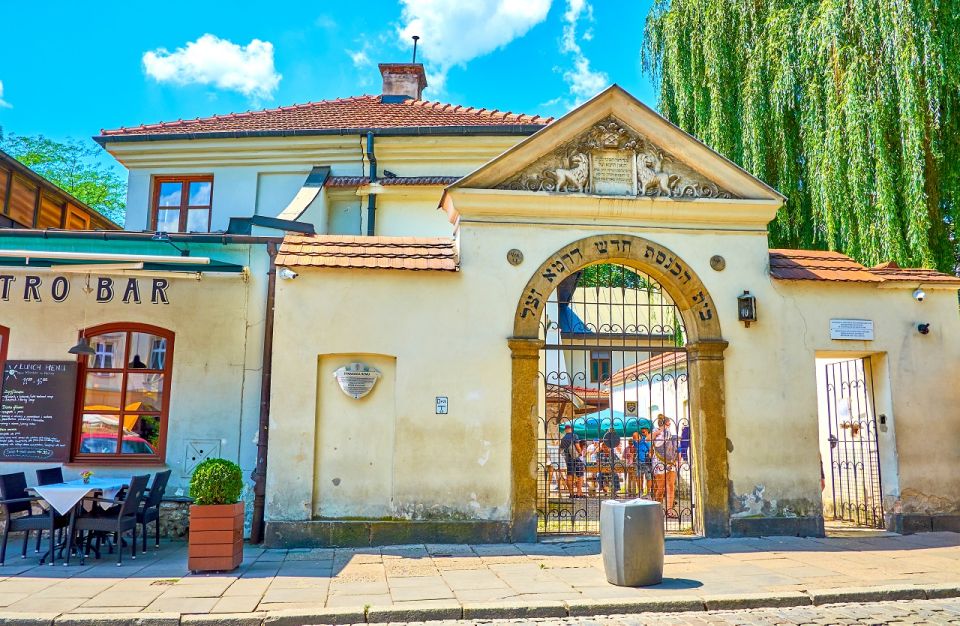
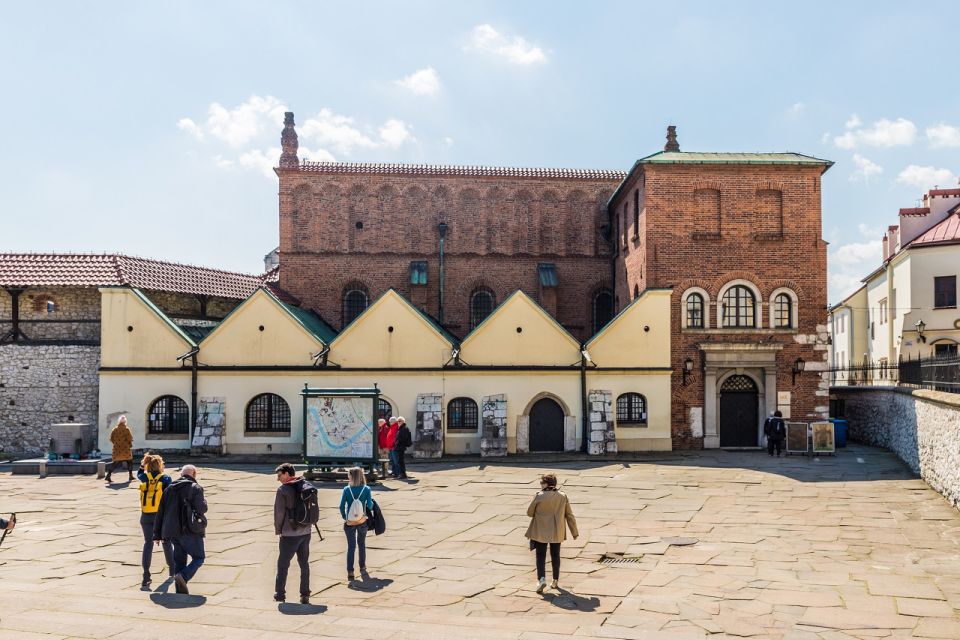
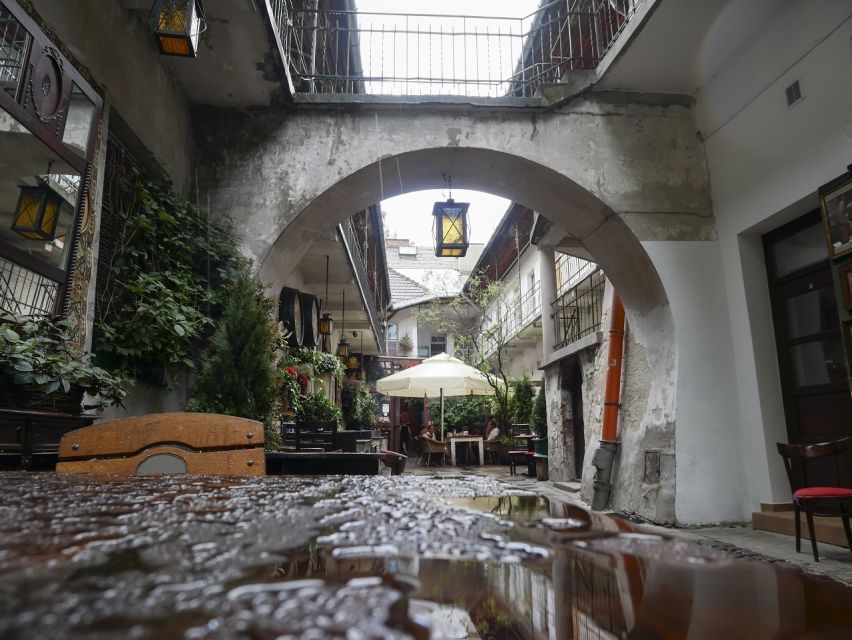
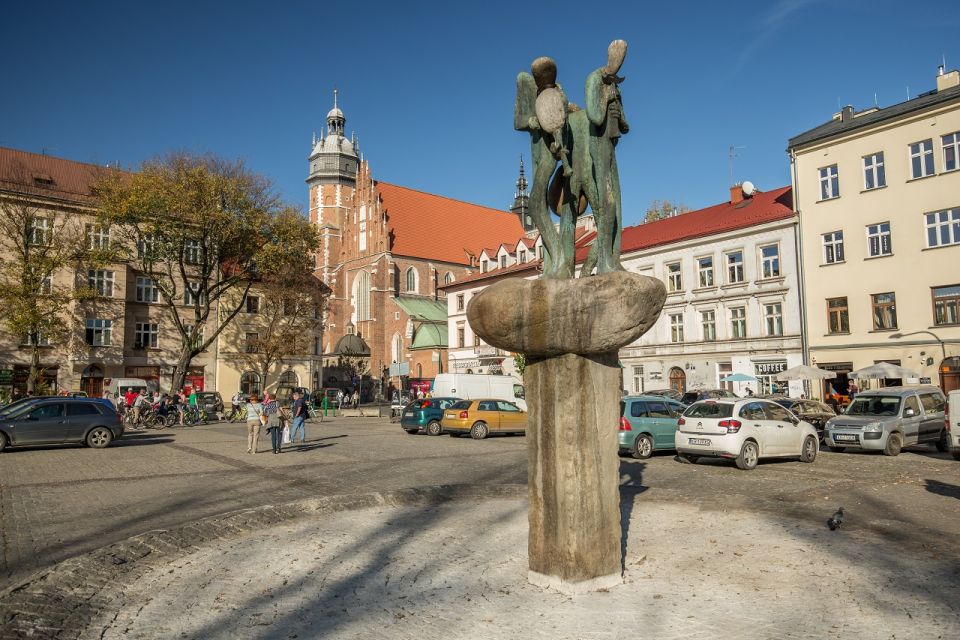
The tour begins outside the Old Synagogue in the Kazimierz district. When you meet your guide, you’re not starting in a classroom. You’re starting in the part of Krakow where Jewish residents shaped the city for centuries, with streets that still tell the story even when the original buildings aren’t all there.
Kazimierz today is full of energy and new life, but the guide keeps pulling you back to earlier realities. The point isn’t to turn the neighborhood into a museum. It’s to show how a community lived here—its routines, its institutions, and how that normal life was later violently interrupted. If you’ve walked around Krakow’s Old Town and thought, this is beautiful but I still want the human story, this is where you get it.
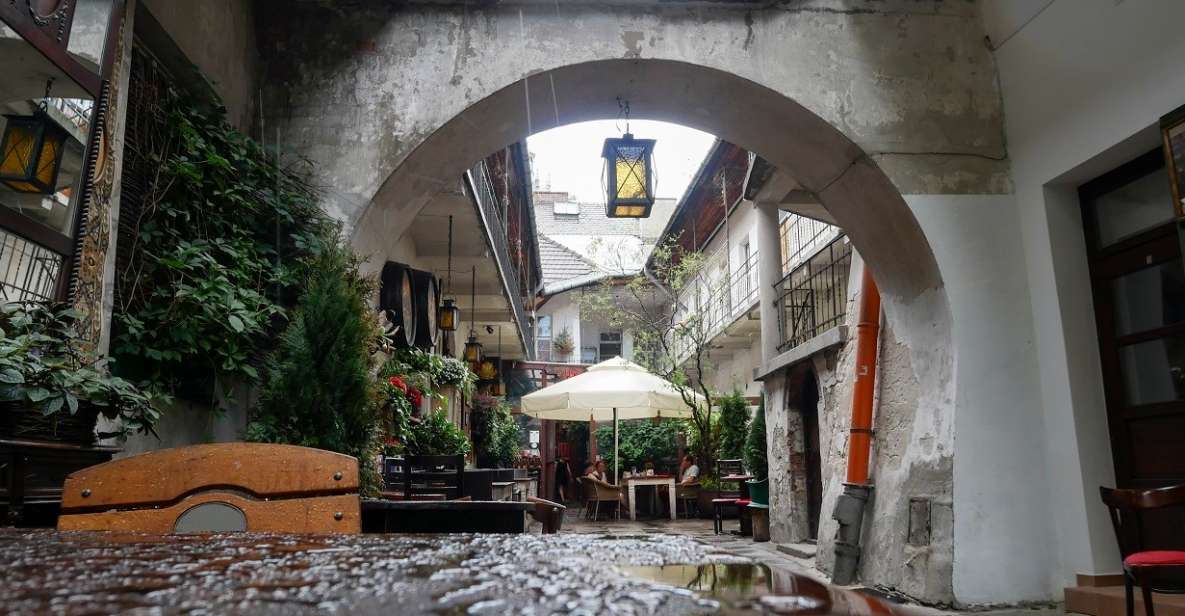
Your guide leads you through charming, now-trendy streets while giving you the context you need to make sense of what you see. That matters because without it, Kazimierz can look like just another photogenic district. With a guide, you notice details differently: where a site is in relation to another, why certain places mattered, and how the war reshaped the map.
One practical note: the tour isn’t designed for slow sightseeing. It’s guided history, so keep your camera ready but save your deepest photo stops for places the guide flags.
Walking Through Schindler’s Enamel Factory: More Than Skip-the-Line
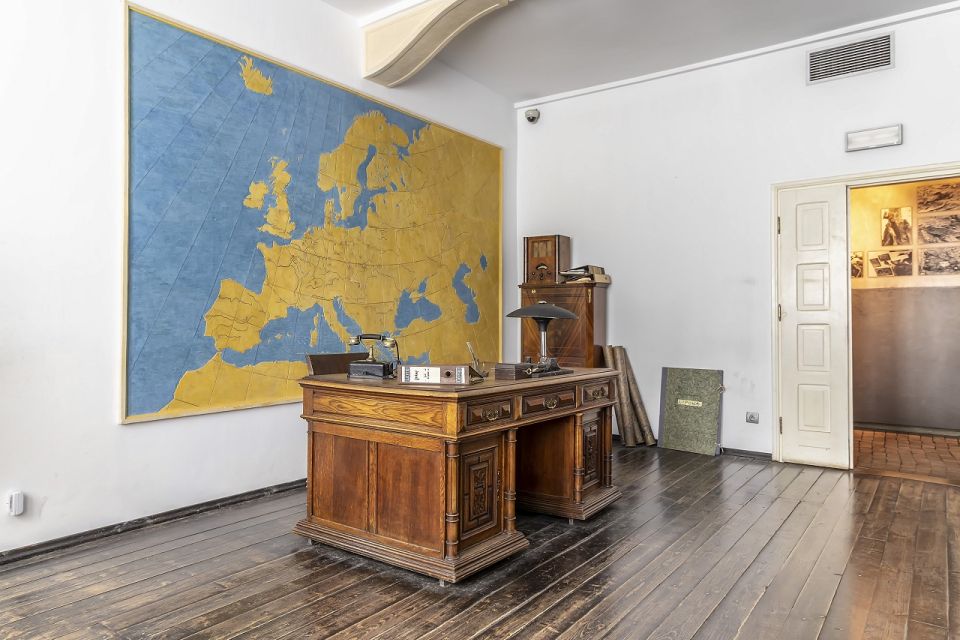
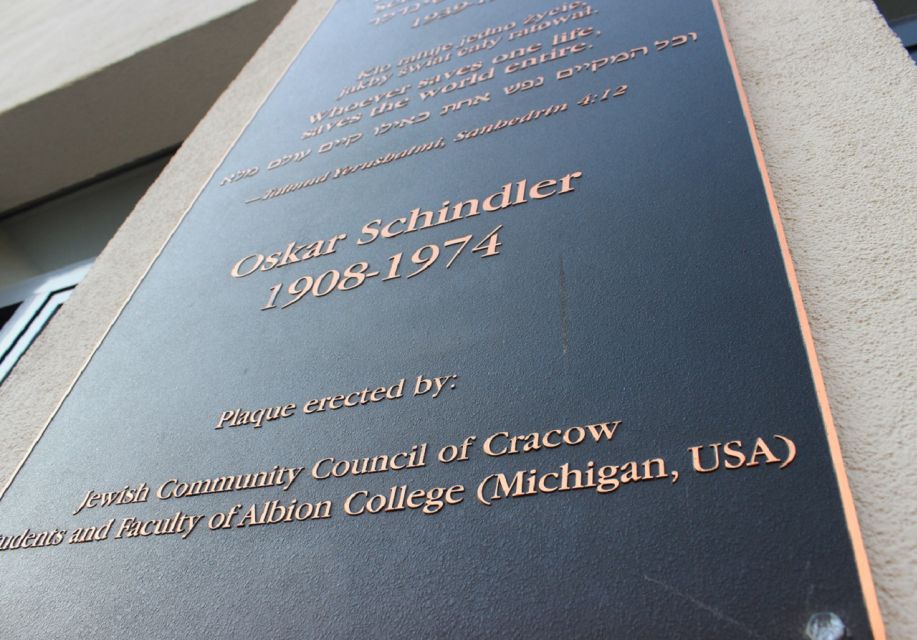
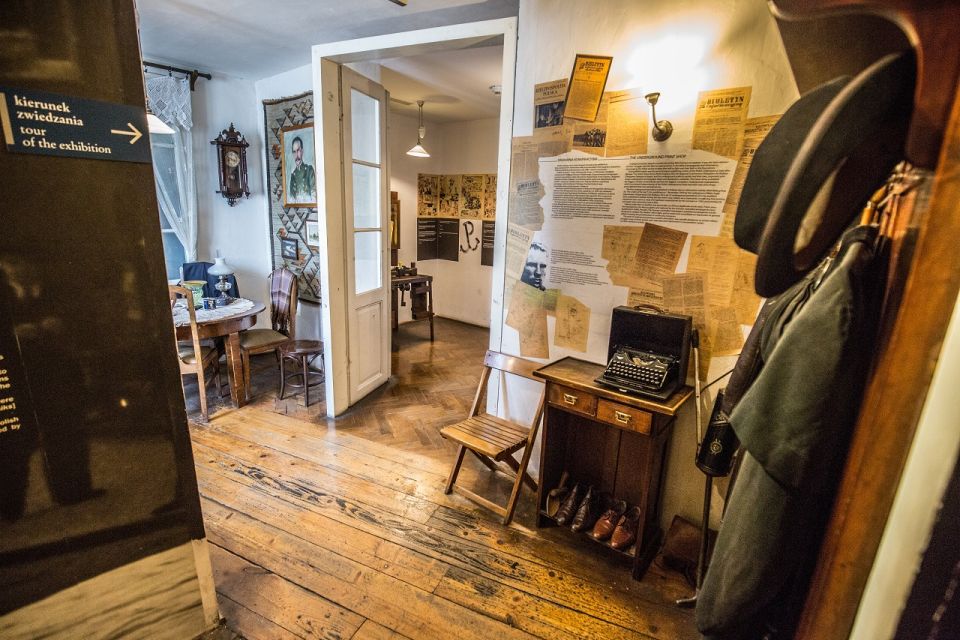
Next comes the Oskar Schindler Enamel Factory—your guided stop that uses skip-the-line tickets. That single benefit is worth something in Krakow, because Schindler’s Museum can be busy and waiting around is the fastest way to lose the mood of a serious visit. Here, the priority is getting you into the museum so your guide can do their job: connect the objects and rooms to the human choices that shaped lives.
The factory visit focuses on WWII horrors and on how Oskar Schindler helped save Jewish people from concentration camps run by the Nazi regime. The way your guide frames it matters. You’re not only seeing tragedy; you’re also seeing the scale of what was at risk and why Schindler’s actions mattered in that specific system of persecution.
Your time inside the museum is also tied to scheduling. From January 1, 2026, you’ll want to treat start times as approximate due to the museum’s scheduling. Personalized entry rules also come into play (more on that in practical tips). Even if you’re traveling soon, that’s a good heads-up: this isn’t one of those tours that runs completely on autopilot.
If you care about learning efficiently, this stop is the backbone of the tour. It’s where the history goes from local context (Kazimierz streets and community life) to the broad, terrifying mechanism of the Holocaust—plus the story of someone trying to push back against it.
You can also read our reviews of more guided tours in Krakow
The Former Ghetto Sites: Walls, Homes, and the 68 Chairs Monument
The last major phase takes you to the site of the former Jewish ghetto. This is where the tour becomes emotionally direct. You’ll learn about forced overcrowding and the suffering that Jewish residents endured during the Nazi occupation of Poland. Again, your guide isn’t just pointing out spots; they’re helping you understand what the space used to be and what it meant to live under those conditions.
A highlight here is seeing a section of the undestroyed ghetto wall—one of the rare physical leftovers that keeps the story from turning abstract. Standing near that kind of remaining structure can change how you interpret everything else you’ve heard. It’s harder to think in vague terms when you’re looking at something that physically survived.
You’ll also visit houses where thousands of displaced Jews once lived. That detail is important because the ghetto wasn’t just a line on a map. It was a daily, packed reality—shelter, constraints, and impossible living conditions.
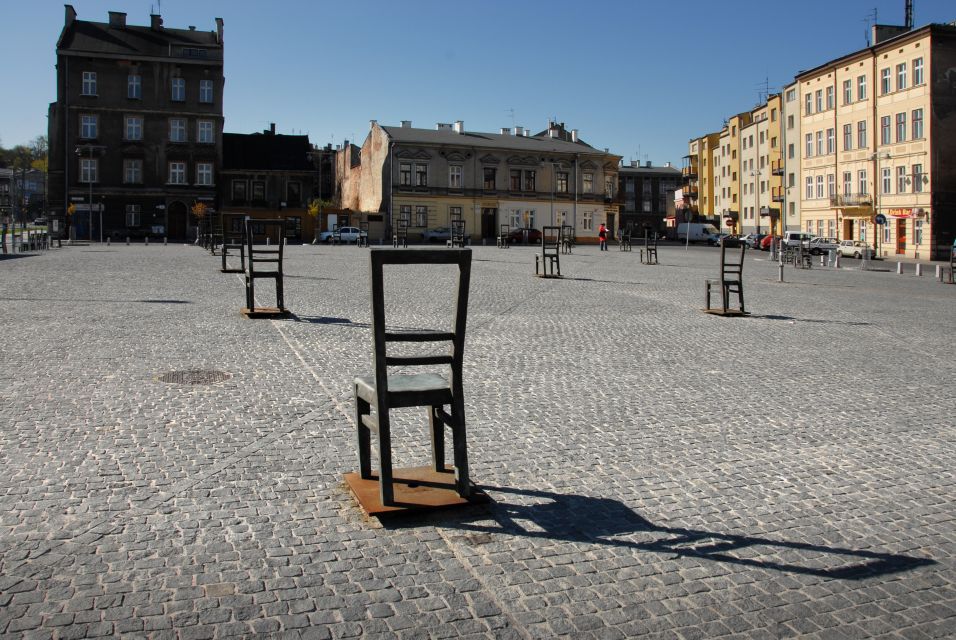
Two additional stops make this section feel grounded in everyday survival and memory: the pharmacy called Under the Eagle and the monument of 68 chairs in Heroes’ Square. The chairs monument is the sort of memorial that makes you pause, because it pushes history into an image that stays with you after you walk away. Under the Eagle, on the other hand, helps you remember that even in the worst circumstances, people were still surrounded by the ordinary shapes of life—medicine, services, and the attempt to function.
This part of the tour is likely the most intense. Take your time with it, and plan your evening afterward carefully. Don’t schedule something that requires lots of emotional energy right after.
How 5 Hours Works on the Ground: Pace, Rest Stops, and Weather
This tour runs for 5 hours, with three rest stops included. That’s not just a comfort perk. It’s a pacing tool that makes it possible to absorb heavy material without burning out your attention in hour two.
The walking portion works best if you’re comfortable moving through several key locations rather than staying long in just one. If you like tours where the guide keeps you on track and you trust them to decide where to linger, you’ll probably enjoy this format. If you prefer lots of free time for independent wandering, you’ll need to treat this as an organized history program first—and leave your own extra Kazimierz exploring for another day.
Weather can be a factor. One guide, Emil, handled rainy conditions by stopping under shelter when possible to keep the group dry. That’s the kind of practical attention you want in a historical walk: staying safe, not rushing, and using the geography and timing to make the experience manageable.
One more note: the tour is not suitable for wheelchair users. If mobility is an issue, you’ll likely want to look for an alternative format or a different itinerary type.
Guide Quality in Real Life: Names, Style, and How You Remember Places
This tour is led by a licensed guide, and the language options are wide: Spanish, Italian, French, English, German. That matters because you’re dealing with complex subject matter, and clear explanations help you hold the timeline in your head.
Guides described on the booking side include Chiara, Annetta, Emil, and Margot. What stood out across these experiences is a tone that blends empathy and cultural context—so you’re not just collecting facts. Margot’s approach, for example, succeeded at keeping people captivated even in tough weather, and she guided the emotional thread of the story in a way that made places feel connected rather than random.
Chiara’s style was also highlighted for helping visitors see what isn’t physically there anymore, especially in the ghetto area. That’s an underrated skill. A location might look incomplete or changed, and without interpretation it’s easy to feel lost. With the right guide, absence becomes part of the story.
If you’re the type of traveler who loves turning corners and suddenly understanding why a street matters, this tour’s guide-led approach is the core of the value.
Price and What You Actually Get for $81
At about $81 per person for a 5-hour guided experience, the value comes from a mix of things you’d otherwise pay for separately: a licensed guide, skip-the-line museum access for Oskar Schindler’s Enamel Factory, and a structured route across multiple high-impact sites.
You don’t get food and drinks included, so you should budget for a snack or a quick stop before or after. But the tour includes three rest stops, which helps you manage energy and avoid getting stuck hungry in the middle of a serious visit.
Here’s the practical way to think about the price: you’re paying to compress time and remove friction. Skip-the-line access matters most when you’re visiting a timed, high-demand site. The guided route matters because connecting Kazimierz street life to the Holocaust era takes interpretation—your guide provides that bridge.
If you’re trying to “just see the highlights” with minimal planning, this is a smart way to do it. If you love self-guided walking and already know the background, you might pay less on your own—but you’ll likely lose the glue that helps the history make sense in context.

Practical Tips: Tickets, ID, Shoes, and Best Use of Your Time
Comfort counts on this one. Wear comfortable shoes. You’ll be walking between the Old Synagogue area, the museum, and multiple ghetto-related sites. Even with rest stops, the tour will feel like a real outing, not a light stroll.
Schindler’s Factory entry has a clear ID requirement. From January 1, 2026, you must provide the full names of all participants when reserving, and you must bring a passport or ID for entry to Schindler’s Factory Museum. If you forget, entry may be denied. If you’re booking now for a later date, double-check the name spelling to avoid last-minute stress.
Timing works best when you keep your schedule flexible. Start times are approximate due to museum scheduling starting in 2026. Plan a low-pressure next block for afterward, especially because you’ll leave with emotionally heavy information.
Finally, consider what you want most from your Jewish history visit. This tour focuses on Kazimierz streets, the factory, and former ghetto sites. If you strongly want a synagogue visit or a Jewish cemetery stop, you might need to add a separate activity, since this itinerary emphasizes other key elements.
Who This Tour Suits Best (And Who Might Want Something Else)
This is a strong fit if you want a guided route through the most important Jewish history sites in Krakow, without spending hours researching what to prioritize. You’ll like it if you care about understanding WWII events in a way that connects specific places—Kazimierz, Schindler’s factory, and the ghetto remnants.
It also works well for travelers who enjoy learning from live storytelling rather than reading a guidebook alone. The best parts here are interpretation: how a guide helps you see what the neighborhood used to be and how the war changed it.
You might want to consider a different format if you need wheelchair access, because this tour is not suitable for wheelchair users. And if you’re looking for a purely upbeat cultural walk, this isn’t that. The subject matter is tragic and intense, even though it includes the story of human rescue and resistance.
Should You Book This Kazimierz, Schindler, and Ghetto Tour?
Yes, I’d book it if you want one organized way to understand Krakow’s Jewish history in the places that matter most. The combination of Kazimierz walking, skip-the-line access to Schindler’s Enamel Factory, and a guided look at former ghetto sites creates a clear storyline you can follow for the full 5 hours.
It’s also a good value for $81 because you’re not just getting transit between stops—you’re paying for a licensed guide and for museum entry efficiency. Skip-the-line saves time, and the guide saves confusion.
Just go in prepared for weight. Bring your comfortable shoes, keep your next hours flexible, and let the story land at the sites where it belongs. If you do that, you’ll come away with understanding that lasts longer than photos.
FAQ
How long is the tour?
The tour lasts 5 hours.
Where do I meet the guide?
Meet outside the Old Synagogue in Kazimierz. Look for a representative with an Excursion city sign.
Are tickets to Schindler’s Factory included?
Yes. The tour includes skip-the-line tickets to Oskar Schindler Enamel Factory.
Is food or drink included?
No. Food and drinks are not included.
What languages are available for the live guide?
The live guide is available in Spanish, Italian, French, English, and German.
Is this tour wheelchair accessible?
No. The tour is not suitable for wheelchair users.