REVIEW · KRAKOW
Krakow: Kazimierz by Golf Cart and Schindler’s Factory Tour
Book on GetYourGuide →Operated by INTERCRAC Ltd. · Bookable on GetYourGuide
A ride through history with real context. This 3-hour tour pairs a comfy golf cart loop around Kazimierz and the former ghetto area with a focused, expert-guided visit to Schindler’s Factory—so you don’t just hear the famous story, you also see what daily life looked like around it. You’ll pass sites tied to the Jewish quarter, the Vistula-side ghetto district, and the museum’s reconstructed 1940s feel.
Two things I really like: the heated cart with an English audio guide makes the neighborhoods easy to absorb at a relaxed pace, and the live, licensed guide at the museum gives you a clear, human explanation of the exhibition. One thing to watch: you might not get much time to stop and read every wall plaque inside the museum space at your own speed.
In This Review
- Key things you’ll notice right away
- The route that connects Kazimierz to the ghetto district
- Kazimierz’s streets and synagogues
- The Vistula crossing into Podgórze
- Heated golf cart logistics that actually help you see more
- Group pace: good for seeing, not perfect for lingering
- Schindler’s Factory Museum: where the story turns from places to people
- How Schindler’s story fits into the larger occupation story
- Artifacts and reconstructions: why they matter
- Value and price: what you get for about $80
- Who this tour suits best (and who should rethink)
- Practical tips before you go
- Is this worth booking? My quick verdict
- FAQ
- FAQ
- How long is the tour?
- Where do I meet the group?
- What language is the tour available in?
- Is there an audio guide on the golf cart?
- Do I need a licensed guide inside Schindler’s Factory?
- What should I bring?
- Is the tour wheelchair accessible?
Key things you’ll notice right away
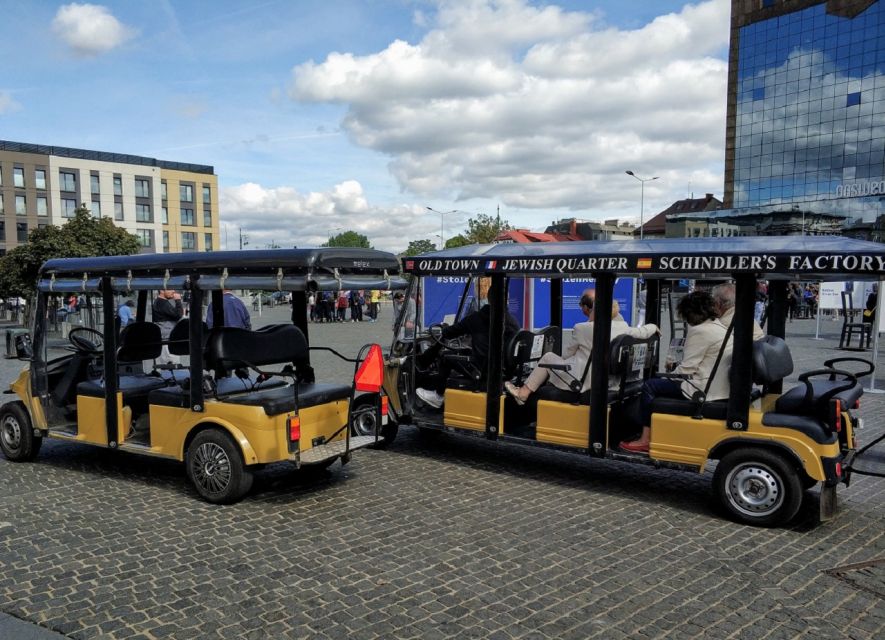
- Heated, eco-friendly golf cart with English audio so you can take in Kazimierz without walking the whole route
- A route through Kazimierz and Podgórze that links neighborhood streets to the former ghetto geography
- Original-style artifacts and 1940s reconstructions inside Schindler’s Factory Museum
- A licensed, live museum guide who explains the wartime fate of Krakow’s Jewish community
- Fast-track admission to reduce waiting before you enter the museum exhibition
The route that connects Kazimierz to the ghetto district
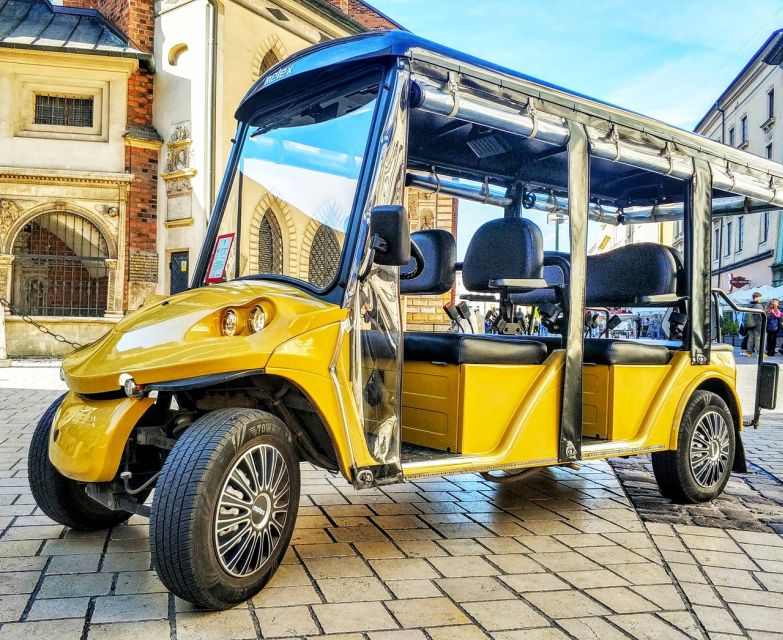
This tour is built around a simple idea: geography matters. Instead of starting at one museum point and calling it a day, you first get a guided ride through Krakow’s Kazimierz area, then you cross into Podgórze—the part of town that was the Jewish ghetto during World War II.
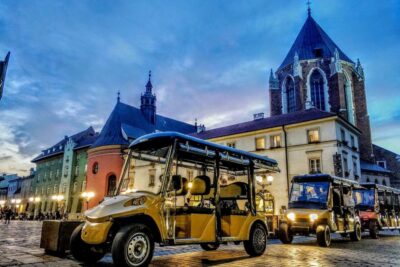
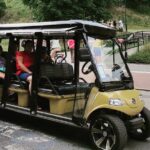
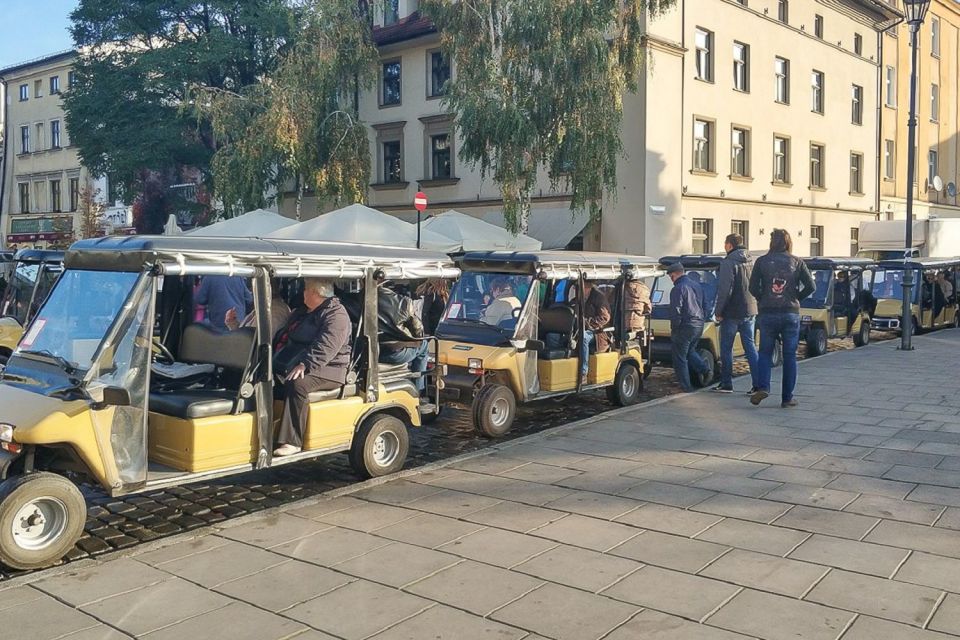
The cart itself sets the tone. It’s comfortable and heated, and you also get an English audio guide. That matters because it keeps the experience flowing. You’re not rushing from place to place, and you can still follow the story as the vehicle moves through streets you’d otherwise have to pick your way through on foot.
You can also read our reviews of more tours and experiences in Krakow.
Kazimierz’s streets and synagogues
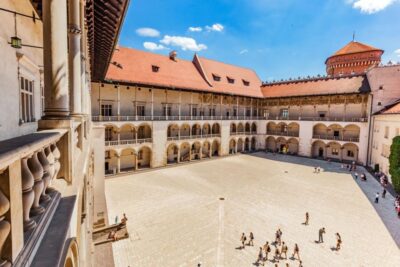
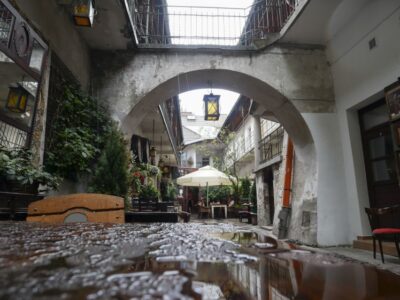
You begin in Kazimierz, Krakow’s historic Jewish Quarter. The area functioned for centuries as a separate town and a major center of Jewish culture—so you’re not only seeing old buildings, you’re seeing how a whole community lived and organized itself. Along the route, you’ll pass historic synagogues and narrow streets that still reflect long-running traditions.
You also move through the Christian part of Kazimierz, where you’ll notice the modern-day feel: cafés and galleries and the everyday atmosphere of a neighborhood that has layers. Even without stopping for long photo breaks, the tour helps you understand that this wasn’t a single “uniform” district. Different communities shaped the same streets.
The Vistula crossing into Podgórze
Then comes the transition that makes this tour stand out: you cross the Vistula River and enter Podgórze, the ghetto district during the war. The shift is immediate in what you see and what the audio and guide help you understand.
You’ll view several major reminders, including:
- a remaining fragment of the ghetto wall
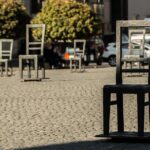
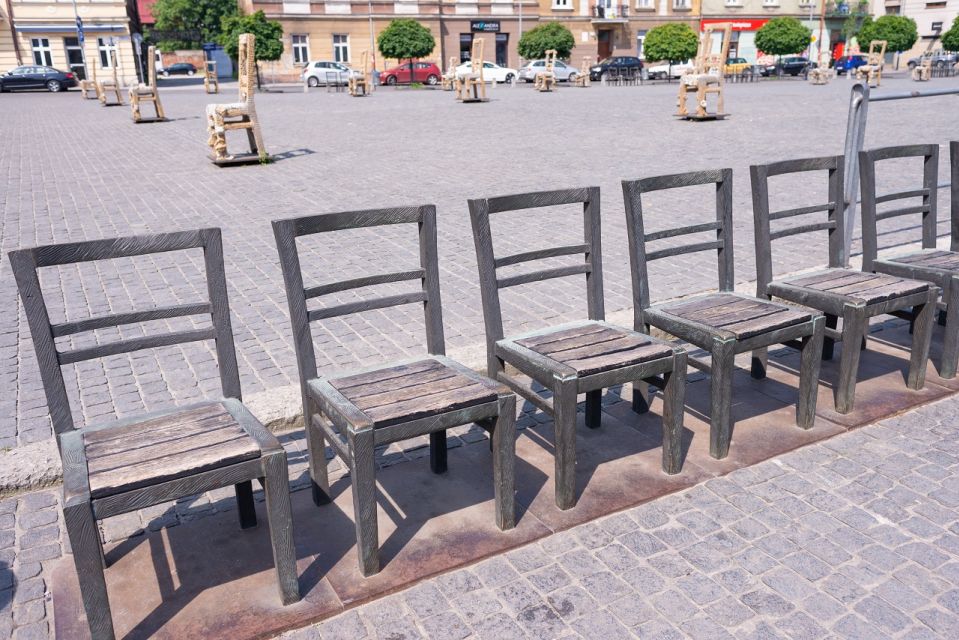
- Ghetto Heroes Square, marked by its distinctive chair memorial
- Under the Eagle Pharmacy, which serves as a lasting point tied to the wartime past
These stops don’t work like checkboxes. They’re designed to help you place the museum’s stories in a real neighborhood context—what it would have meant to live there day after day when everything around you was changing.
Heated golf cart logistics that actually help you see more
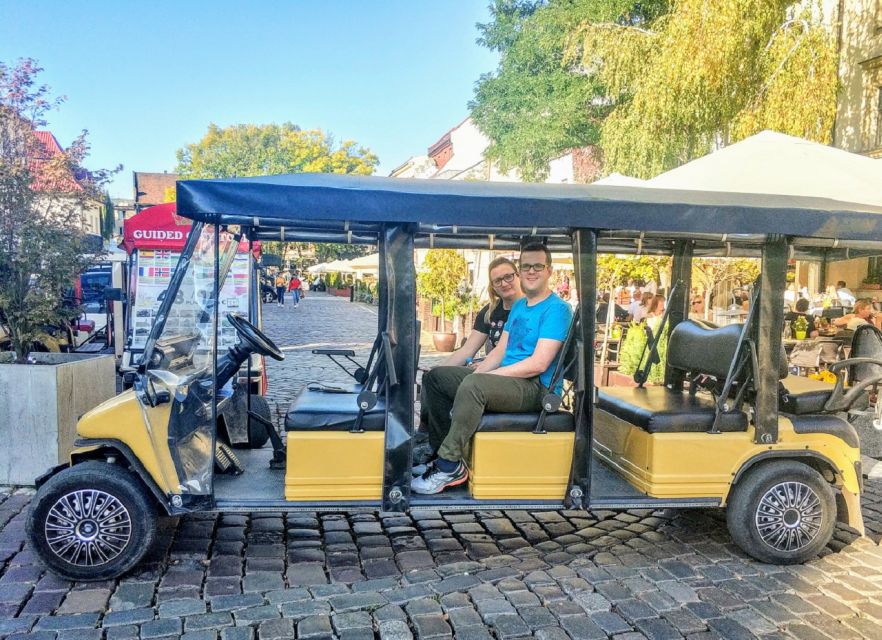
This isn’t a survival-walk kind of tour. The vehicle is part of the value, and it’s built for comfort: heated, with audio commentary in English. That means you can focus on noticing details—street patterns, building forms, the sense of where you are—without constantly stopping to translate or read.
The meeting point is straightforward: Parking Kiss&Ride in front of the Zabka store. Plan to arrive at least 10 minutes early, because once the group has entered, late arrivals can’t be accommodated and tickets become non-refundable.
Group pace: good for seeing, not perfect for lingering
Here’s the trade-off to expect: with only 3 hours total, the tour is tuned for movement and coverage. One review-style caution you should take seriously is that the schedule can leave you less time to linger and read every plaque at your own pace. If you’re the type who likes slow museum reading, come prepared to treat Schindler’s Factory as the place where you’ll focus most of your attention—and accept that some signage will be brief.
Schindler’s Factory Museum: where the story turns from places to people
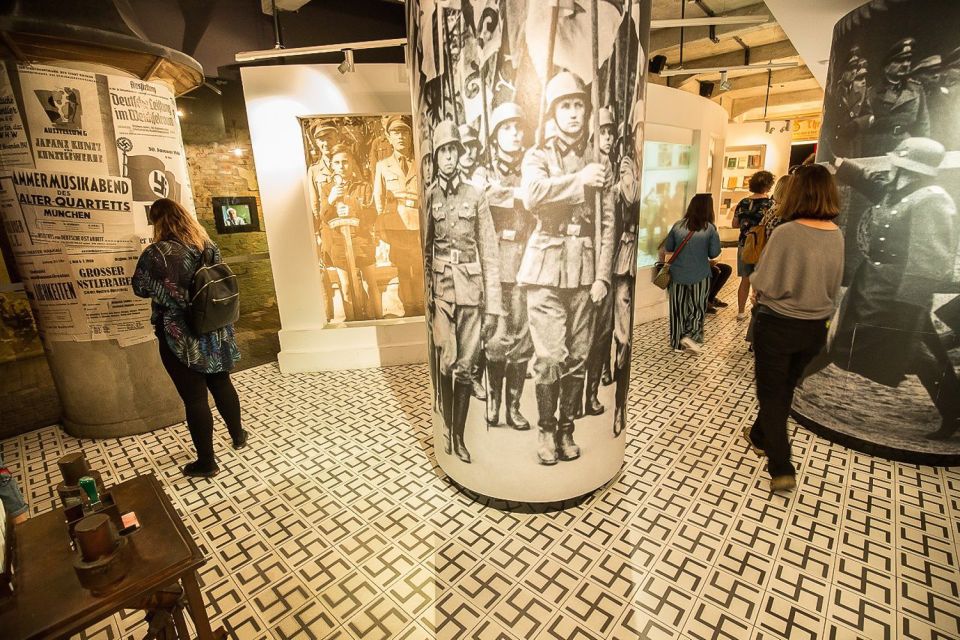
After the neighborhood ride, the tour switches gears at Schindler’s Enamel Factory, now a museum. This is where you spend time with a licensed expert guide and follow the exhibition titled Kraków under Nazi Occupation 1939–1945.
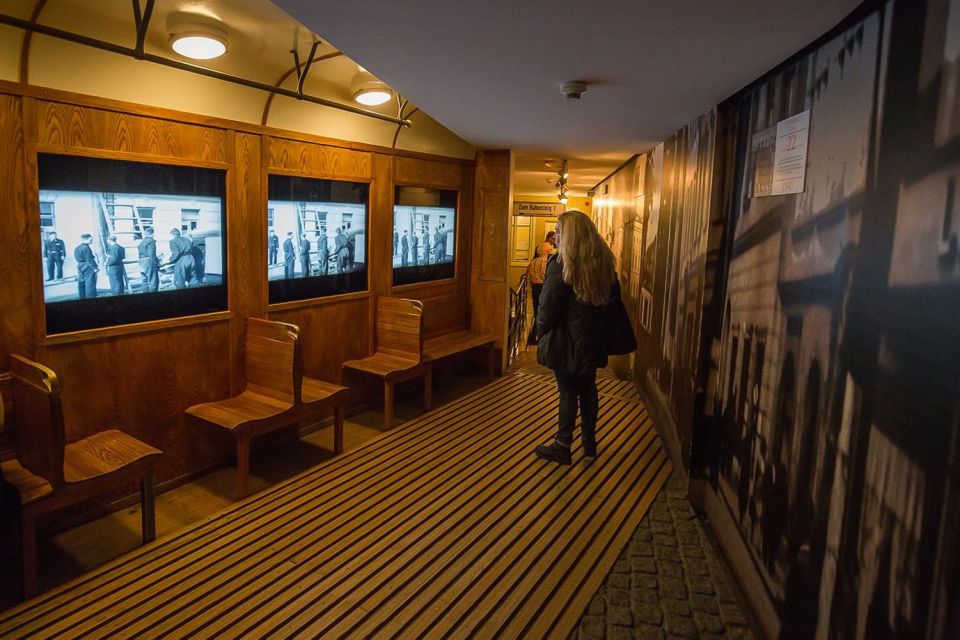
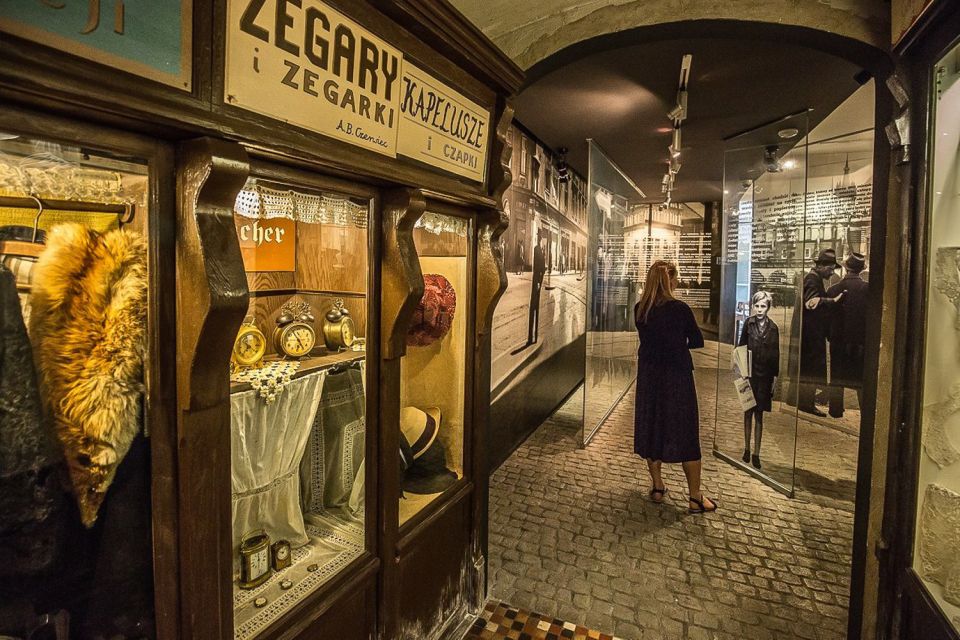
What makes this portion feel more meaningful than a standard self-guided visit is the way the exhibition is framed: you’re shown wartime life through photographs, personal objects, and reconstructed streets. Instead of only hearing the overall outline, you’re constantly pointed toward daily realities—fear, uncertainty, and the struggle to keep going.
How Schindler’s story fits into the larger occupation story
Schindler’s role here isn’t presented as a lone heroic legend. You’re shown that Oskar Schindler used his position, influence, and resources to protect Jewish workers. According to the tour description, he employed Jewish workers and used what he could to prevent deportation. The museum presentation emphasizes that more than a thousand men and women survived thanks to his courage and determination.
You’ll also hear the term Schindlerjuden, used for the people he saved. Even if you’ve heard the basics before, the guided approach helps you connect the name to something real: individual stories and objects that give the occupation’s pressure a human face.
Artifacts and reconstructions: why they matter
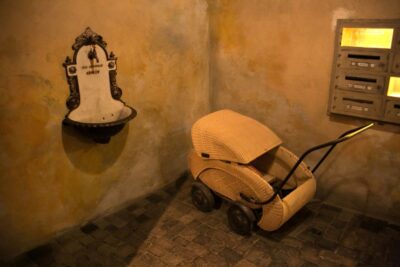
The museum is described as showing original artifacts and authentic reconstructions from the 1940s. That combination is important. Artifacts help you feel the factual weight of what happened; reconstructions help you understand what daily routines and settings might have looked like under that pressure.
And you’ll likely appreciate the pacing: the guide’s job is to connect what you’re seeing to why it mattered. It’s easier to process difficult material when someone helps you hold the threads together—especially when you’ve just spent the morning linking streets and walls to the ghetto geography.
Value and price: what you get for about $80
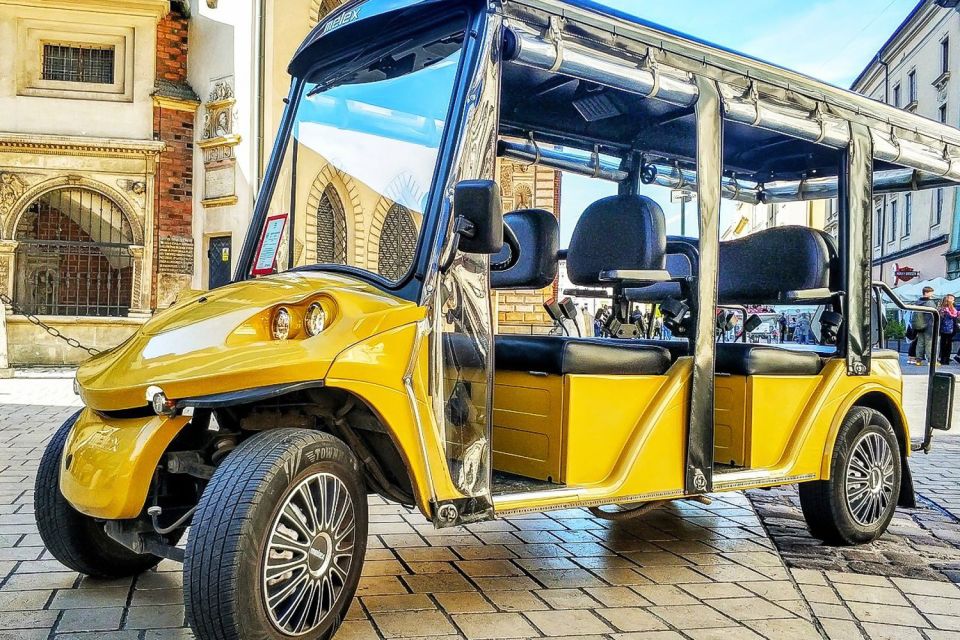
At around $80 per person for a 3-hour experience, you’re not just paying for “a cab to a museum.” You’re paying for two things that add up: transportation with interpretation, and then a guided museum visit with fast-track admission.
Here’s why that price can make sense:
- You get Krakow neighborhood context first (Kazimierz, then Podgórze), not just one museum stop.
- The cart includes English audio, which reduces the effort of trying to self-navigate.
- The museum segment includes a professional, licensed guide, which is the part that benefits most from live explanation.
If you’re trying to maximize meaning per hour, this pairing works. If you prefer long, slow reading sessions with no schedule pressure, you may find the timing a bit tight. But if you want the “where and why” as well as the “what,” the structure is strong.
Who this tour suits best (and who should rethink)
This experience fits best if you:
- want more than one stop and you like your history tied to actual streets and visible memorials
- appreciate a mix of guided explanation and self-paced audio
- want a clear museum visit with a licensed guide, not just an entry ticket
It might not be ideal if:
- you need wheelchair access (the tour is not suitable for wheelchair users)
- you’re looking for long downtime to sit and read every label on your own
If you fall somewhere in between, don’t panic. You can still get a lot from it—you just have to choose where you’ll slow down mentally: Kazimierz on the cart, or Schindler’s Factory in the museum.
Practical tips before you go
A few small things will make this run smoother.
- Wear comfortable shoes. Even though it’s mostly cart time, you’ll still move around at stops.
- Bring your camera, but also plan for brief moments rather than long photo sessions.
- Pack comfortable clothes for walking and time in museum spaces.
- Have a plan for food and drinks, since the tour does not include them.
If you like to prepare, read up lightly on the idea of Kazimierz and Podgórze as different “parts of the city” in wartime—so the route hits harder when you arrive. You don’t need a textbook, but 10 minutes of context helps.
Is this worth booking? My quick verdict
I’d book this tour if you want a single, well-timed experience that connects Krakow’s Jewish Quarter and former ghetto area with a guided, story-driven visit to Schindler’s Factory. The combo of cart-based neighborhood context plus a licensed museum guide is exactly the kind of two-part format that helps the facts stick.
If you hate tight schedules or you need a lot of quiet time for independent reading, consider whether Schindler’s Factory is your main priority and accept that the day is designed for coverage.
FAQ
FAQ
How long is the tour?
The duration is 3 hours.
Where do I meet the group?
Meet at Parking Kiss&Ride in front of the Zabka store.
What language is the tour available in?
The live tour guide and audio guide are in English.
Is there an audio guide on the golf cart?
Yes. The golf cart includes an audio guide in English.
Do I need a licensed guide inside Schindler’s Factory?
Yes. The part inside Schindler’s Factory is with a live, licensed expert guide.
What should I bring?
Bring comfortable shoes, a camera, and comfortable clothes. Food and drinks are also recommended since they aren’t included.
Is the tour wheelchair accessible?
No, the tour is not suitable for wheelchair users.