REVIEW · KRAKOW
Krakow Jewish District and Ghetto Guided Tour in a Small Group
Book on Viator →Operated by Krzysztof Blaszczyk Hussar Travel · Bookable on Viator
Krakow’s Jewish story is easiest to follow with a guide. This small-group tour is built as a clear, stop-by-stop route through key Jewish Quarter streets and the ghetto’s main landmarks, with English commentary from the start. I like that it keeps you moving through important sites without the usual wandering, and I also like the tight group size (max 10) that makes questions feel natural.
One thing to keep in mind: a lot of the stops are viewed from outside (synagogues and the pharmacy), so if you’re hoping for long interior visits, you may want to plan extra time for that on your own.
If you want the quick win—get your bearings fast—this tour is made for that.
In This Review
- Key things that make this tour worth your time
- Krakow’s Jewish District and Ghetto in 2 hours: what you’re really buying
- Small-group pacing: up to 10 people keeps it human
- Start at Szeroka Street: the Jewish Quarter’s oldest core
- What to watch for at these exterior synagogue stops
- Wolf Popper to Jan Karski: meaning beyond the walls
- Why this middle stretch feels powerful
- Plac Nowy and the JCC area: trade, institutions, daily life
- A small tip: slow down on the “in-between” stops
- Entering the ghetto story: Eagle Pharmacy and Plac Bohaterów Getta
- Why the ending sequence works
- Price and value: what $60.21 buys you (and what it doesn’t)
- Best fit: who this tour suits
- Practical tips for making the most of your 2-hour walk
- Should you book this Krakow Jewish District and Ghetto guided tour?
- FAQ
- How long is the Krakow Jewish District and Ghetto guided tour?
- What’s the group size?
- What language is the tour offered in?
- What’s the meeting point and where does the tour end?
- Do I need to buy tickets for the stops?
- What’s included in the price?
- Is a mobile ticket used?
- Is this tour good for most travelers?
- Is it easy to reach the start location?
- What if the tour is canceled due to not meeting a minimum number of travelers?
Key things that make this tour worth your time
- Small group cap of 10: quieter, more personal pacing, and fewer bottlenecks at each stop.
- Two focused zones in about 2 hours: Jewish Quarter streets first, then the ghetto’s most important public spaces.
- Multiple historically connected stops: synagogues, Jan Karski’s memorial, Plac Nowy, the JCC area, and ghetto wall remnants.
- No getting lost: you follow a guide from Szeroka 6 all the way to Plac Bohaterów Getta.
- Free entry on the timed stops listed: several sites have ticket-free viewing as part of the walk.
- Mobile ticket: simpler check-in on the day.
Krakow’s Jewish District and Ghetto in 2 hours: what you’re really buying
This is not a “sit and watch” tour. You’re paying for a guided path through places that can feel confusing if you go solo. In a short window—about 2 hours—you’ll connect the dots between older Jewish life in the Jewish Quarter and the later reality of the ghetto.
The value is in how the tour stitches together multiple landmarks with a narrative through the guide’s commentary. Even when you’re only seeing a building from outside, the stop still matters because the guide helps you understand what the site represents in Krakow’s Jewish story, and where it sits in relation to the next place.
Also, the structure helps you stay mentally organized. Instead of trying to memorize a self-guided walking route, you’ll get a sequence that moves you along the map.
You can also read our reviews of more guided tours in Krakow
Small-group pacing: up to 10 people keeps it human
The tour is capped at 10 travelers, which changes the whole feel. In small groups, guides can adjust pace if someone needs a slow minute to read a sign or figure out a direction. It’s also easier to hear the commentary without straining over a crowd.
You’ll get a tour guide service as the main included element, and that matters here because so many key stops are tied to context. A building façade or a street name isn’t always obvious on its own. With a guide, you’re not just taking photos—you’re learning what to notice.
And because the tour is listed as near public transportation, it’s easier to fit into a normal Krakow day plan without complicated logistics.
Start at Szeroka Street: the Jewish Quarter’s oldest core
The walk begins at Szeroka 6, which is a smart choice. Szeroka Street is the oldest part of Krakow’s Jewish Quarter, so it sets the right tone immediately. When a tour starts here, you’re not just dropping into history—you’re beginning in the area that shaped day-to-day Jewish life.
At the Szeroka Street stop, you’re given time to orient yourself in the neighborhood. The guide’s job here is to help you see more than streets: you’re learning how the Jewish Quarter formed a recognizable community space, with its own institutions and landmarks.
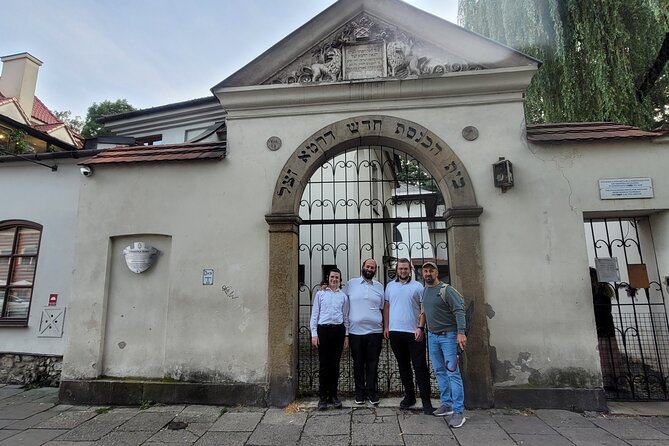
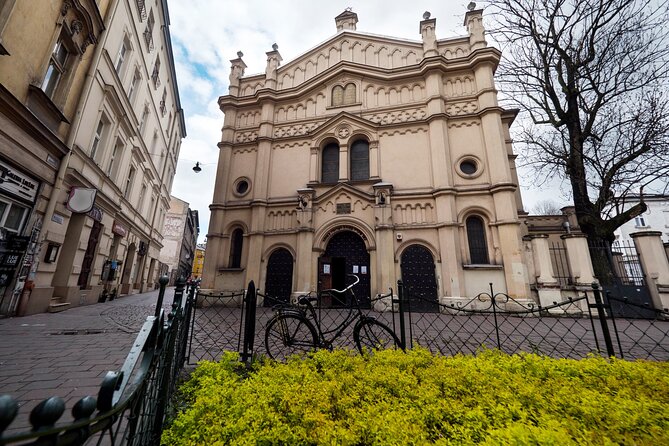
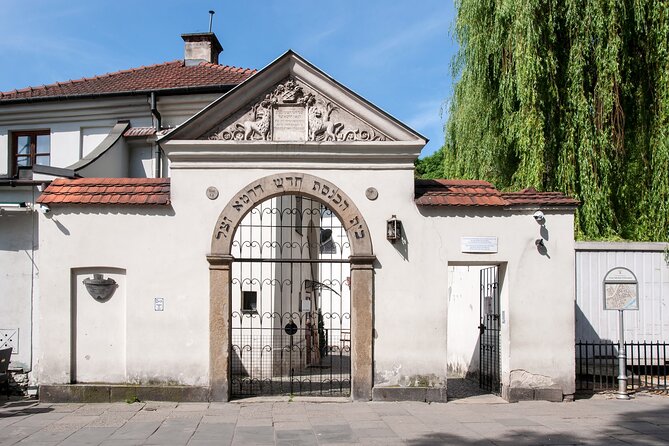
From there, the tour shifts to several synagogues you’ll view from outside, including the Remuh Synagogue (16th century) and the Old Synagogue (also known as a historic synagogue site). Even with exterior viewing, you’ll get the benefit of guided interpretation—what makes these synagogues significant, and how they fit into the bigger story of Krakow’s Jewish community.
What to watch for at these exterior synagogue stops
- Notice architectural differences the guide points out.
- Take the extra few seconds to read any nearby context signs (when present).
- Use the guide’s explanations to turn a quick glance into real understanding.
Wolf Popper to Jan Karski: meaning beyond the walls
Next comes the Wolf Popper Synagogue, listed as a 16th-century site. The stop is short, but synagogues like this deserve exactly this kind of guided attention: quick, focused framing that tells you why the building matters in Krakow’s Jewish history.
Then you’ll reach a very different kind of landmark: the Statue of Jan Karski, described as the man who tried to stop the Holocaust. This stop gives the tour a hard, human pivot. It’s not just about architecture or older community life—it’s about what followed, and about memory.
After that, the route continues past another synagogue exterior described as a 19th-century synagogue, then the High Synagogue exterior. Again, these are brief stops, but they’re placed so you don’t just “see a lot of buildings.” You’re learning how different synagogue sites fit together across time.

Why this middle stretch feels powerful
The tour’s pacing here is intentional: it moves from recognizable Jewish community landmarks to a public memorial that connects local history to the wider Holocaust story. If your brain needs a bridge from “what life looked like” to “what happened later,” this part does it well.
Plac Nowy and the JCC area: trade, institutions, daily life
One of the most practical parts of this tour is how it includes Plac Nowy, described as a center for trade in past centuries for Krakow’s Jewish community. Market squares and trade centers can be hard to appreciate on a walking tour unless someone explains what daily life looked like there. This stop helps you understand why those spaces mattered.
You’ll also see the JCC Krakow area (Community Center). That’s a different type of landmark than the synagogues. It signals community structure—organizations and shared spaces beyond places of worship.
Then the tour includes another synagogue exterior: the Izzak Synagogue (17th century) from outside. This gives the “old institutions” theme a final reinforcement before the tour transitions toward the ghetto.
A small tip: slow down on the “in-between” stops
In many tours, market squares and community centers are treated like filler. Here, they’re not. When you hit Plac Nowy and the JCC area, take a moment to look around you—open space, street layout, pedestrian flow—because the context the guide gives will make that geography feel meaningful.
Entering the ghetto story: Eagle Pharmacy and Plac Bohaterów Getta
After the Jewish Quarter stops, the tour moves into the ghetto’s story with a clear shift in tone. You’ll first encounter the Eagle Pharmacy in Krakow Ghetto, viewed from outside. Even though it’s not a long stop, pharmacies and similar everyday businesses matter because they represent how life continued under impossible conditions.
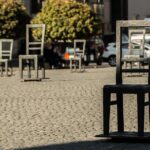
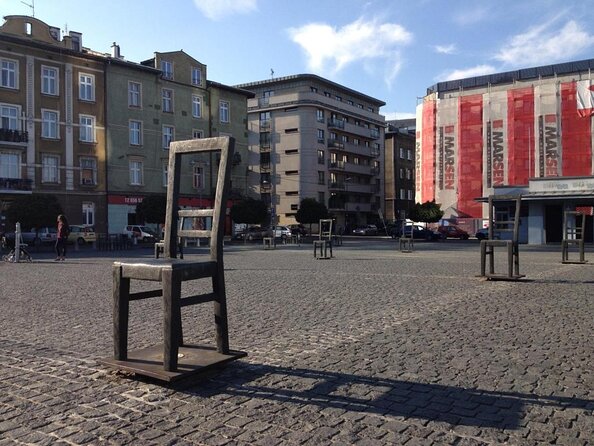
Then you’ll reach Plac Bohaterów Getta, described as the main place of Krakow Ghetto, with 10 minutes at the stop. This is where the tour lands you in the most central public space of the ghetto area, and it’s a strong final act for the walk.
Finally, you’ll see a Ghetto Wall Fragment, listed as remnants of the ghetto walls, with a short viewing time. These remnants are small compared with a full wall you might picture, but they’re impactful because they show what’s left of the borders that once controlled people’s lives.
Why the ending sequence works
The walk ends with pieces that feel increasingly “concrete”—a specific public place, then remnants of physical boundaries. It’s a logical way to close a guided tour on this topic. You’re not ending on a random street corner; you’re ending on evidence you can still point to.
Price and value: what $60.21 buys you (and what it doesn’t)
At $60.21 per person for roughly 2 hours, the price is mainly paying for organization and context: a guide, a structured route, and a small-group size that makes the experience easier to follow.
It’s not priced like a long museum pass where you’re paying for multiple paid-entry entrances. Many stops are listed as ticket-free with viewing time, and several are described from outside. That’s not a downside by default—it just means the “product” you’re buying is interpretation and navigation, not a full schedule of interior admissions.
This tour can still be excellent value if:
- You want a guided overview that links multiple sites.
- You’d rather not spend your time figuring out directions and what each location means.
- You like the idea of hitting the highlights in a short window.
One practical note: if you’re the type who plans museum visits around timing, consider that popular synagogue areas can draw long lines. Booking ahead is often the difference between smooth timing and losing chunks of your day waiting.
Best fit: who this tour suits
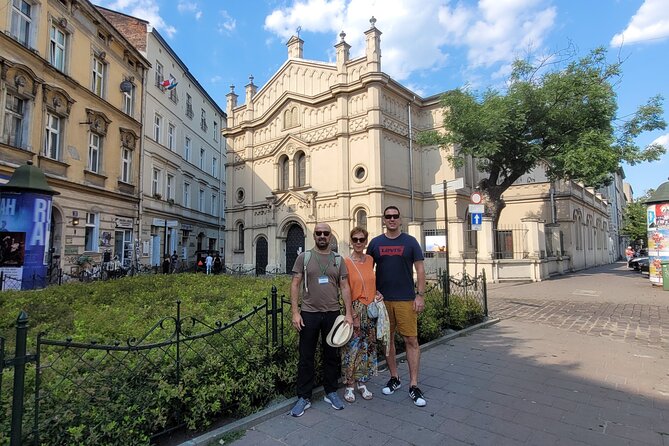
This is a strong fit for:
- First-time visitors to Krakow who want a guided introduction to Jewish Quarter and ghetto landmarks without confusion.
- Travelers who prefer a clear route rather than piecing together neighborhoods on their own.
- People who value a small group atmosphere and direct guide commentary.
It may be less ideal for you if:
- You specifically want extended interior time inside synagogues during the same tour window.
- You don’t like tours that include a lot of exterior viewing.
Practical tips for making the most of your 2-hour walk
- Wear shoes that handle city walking well. The tour is short, but you’ll cover ground between multiple stops.
- Arrive a few minutes early at Szeroka 6 so you can start right on time.
- Bring a “read the room” attitude. This is a topic with heavy weight, so staying present matters more than rushing for photos.
- If you’re combining this with other Krakow sights, give yourself some breathing space afterward. The ghetto-area stops can land emotionally harder than you expect.
Also, because the tour offers a mobile ticket, you’ll want your phone ready at the start. Confirmation is provided when you book, which helps you feel set for the day.
Should you book this Krakow Jewish District and Ghetto guided tour?
If your goal is to see the main locations and understand how they connect, I’d book it. The strongest reasons are the small-group pacing, the guided route that prevents aimless wandering, and the way the itinerary balances community landmarks with ghetto remembrance.
If you’re deciding based on expectations, set them clearly: you’ll get meaningful exterior stops, street-level context, and a guided narrative. You won’t necessarily get long interior time at multiple religious sites.
Given the 5/5 rating and the fact it’s capped at 10, this is the kind of tour you choose when you want an organized, human-scale experience that helps you walk away with a coherent understanding instead of a stack of random photos.
FAQ
How long is the Krakow Jewish District and Ghetto guided tour?
It runs for about 2 hours.
What’s the group size?
The tour is a small group with a maximum of 10 travelers.
What language is the tour offered in?
It’s offered in English.
What’s the meeting point and where does the tour end?
Meet at Szeroka 6, 31-053 Kraków, Poland. The tour ends at Plac Bohaterów Getta (Square of Ghettos Heroes), 30-527 Kraków, Poland.
Do I need to buy tickets for the stops?
Many of the listed stops are described as ticket-free. The tour also includes the guide service, and a ticket is listed as free at several stops.
What’s included in the price?
The price includes the tour guide service for a small group up to 10 people.
Is a mobile ticket used?
Yes, the tour offers a mobile ticket.
Is this tour good for most travelers?
It’s listed as that most travelers can participate.
Is it easy to reach the start location?
The meeting area is near public transportation.
What if the tour is canceled due to not meeting a minimum number of travelers?
If it’s canceled for that reason, you’ll be offered a different date/experience or a full refund.