REVIEW · KRAKOW
Kraków Holocaust Tour
Book on GetYourGuide →Operated by CHT Sp. z o.o · Bookable on GetYourGuide
One quiet street can carry a lot of weight. This Kraków Holocaust Tour is interesting because it covers the entire Jewish ghetto on foot, using a historian-led, place-by-place explanation of how Nazi ghettos were designed and how daily life worked. I like that so much of the area still looks like the late-war period, so the story lands in a real setting, not just on a map. I also appreciate the focus on specific sites like the wall fragments and the ending museum stop. A possible drawback: the tour runs in Spanish, so if you need another language, you may struggle.
You’ll meet the guide at the meeting point marked by a gray umbrella. From there, the group moves through key corners of the ghetto—structures, institutions, and everyday locations—then finishes at the well-known “Pharmacy under the Eagle,” one of the major local museums tied to this subject.
In This Review
- Key things I’d mark on your “must-not-miss” list
- Kraków ghetto walking tour: what it’s really about
- Before you go: good shoes and the right expectations
- Meeting point in Kraków: the gray umbrella and quick start
- Stop 1: fragments of the wall and the purpose of enclosure
- Why this stop matters
- Stop 2: Ghetto Heroes Square (Square of Chairs)
- One practical note
- Stop 3: major buildings tied to meetings, resistance, and policing
- Stop 4: location of the old doors and the control of movement
- Tip for getting more from this stop
- Stop 5: Judenrats and the difficult machinery of administration
- Stop 6: labor organizations, hospitals, and prison
- Why I think this tour is stronger than “a few highlight photos”
- Stop 7: synagogue, factories, and orphanages
- The big idea behind the whole route: why the preservation is powerful
- Ending at the Pharmacy under the Eagle: why the last stop matters
- Price and value: is $16 for 2 hours fair?
- Who this tour is best for
- Should you book the Kraków Holocaust Tour?
- FAQ
- How long is the Kraków Holocaust Tour?
- How much does the tour cost?
- What language is the live guide?
- What does the tour include?
- Is food or drinks included?
- Where do I meet the guide?
- Is the tour wheelchair accessible?
- What should I bring?
- What cancellation options are available?
Key things I’d mark on your “must-not-miss” list
- Full-ghetto coverage: one of the only Kraków tours that walks the whole old ghetto area.
- How the system worked: not just dates, but how Nazi ghetto control was organized.
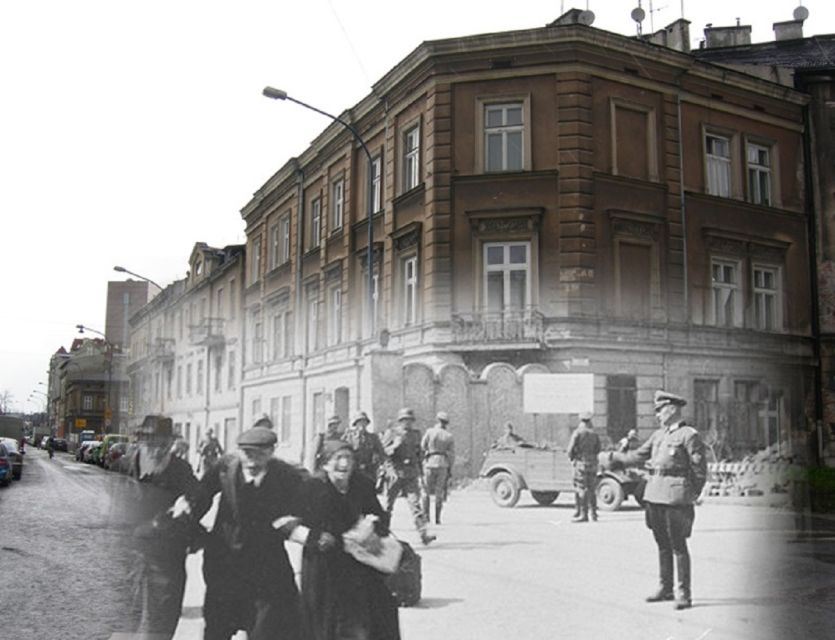
- Survival of the buildings: many houses and institutional spaces still resemble what existed around 1941–1943.
- Stop-by-stop details: wall fragments, old doors, Judenrats, labor, hospitals, a prison, and more.
- A strong ending museum visit: the tour culminates at the Pharmacy under the Eagle.
- Graduate guide background: you’re led by a professional with a degree in Geography and History.
Kraków ghetto walking tour: what it’s really about
This tour is built around a simple idea: if you want to understand how Nazi ghettos operated, you need to see the physical layout and the institutional functions side by side. Kraków’s ghetto district has largely survived in close-to-original form, including a big share of the housing stock and many organizational buildings. That matters, because your brain can connect the explanation to what stands in front of you.
The tour’s structure also helps. You’re not handed a long speech and released. You move through the ghetto’s spaces and learn what each one did—meeting points, administration, policing, labor, medical facilities, and confinement. That’s the difference between hearing about history and understanding the machinery behind it.
At $16 per person for a 2-hour guided walk, this is priced in a way that feels realistic for a serious subject. You’re not paying for transportation or extra add-ons like food. Instead, you’re paying for a live guide with academic training who can point out the meaning of specific locations and explain how they fit into the Nazi plan. For many visitors, that “interpretation value” is exactly what they’re looking for.
You can also read our reviews of more tours and experiences in Krakow.
Before you go: good shoes and the right expectations
Comfort matters here more than on a light sightseeing stroll. You’ll be on your feet for about 2 hours, and the tour is designed to cover a lot of the old ghetto area. Wear comfortable shoes. If you’re prone to fatigue walking on uneven surfaces, plan a slower pace afterward.
Also, set your expectations for tone. This is a Holocaust-focused tour about the Nazi occupation system and what daily life was like inside the ghetto. It’s educational, but it’s not entertainment. If you prefer upbeat travel energy, this may feel heavy.
Finally, accept the language setup. The live guide provides narration in Spanish. That’s not a deal-breaker for everyone, but it’s important. If you can understand Spanish conversationally, you’ll likely follow the connections between sites more easily.
Meeting point in Kraków: the gray umbrella and quick start
You’ll find the guide using a clear, easy marker: a gray umbrella. This may sound like a small thing, but it helps. When you arrive at a historic area, it’s often the little logistics that cause stress. Here, the meeting point description is straightforward, so you can spend your energy on the tour itself.
Once you’re with the group, the guide’s approach becomes the main focus. Expect a guided route that links each location to the broader question: what was the purpose of the ghetto system, and how did it shape everyday life?
Stop 1: fragments of the wall and the purpose of enclosure
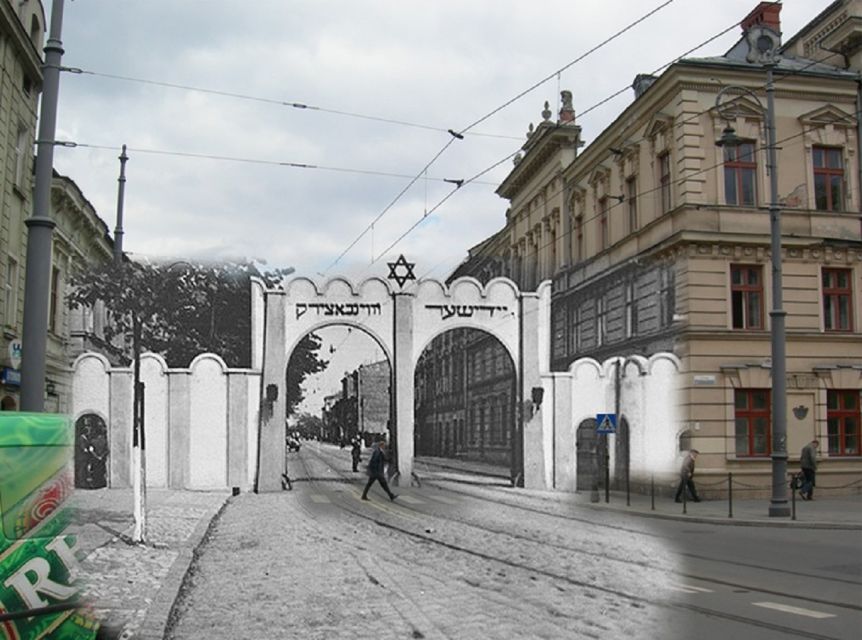
The tour begins by showing you the two fragments of the wall. Wall pieces can look like relics, but in this context they function like evidence. They show that segregation wasn’t vague or rhetorical—it was enforced through physical barriers.
This is where the tour’s “how the system worked” theme starts to feel concrete. The explanation of why ghettos existed and how they were controlled becomes easier to grasp when you can literally see the boundary logic in front of you. You’ll get the sense of how enclosure created limits on movement, resources, and autonomy.
Why this stop matters
If you’re trying to understand the Nazi thought process behind ghetto creation, enclosure is the first step. The wall fragments act like a visual shortcut from policy to daily experience.

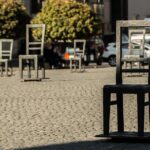
Stop 2: Ghetto Heroes Square (Square of Chairs)
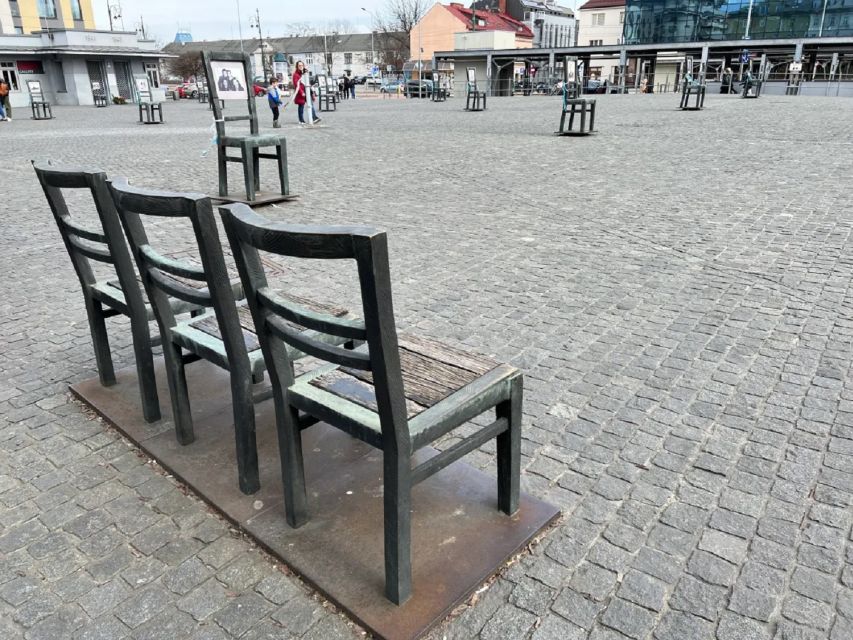
Next comes Ghetto Heroes Square, also known as the Square of Chairs. Squares are often easy to overlook on walking tours because they don’t always look like “destination history.” But in a ghetto context, a public space becomes meaningful: it’s where the community’s reality meets the outside world’s control.
This stop helps break the route into human scale. After the wall fragments, the explanation can shift from barrier mechanics to how people experienced life in a confined district—through community spaces, visible gatherings, and public landmarks.
One practical note
Squares are open. If the weather is rough, you may feel it more here than in narrow streets.
Stop 3: major buildings tied to meetings, resistance, and policing
From there, you’ll move to important buildings, including spaces connected to intellectual meetings, resistance, and police agencies. That set of categories is deliberate. It shows that even under brutal restrictions, organizations and networks existed—and the Nazis also built their enforcement infrastructure with purpose.
I like this part because it prevents the story from becoming one-note. A ghetto was not only a site of suffering; it was also a place where people organized, communicated, and resisted. At the same time, the occupation forces created institutions that monitored, restricted, and punished.
When you see these building types in the same route, you can feel the contrast without the guide needing to overdramatize. You’re walking through competing systems—community initiative versus state violence.
Stop 4: location of the old doors and the control of movement
You’ll also visit the location of the old doors. Doorways are small compared to walls and squares, but the function is huge. Doors determine who passes, when, and under what conditions. In a ghetto system, that kind of control becomes part of daily life.
This is one of the places where the tour’s focus on “purpose” comes alive. Instead of only talking about confinement in the abstract, the guide connects the idea of controlled access to what it likely meant for routines—entering, leaving, waiting, and complying with rules.
Tip for getting more from this stop
Try to picture the flow. Door locations aren’t just historical markers; they’re points where movement decisions were made.
Stop 5: Judenrats and the difficult machinery of administration
The tour then addresses the Judenrats. This is a topic that often gets misunderstood, so it’s valuable that the tour frames it in terms of what ghettos were: systems designed to control Jewish life under occupation.
I appreciate that the tour doesn’t treat the Judenrats as a side note. By placing them after walls, doors, and policing-related buildings, the story becomes more logical: administration followed the boundaries. Once you’re enclosed and monitored, you still need internal structures to manage labor allocation, community organization, and governance under extreme constraints.
This stop also supports the tour’s bigger theme: ghettos were not accidental. They were built as tools.
Stop 6: labor organizations, hospitals, and prison
Next, you’ll see several core institution types:
- Labor organizations
- Hospitals
- Prison
This sequence matters because it mirrors the Nazi system’s range of needs. Occupation authorities needed bodies to work, medical care to maintain enough labor capacity, and confinement to manage punishment and threats to control.
By showing labor, health, and imprisonment within the ghetto context, the tour helps you understand how everything was connected. It also answers an uncomfortable question: what did daily life look like when work and sickness and punishment were all built into the district’s structure?
Why I think this tour is stronger than “a few highlight photos”
A lot of Holocaust tours stop at monuments and a couple of buildings. Here, you get a working map of the system’s functions. That’s not just “more sites.” It’s a clearer explanation of the machinery.
Stop 7: synagogue, factories, and orphanages
The tour continues to places tied to community religion and daily existence, including a synagogue, factories, and orphanages.
These stops broaden the picture from institutions of control to institutions tied to human life: worship, production, and children’s survival. The presence of factories emphasizes forced economic structure, not normal industry. Orphanages bring the story down to the most vulnerable reality in the district.
I find these stops important because they remind you that ghetto life was made of routines—sometimes enforced, sometimes communal, often both at once. You’re not only learning about what was taken. You’re learning about what had to keep going, even under crushing conditions.
The big idea behind the whole route: why the preservation is powerful
A major reason this tour hits harder than many others is the ghetto area’s preserved look. Many buildings resemble their appearance from 1941 to 1943. That’s not a “fun fact.” It changes the way the tour feels.
When the buildings are still there, you’re not mentally translating everything. Your mind can compare the guide’s explanation to real architectural choices: which buildings look like institutional spaces, where the administrative logic would function, and how community life could exist in the same physical frame as coercion.
The result is a dramatic atmosphere tied directly to the places—not to artificial effects.
Ending at the Pharmacy under the Eagle: why the last stop matters
The tour finishes at the famous pharmacy under the eagle. You’ll find this museum stop positioned as one of the city’s most important places on the subject.
A museum ending works for two reasons. First, it gives you time to slow down after the walking route. Second, it helps you translate the earlier stops into a broader historical picture through interpretation and exhibits.
If you only did this one tour and wanted the strongest “closing moment,” ending at a museum like this is a smart choice. It lets the guided route become something you can revisit afterward, when you’re back in your hotel processing what you saw.
Price and value: is $16 for 2 hours fair?
At $16 per person for a 2-hour live tour, you’re paying for several things at once:
- a live guide who’s educated in Geography and History
- a historian-led approach to explaining the ghetto’s purpose and function
- a route that covers the entire old ghetto area, with multiple institution stops
- an ending museum visit at the Pharmacy under the Eagle
You’re not paying for food or drinks, which keeps the pricing more straightforward. If you’re the kind of traveler who prefers guided interpretation over standalone wandering, the value is strong. You’ll get more than “what to look at.” You’ll get a framework for why it was built and what it meant for daily life.
The biggest hidden value is time. In a historic area, it’s easy to get lost or miss the relationships between buildings. A guided route like this saves you from that.
Who this tour is best for
This is a great fit if you:
- want a structured explanation of how ghettos functioned
- prefer walking through real surviving sites rather than only reading plaques
- want the most complete ghetto coverage you can find in Kraków
- can follow narration in Spanish without needing translation
It may feel less ideal if you:
- need a language other than Spanish
- want a lighter, more casual sightseeing pace
- are easily overwhelmed by intense Holocaust subject matter
Should you book the Kraków Holocaust Tour?
I’d book it if you’re looking for the most complete old-ghetto route available in Kraków and you want the story explained as a system, not only as a set of tragic scenes. The strength here is that the area is well preserved, so the guide can point out how daily life and Nazi control were built into the district’s layout.
If Spanish narration is a concern, treat that as your main decision point. If you’re comfortable with Spanish, this one is a high-value way to understand the Kraków ghetto beyond surface-level facts.
FAQ
How long is the Kraków Holocaust Tour?
The tour lasts 2 hours.
How much does the tour cost?
It’s listed at $16 per person.
What language is the live guide?
The tour is provided with a live guide in Spanish.
What does the tour include?
It includes a graduate guide in Geography and History.
Is food or drinks included?
No. Food and drinks are not included.
Where do I meet the guide?
The guide will be carrying a gray umbrella.
Is the tour wheelchair accessible?
Yes, it is listed as wheelchair accessible.
What should I bring?
Wear comfortable shoes for walking.
What cancellation options are available?
Free cancellation is available up to 24 hours in advance for a full refund.