REVIEW · KRAKOW
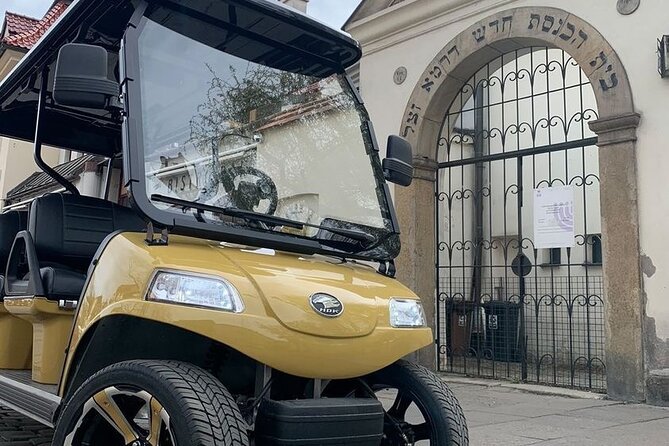
Krakow Guided Tour by Electric Golf Cart
Book on Viator →Operated by Auschwitz-Krakow Tours · Bookable on Viator
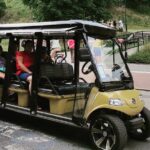
A city like Krakow needs efficient time, and this electric cart route delivers. You ride past major WWII memorial spots, Jewish heritage landmarks in Kazimierz, and top sights like Wawel—without the marathon walking. It’s a smooth way to get your bearings fast and still hit the meaningful stops.
I love that you get a real English-speaking driver plus an English audio guide, so you’re not stuck with just one track of information. I also like the built-in flexibility for photos and short breaks, like when the driver may stop briefly for zapiekanki in Market Square.
One thing to consider: a lot of the stops are “see from the cart” rather than “go inside,” and several sights have admission not included. If you want deep time inside museums and synagogues, you may need a second day.
In This Review
- Key highlights worth planning for
- Electric golf cart touring: why this route works so well
- Price and value: what you get for $37.99
- The first impression: driving past Schindler’s Factory and Ghetto Heroes Square
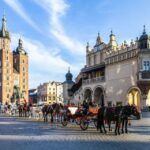
- Market Square without wasting time: zapiekanki and quick viewing
- Jewish heritage in Kazimierz: Old Synagogue, Kupa Synagogue, and more
- Wawel views from the cart: seeing the symbol without entering
- Plac Wolnica and the ghetto wall: where the route gets heavy
- Podgórze churches: St. Joseph, Skałka, and Corpus Christi
- The Kazimierz synagogue circuit: Tempel, Izaak, High Synagogue, Popper, and Remuh
- Krakus Mound: the panorama break that makes the tour feel complete
- Barbican and Matejko Square: quick hits of defense and memorial
- Who this tour fits best (and who should consider adding more time)
- Should you book this Krakow electric cart tour?
- FAQ
- How long is the Krakow guided tour by electric golf cart?
- What language is the tour offered in?
- How much does the tour cost?
- Is the tour ticket mobile?
- Are admission tickets included for all stops?
- Can you enter Wawel Royal Castle and the synagogues during the tour?
- Is time set aside for photos?
- Are water and snacks included?
- What is the cancellation policy?
Key highlights worth planning for
- Electric cart pace: You cover far more ground in about 1 hour 30 minutes to 2 hours than walking alone.
- English commentary support: An English audio guide is included, and your English-speaking driver can add extra context (one driver named Philippe was singled out for helpful commentary).
- Fast photo strategy: You’ll have time for photos, and you can ask the guide for quick stops if you want a few extra minutes.
- WWII landmarks in the route: You pass places tied to the Kraków Ghetto, including the Ghetto Heroes Square area and the preserved wall segment with its commemorative plaque.
- A snack moment in Market Square: If you ask, the driver can stop for zapiekanki for about 5–10 minutes.
- Views from Wawel and Krakus Mound: You’ll see Wawel from the cart and get a chance to go up Krakus Mound for a panorama.
Electric golf cart touring: why this route works so well
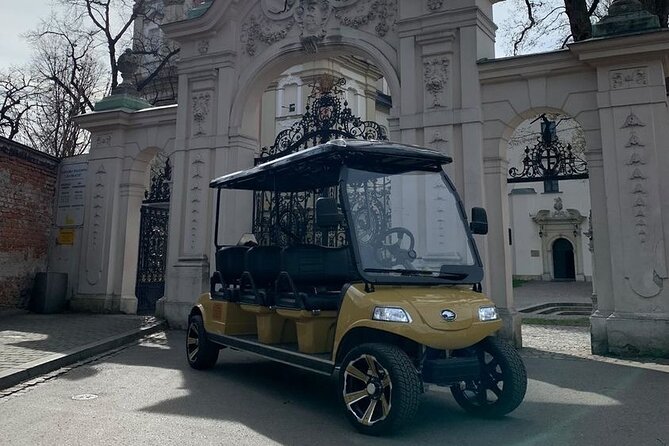
This tour is built for people who want big highlights without burning half a day on logistics and sidewalks. The ride is on an electric golf cart, so you can keep your energy for the sights that deserve your full attention—especially Kazimierz and the Podgórze side of town.
The cart experience also helps you stay present. When you’re not constantly checking street directions, you’re free to notice details: the squares’ names, the positioning of landmarks, and how the ghetto memorial areas sit in modern Krakow.
It’s also practical for timing. At roughly 1 hour 30 minutes to 2 hours, it’s long enough to feel like a real tour, but short enough that you can still plan a museum visit or a long dinner afterward.
You can also read our reviews of more guided tours in Krakow
Price and value: what you get for $37.99
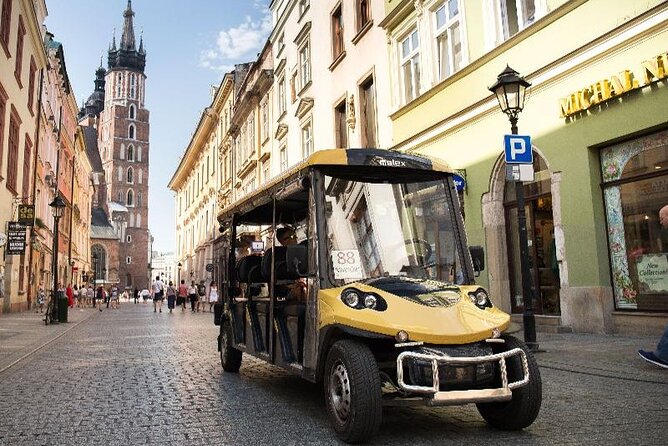
At $37.99 per person, you’re paying for guided movement through multiple neighborhoods with English support, plus photo time. The included English audio guide and English-speaking driver are the main value drivers, because they turn a “drive-by highlights” route into something you can follow.
You should also understand what’s not included. Bottled water and snacks aren’t included, and admission tickets are explicitly not included for several stops. Some locations are simply not entered at all—like parts tied to Wawel and certain synagogues—so the cost is for orientation and viewing, not for a stack of museum tickets.
Group size matters too. The tour caps at 47 travelers, which typically keeps the experience from feeling like a long bus cattle line. In at least some cases, drivers may also help with dropping you near where you want to be afterward (one driver named Andrzej was praised for being flexible with drop-off).
The first impression: driving past Schindler’s Factory and Ghetto Heroes Square
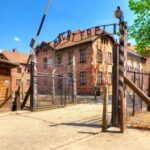
Early on, you’ll head toward the Fabryka Emalia Oskara Schindlera area. The cart route goes through the famous Oskar Schindler’s Factory area, but you don’t get an admission ticket here. That means you’re not doing a full interior visit as part of this stop—you’re getting the location context fast.
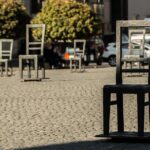
Next comes Ghetto Heroes Square (Plac Bohaterów Getta). This is one of those places where Krakow’s layers of history are right in front of you. The square is tied to executions and displacement, and it previously carried other names, including Plac Zgody, before being renamed to commemorate events during the liquidation of the Kraków Ghetto in 1943.
What’s valuable for you here is the sequencing. You’re not jumping into a separate history day; you’re being led along a story as you go—starting with a WWII-era reminder, then moving toward the broader ghetto geography you’ll see again later along the route.
Market Square without wasting time: zapiekanki and quick viewing
Krakow’s Market Square stop is short, but it’s useful. You cross and visually orient yourself in the center, and the driver can stop for the best snack in Krakow: zapiekanki. The time window is typically 5–10 minutes, which is just enough to grab food without turning the tour into a slow meal.
A practical note: snacks aren’t included. That’s not a problem if you plan for it. I’d treat this like a bonus tasting window, not a meal replacement—especially since you’ll have free church stops afterward where you might want to keep your attention.
If you’re hungry, don’t wait until you’re starving. This is one of the few places on the route where you can count on a quick food option being offered directly by the driver.
Jewish heritage in Kazimierz: Old Synagogue, Kupa Synagogue, and more
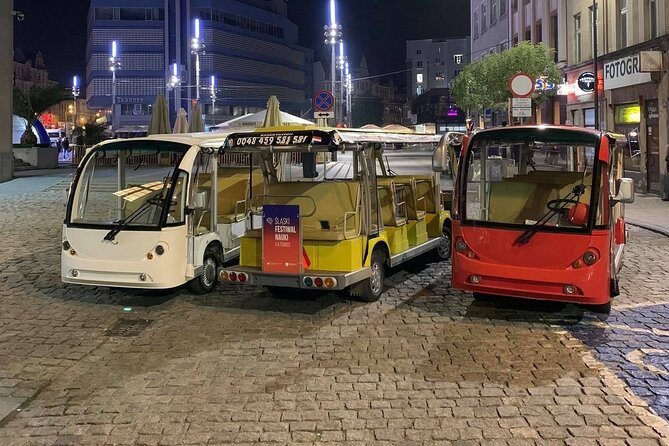
A big chunk of the tour focuses on Kazimierz, Krakow’s historic Jewish district. The route uses a “look and learn” style rather than “enter and linger,” and it’s important to match your expectations.
You’ll pass by the Old Synagogue (Synagoga Stara) in Kazimierz, and the tour notes you can’t enter during the experience. It’s described as the oldest synagogue building still standing in Poland and a precious European landmark of Jewish architecture. You’re seeing it as part of your route context, not as a full architectural interior visit.
You’ll also pass Kupa Synagogue (Synagoga Kupa), founded in 1643 and described as the last synagogue built in the independent city of Kazimierz. Again, the tour indicates entrance isn’t possible during the experience.
I like this approach for you if your goal is to understand what’s where and how the district’s landmarks relate to each other. If your goal is photography-heavy architecture study or deep religious history inside the buildings, you’ll likely want to add a separate ticketed visit on another day.
Wawel views from the cart: seeing the symbol without entering
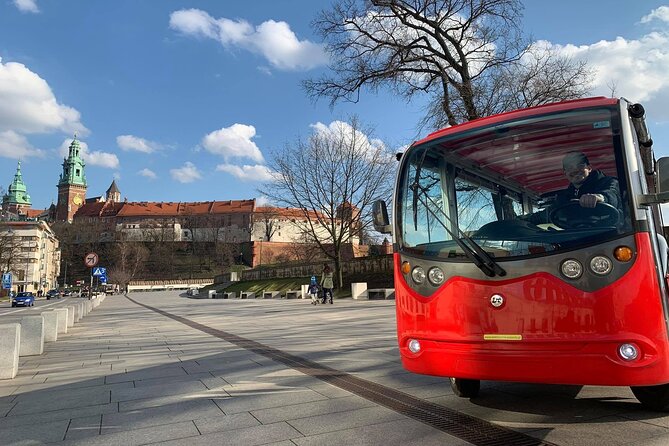
The tour also includes Wawel Royal Castle and Wawel Hill. You’ll see it from the golf cart, but you won’t enter the castle. That’s clear up front, and it shapes how you should think about this stop.
Even from outside, Wawel matters. The site is framed as the most historically and culturally significant location in Poland, with a fortified residency on the Vistula River. It was established under King Casimir III the Great and expanded over centuries into structures around an Italian-styled courtyard, spanning multiple European architectural periods.
For many people, seeing Wawel from the cart is the perfect “first meeting.” You learn what it feels like to stand near the hill, even if you save the interior exploration for another time when you can slow down.
Plac Wolnica and the ghetto wall: where the route gets heavy
After Wawel, you pass through Plac Wolnica in Kazimierz. The tour describes it as once matching the size and grandeur of Krakow’s Main Market Square, with measurements of 195m by 195m. It also highlights the square’s old role: administrative and judicial authorities of Kazimierz were based here, and market stalls once sold goods ranging from fur and tobacco to salt and amber.
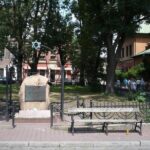
Then the tone shifts in a serious way. You’ll stop briefly near a 12-metre stretch of the original ghetto wall, with a commemorative plaque raised in 1983. The plaque text is in Hebrew and Polish and remembers those who lived, suffered, and died, marking the start of the final journey to the death camps.
Right after that, the route includes Eagle Pharmacy Museum (under number 18 on Bohaterów Getta Square). The tour provides specifics that make the stop more than just a name on a map: Jozef Pankiewicz ran the pharmacy before Tadeusz Pankiewicz took over, and the pharmacy served both Polish and Jewish residents. During the Podgórze ghetto period, it’s described as the only pharmacy within the ghetto borders, and the proprietor was described as the only Pole with rights to stay in it.
This part is valuable because it anchors you. You’re seeing ordinary street-level geography, but it’s the setting for extraordinary events. The cart format keeps the pace moving, which can be emotionally intense—so take a breath when you get a photo pause and let the meaning land.
Podgórze churches: St. Joseph, Skałka, and Corpus Christi
This tour does something smart: it balances the weightier WWII stops with classic Krakow religious architecture. These church stops are short, but they’re scheduled with enough time to notice what’s different.
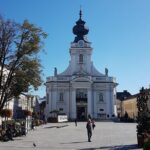
First is Church of St. Joseph (Kościół św. Józefa). It’s a historic Catholic church in the Podgórze district, located on Podgórski Square. The tour gives about 5 minutes and notes admission is free.
Next comes Church on the Rock (Kosciol na Skalce), also known as Skałka. This is described as a small outcrop with a Pauline monastery. The tour highlights the story of Saint Stanislaus of Szczepanów, who was slain there in 1079, leading to the king’s exile and eventual canonization. This stop has about 10 minutes, and admission is free.
Finally, you pass Corpus Christi Church (Kosciol Bozego Ciala). It’s described as erected in stages from 1340 to about the mid-15th century, intended as a monastery church with monastic cemetery nearby. The tour also notes that King Władysław II Jagiełło gave it to the Canons Regular of the Lateran in 1404. Like the others, it’s about 10 minutes and admission is free.
For you, the value here is perspective. These stops remind you that Krakow isn’t only wartime memory. It’s also a working city with places of faith that have existed across centuries.
The Kazimierz synagogue circuit: Tempel, Izaak, High Synagogue, Popper, and Remuh
The tour’s Kazimierz portion doesn’t focus on one synagogue. It strings together several, which helps you understand how the district developed as a network of communities and traditions.
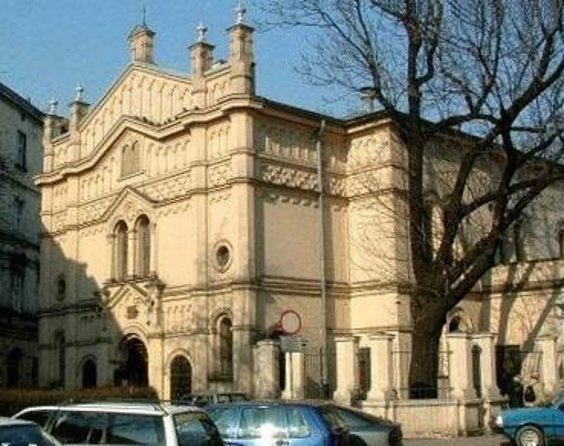
You’ll encounter the Tempel Synagogue, described as both a major worship place and a center of Jewish culture that hosts concerts and meetings, especially during the Festival.
You’ll also pass Izaak Synagogue (Synagoga Izaaka), founded in 1644 and designed by Italian-born architect Francesco Olivierri. The tour links the synagogue to its donor, Izaak Jakubowicz, also called Isaac the Rich.
Next is the High Synagogue, an inactive 16th-century Orthodox synagogue. It’s described as the tallest synagogue in the city, with Late Renaissance architecture and a note about why it earned its name.
Then comes Wolf Popper Synagogue (Poppera). The tour describes its origin in the early 17th century, funded by Wolf “The Stork” Popper. It also includes a striking detail about the entrance doors depicting an eagle, leopard, lion, and buck deer. Today, it’s described as serving as a bookshop and art gallery in the women’s area upstairs.
Finally, the route includes Remuh Synagogue (Synagoga Remu). The tour notes it’s a 16th-century Jewish temple, the smallest historic synagogue in Kazimierz, and named after Rabbi Moses Isserles using the ReMA acronym pronounced ReMU. It also says Remuh is currently one of two active synagogues in Krakow, and it lists admission as not included.
Here’s how to plan your expectations: this segment is best for orientation and context. If you’re the type who wants interior visits, programs, or a longer look at religious spaces, you’ll want to use this tour as your groundwork and then pick one or two places for a return visit.
Krakus Mound: the panorama break that makes the tour feel complete
One of the best “you’ll thank yourself later” stops is Krakus Mound (kopiec Krakusa). The tour gives about 20 minutes, and admission is free. You can go up the hill, and the description emphasizes the city panorama from Lasota Hill, around 3 kilometres (about 2 miles) south of the city center.
Krakus Mound is also explained as a tumulus linked to a local legend about King Krakus. You get a mix of myth + geography + views. It’s not only scenic—it’s a mental reset after the WWII-heavy route pieces.
This is the stop where I’d slow down mentally. Take your photos, then just look around. From the cart tour’s vantage, Krakow’s neighborhoods can feel like separate worlds; from the mound, the city starts to feel like one connected place.
Barbican and Matejko Square: quick hits of defense and memorial
Near the end, you get two classic Old Town contrast stops.
First is the Barbican (and the Museum of Krakow). It’s described as an element of medieval defensive construction, usually a round brick building protruding from the city wall and connected to the city gate via a sheltered passage. Your time is short—about 1 minute—and admission is listed as not included, so think of it as a pass-and-photo moment.
Then the route heads to Matejko Square. Here you’ll see the Grunwald Monument, described as an equestrian statue of King Władysław II Jagiełło erected in 1910 to mark the 500th anniversary of the Battle of Grunwald (1410). The monument’s story is also part of the viewing: demolished in 1939, reconstructed in 1976. In front is the Tomb of the Unknown Soldier from 1976.
Even if you don’t know the full background, this section helps you connect Krakow’s medieval and national memory with what you saw earlier in the ghetto areas. The tour’s structure is doing that work for you.
Who this tour fits best (and who should consider adding more time)
This electric cart tour is a good fit if you want:
- A guided orientation across multiple neighborhoods quickly
- A mix of WWII context + Kazimierz heritage + key city sights
- A route that supports photo stops and short breaks without tiring you out
It’s less ideal if you want to:
- Spend long, ticketed time inside many sites (the tour states no entry is possible for the Old Synagogue, Kupa Synagogue, and Wawel Royal Castle)
- Do a deep dive museum day all in one go
If you’re traveling with limited mobility or you just don’t want to spend hours on your feet, the electric cart format helps a lot. One review also called out the cart as comfortable and noted blankets, which is a nice touch for staying warm during the ride.
And if you’re a planner type, book ahead. The tour notes that it’s commonly booked around 58 days in advance, so you’ll likely get better timing by reserving earlier rather than waiting.
Should you book this Krakow electric cart tour?
If your goal is to see a lot of Krakow’s most important areas in one efficient, English-guided ride, I’d say yes. The combination of an English-speaking driver, audio guide, and a route that highlights both Jewish heritage and WWII memorial geography makes it strong value for the time.
I’d book it if you’re also willing to treat it as a “first look.” You’ll see many landmarks from the outside, and some entrances require separate tickets or aren’t possible during the tour. Then, you can choose one or two stops to revisit on your own when you want longer time.
If you already know you want full interior visits to synagogues and castles during a single day, consider adding a different, ticketed day plan. For most people, though, this electric cart route is an excellent way to get the story straight and move through Krakow with less guesswork.
FAQ
How long is the Krakow guided tour by electric golf cart?
It runs about 1 hour 30 minutes to 2 hours.
What language is the tour offered in?
The tour is offered in English, including an English-speaking driver and an English audio guide.
How much does the tour cost?
The price is $37.99 per person.
Is the tour ticket mobile?
Yes, the tour uses a mobile ticket.
Are admission tickets included for all stops?
No. Admission tickets are listed as not included for several stops, including Fabryka Emalia Oskara Schindlera, Market Square snack time, Wawel Castle (view only), and many synagogue-related stops. Some churches on the route are marked as admission free.
Can you enter Wawel Royal Castle and the synagogues during the tour?
The tour states it is not possible to enter the Old Synagogue, Kupa Synagogue, and Wawel Royal Castle. For other synagogue stops, admission is sometimes not included, so you may need separate tickets if entry is possible on your own.
Is time set aside for photos?
Yes. The included experience mentions time for photos.
Are water and snacks included?
No. Bottled water and snacks are not included.
What is the cancellation policy?
You can cancel for a full refund up to 24 hours before the experience starts. If you cancel less than 24 hours before, the amount paid is not refunded.