REVIEW · KRAKOW
Kazimierz District, the Wawel Hill and Cracow Old Town
Book on Viator →Operated by Polonia Y Centro Europa · Bookable on Viator
Krakow clicks fast on this guided walk. I like the way it anchors you in Kazimierz first, with Jewish history at Szeroka Street and the chance to step into Remuh Synagogue and its adjacent cemetery. I also like that the whisper system keeps the guide easy to hear, even when you’re moving through busy corners. One caution: the $65 price covers the guided experience, but a few major sights have optional admission fees if you want to go inside.
This is a small, private tour, so it’s only your group and your guide can keep the pace right for you. You’ll use a mobile ticket, start at Szeroka 40 at 9:30 am, and finish near Kraków Barbican at Basztowa. It’s also not recommended for travelers with impaired mobility, since it’s a walking-heavy old-town route.
In This Review
- Key things that make this Krakow walk work
- Starting in Kazimierz: Remuh Synagogue sets the tone
- Kazimierz streets, Nowy Square, and a Schindler’s List patio photo moment
- Wawel Royal Castle courtyard: Renaissance architecture at a walkable pace
- Wawel Cathedral: optional entry to coronations and royal burial
- Franciscan basilica on Kanonicza and Grodzka: stained glass details you’ll want to spot
- Collegium Novum and Jagiellonian University: Copernicus in the real city
- Rynek Main Square and Cloth Hall: the old market square that still defines the walk
- St Mary’s Basilica option and the Hejnał: the church and the hourly signal
- Finishing by the Barbican and Florian Gate: 14th-century walls in the open air
- Price and timing: what $65 really covers (and what to budget)
- Who this tour suits best (and who should skip it)
- Should you book this Krakow walking tour?
- FAQ
- How long is the tour?
- What time does the tour start?
- Where does the tour start?
- Where does the tour end?
- Is this a private tour?
- What is the whisper system?
- Which admissions are not included?
- Are any stops included with free admission?
- Is bottled water or drinks included?
- Is cancellation free, and when do I get confirmation?
Key things that make this Krakow walk work
- Whisper system for clear listening so you don’t miss names, dates, or the big symbolism.
- Kazimierz opener at Remuh Synagogue plus an optional visit to one of Europe’s oldest Jewish cemeteries.
- Schindler’s List location stop at the famous patio between Józefa and Meiselsa streets.
- Wawel courtyard architecture with real Renaissance detail you can actually point at as you stand there.
- University quarter stops tied to the Jagiellonian University and Copernicus.
- Rynek Main Square + St Mary’s option + Hejnał before ending by the Barbican and Florian Gate.
Starting in Kazimierz: Remuh Synagogue sets the tone
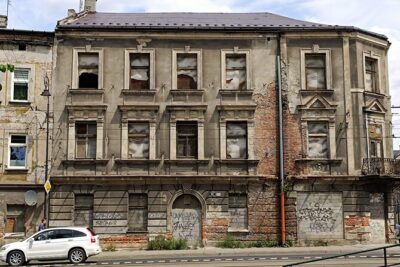
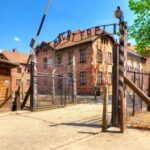
You begin in Kazimierz, the former Jewish district that has been one of Krakow’s key cultural centers for centuries. Szeroka Street is the big lead-in here, and the tour uses that context to help you understand what you’re seeing instead of just passing it by.
Stop one is Remuh Synagogue, where you have an optional entry. If you choose to go in, you’ll also have access to the adjacent Jewish cemetery tied to the same era. This is one of those places where the atmosphere does a lot of the explaining.
If your group includes a guide like Marta (she’s been praised for being friendly and very knowledgeable with steady timing), you’ll likely get helpful grounding before you step inside. That’s the difference between looking at stone and understanding what the names and traditions mean.
Good to know: the Remuh admission isn’t included, so decide in advance if you want to pay for entry that morning.
You can also read our reviews of more tours and experiences in Krakow.
Kazimierz streets, Nowy Square, and a Schindler’s List patio photo moment
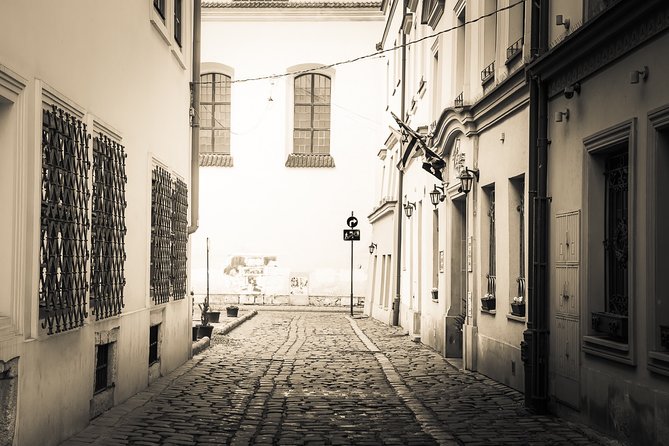
After Remuh, the walk moves through Kazimierz with a focus on how the neighborhood works as a story. You cross Nowy Square and head toward the area tied to the patio scene from Schindler’s List.
This stop matters even if you’re not a film superfan. It’s a chance to see how a specific location can keep history visible in a very modern way. And because it’s on the route, you’re not doing a separate detour that eats your time.
You spend about 45 minutes in this Kazimierz stretch, which is a sensible amount of time. It lets you slow down where it counts, then keep momentum on the rest of the walk.
Tip: if you care about photos, I’d aim to capture your main shots early here, because the later Old Town landmarks are popular too.
Wawel Royal Castle courtyard: Renaissance architecture at a walkable pace
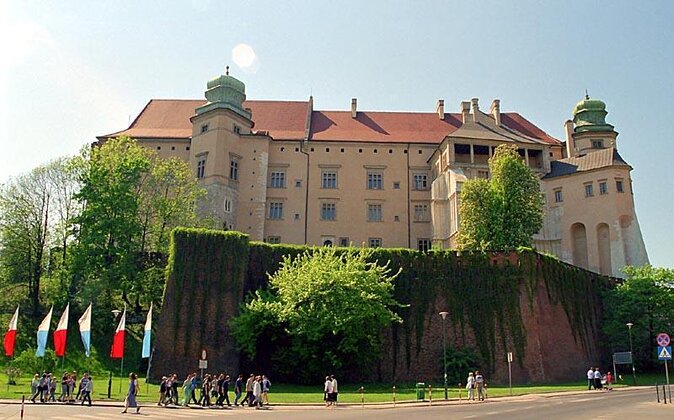
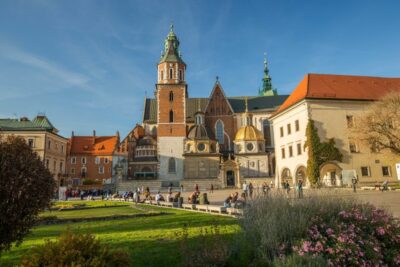
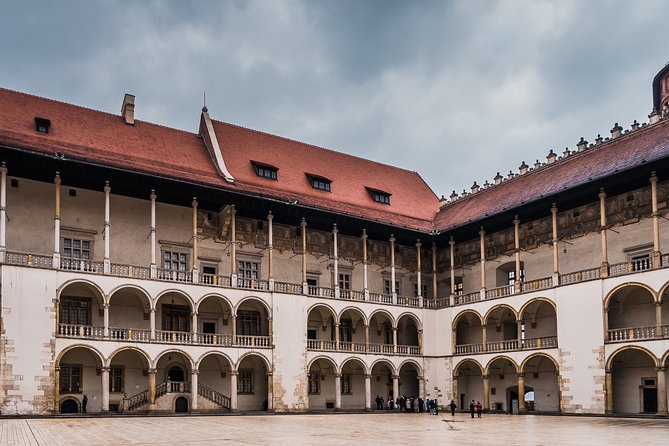
Wawel is next, and it’s the kind of stop that makes Krakow feel instantly different from other Polish cities. On the Wawel Hill, you’ll admire the Royal Castle patio and get a clear look at Renaissance-style work.
A standout detail: the patio is linked to the craftsmanship of Francesco Fiorentino and Bartolomeo Berrecci. Standing in the same space where you can see those architectural choices makes the style feel real, not like a museum label.
This stop is about 15 minutes, and that’s perfect for a walking tour. You get the key visual points without turning your morning into a long, indoor slog.
The courtyard timing also helps you keep energy for the bigger “inside-or-outside” decision at the cathedral that comes next.
Wawel Cathedral: optional entry to coronations and royal burial
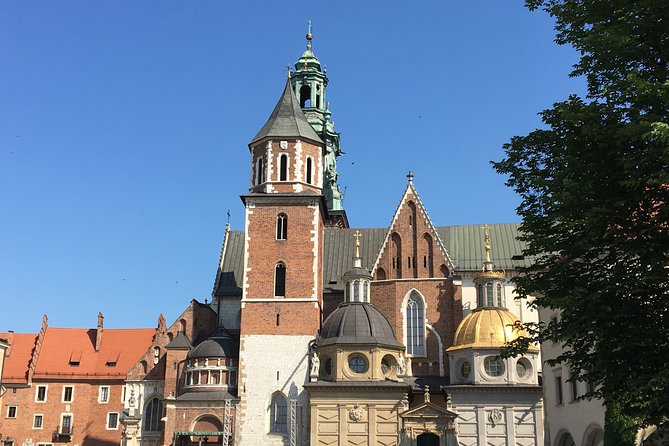
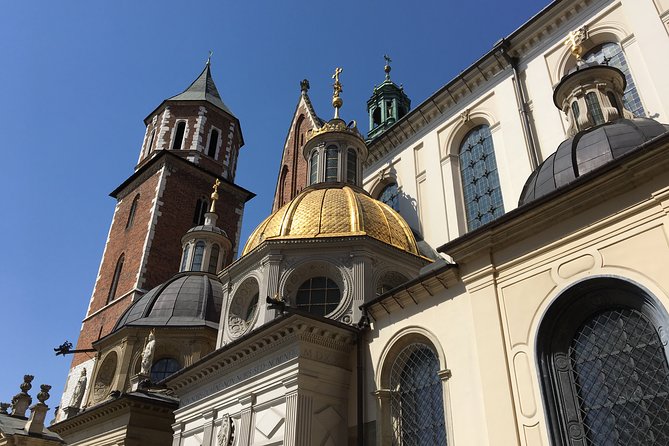
From the castle area, you move to Wawel Cathedral, dedicated to Saint Stanislas and Saint Venceslas. This is the religious heart of the complex, with more than a thousand years of history behind it.
If you choose to enter, you’re stepping into a place that served multiple roles over time: coronations of Polish kings and a burial site for Polish rulers. Even if you’re not into royalty, that adds weight to what you’re looking at.
This stop is longer than the castle—about 40 minutes for the optional cathedral entry—so it’s worth thinking about your energy level. If you’re the type who likes quiet interiors and reading the details, go in. If you prefer exterior views and a faster pace, you can skip and keep moving.
Good to know: Wawel Cathedral admission is not included.
Franciscan basilica on Kanonicza and Grodzka: stained glass details you’ll want to spot
Next you head down the older streets of Cracow—Kanonicza and Grodzka—toward the gothic basilica of the Franciscan friars. This part of the route is a nice contrast: after the grand royal complex, you get a more human-scale, street-level experience.
Inside, the tour focuses on polychromy and modernist stained glass windows designed by Stanislas Wyspiański. That mix is the point. Gothic forms meet later artistic choices, and you can feel that layering when you’re told what to look for.
This stop is relatively short (about 15 minutes), but it’s designed to make you notice specific visual elements, not just “a church.” It also helps you understand Krakow as a living city where older spaces still show newer creativity.
Admission for this stop is marked free.
Collegium Novum and Jagiellonian University: Copernicus in the real city
After the Franciscans, the tour shifts into the university quarter. You enter the area near Collegium Novum, a major 19th-century building that serves as the seat of the rector of the Jagiellonian University.
This is a quick stop—around 10 minutes—but it gives you a good mental map of where university power sits in Krakow. Then you continue to medieval-era university buildings tied to the founding in 1364 by King Casimir the Great.
Collegium Maius is the oldest surviving university building from the 15th century, and it’s also where Nicolaus Copernicus studied. That connection makes the stop more than “pretty old academic buildings.” It turns the campus area into a story about learning and scientific thinking.
You spend about 15 minutes here, and that works. You get the essential buildings and the key name connections without it feeling like a lecture.
Admission for these university-related stops is shown as free.
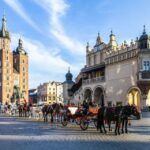
Rynek Main Square and Cloth Hall: the old market square that still defines the walk
Then you hit Rynek, the Main Market Square. It’s one of the largest medieval squares in Europe and dates back to 1257. The tour also explains how the square’s layout relates to Krakow’s survival after the Mongol invasion in 1241.
That context matters because it changes the way you look at the stones. You’re not just admiring architecture; you’re seeing how a city rebuilt itself and organized life around commerce.
Next comes the Cloth Hall, where you have the chance to enter. It dates to the 13th century and was remodeled in the 16th century thanks to Santi Gucci, a Florentine artist. If you’ve ever seen Renaissance “influence” described in textbooks, this is the kind of place where you can point and connect it to real buildings.
This part takes about 30 minutes, which is a good balance: enough time to enjoy the square, but not so long you lose the flow toward the big church stop next.
Admission for this segment is indicated as free.
St Mary’s Basilica option and the Hejnał: the church and the hourly signal
From the square, you reach St Mary’s Basilica, and this one is optional for entry (about 20 minutes if you go in). It was especially important to Krakow’s bourgeoisie, which helps explain why the interior is so focused on impressive art.
Inside, the highlight is the wooden High Altar from the 15th century, carved in linden wood by Veit Stoss. The altar depicts scenes from the lives of Virgin Mary and Jesus Christ and is treated as a gothic masterpiece.
Even if you skip the interior, you’ll still get the famous Krakow sound moment right outside.
Just nearby is plac Mariacki 5, where you can hear the “Hejnał”—the melody played from the highest tower four times each hour. It’s a simple routine on a schedule, but it feels very Krakow because it’s tied to daily city rhythm.
This stop is short (about 10 minutes), but it’s one of those experiences you remember later because it breaks up the walking with something distinctively local.
Good to know: St Mary’s Basilica admission isn’t included.
Finishing by the Barbican and Florian Gate: 14th-century walls in the open air
You wrap up by Kraków Barbican and the city walls dating back to the 14th century. The route leads you down Floriańska Street, then to Saint Florian’s Gate and the adjacent Barbican.
This ending works for a reason: by the time you reach the walls, you’ve already seen Kazimierz, Wawel, university buildings, and the market square. So the city defenses make sense in your head as part of the full urban picture.
The walk here is about 20 minutes, and it’s paced for stopping, looking, and taking a last set of photos without rushing.
Admission is listed as free for this final segment.
Price and timing: what $65 really covers (and what to budget)
At $65 for about 4 hours, this is solid value for a guided loop through multiple top Krakow areas. You’re not just doing one neighborhood. You’re connecting Kazimierz, Wawel, the university quarter, and Rynek into one coherent morning.
What you’re paying for isn’t just movement. The whisper system is a real quality-of-life feature, especially on a route with lots of corners and street noise. And since it’s a private group with only your group participating, you generally lose less time to waiting.
Where the cost can rise is at optional entries. Based on the stops marked as not included, you may want to budget extra for:
- Remuh Synagogue (and the adjacent cemetery)
- Wawel Cathedral
- St Mary’s Basilica
Also remember that bottled water and coffee/tea (plus soda/pop) aren’t included. If you tend to get thirsty on walks, bring something small or plan to buy water nearby.
Who this tour suits best (and who should skip it)
This tour is a good match if you want structure without feeling trapped in a museum. The route mixes indoor options with strong exterior viewing, and the timing across stops helps you cover a lot without it turning into a blur.
You’ll also like it if you care about context. The tour’s rhythm is designed to give you a story for each place—from Kazimierz’s Jewish heritage to Wawel’s royal role to the university connection to Copernicus and the market square’s medieval planning.
One caution: it’s not recommended for travelers with impaired mobility. If that includes you, you’ll likely have a tough time with the walking-focused layout.
Should you book this Krakow walking tour?
I’d book it if you want one morning that hits Krakow’s biggest “you can’t miss this” areas while still giving you real detail at each stop. The whisper system and private-group format make a difference, and the guide quality can be excellent when you get someone like Marta, known for being friendly and thorough with pacing.
I’d rethink it if you hate paying optional admissions mid-tour. This walk clearly leaves a few of the major interiors as add-ons, so your best move is deciding ahead of time which ones you truly want to go inside.
If you’re flexible, this is a smart way to fall in love with Krakow fast—without spending the whole day in transit or hopping between unrelated tours.
FAQ
How long is the tour?
The tour is approximately 4 hours.
What time does the tour start?
The start time is 9:30 am.
Where does the tour start?
The meeting point is Szeroka 40, 31-053 Kraków, Poland.
Where does the tour end?
The tour ends near Kraków Barbican at Basztowa, 30-547 Kraków.
Is this a private tour?
Yes. It is a private tour/activity, and only your group will participate.
What is the whisper system?
A whisper system is included to help you hear the guide clearly during the visit.
Which admissions are not included?
Admission tickets are not included for Remuh Synagogue (and its adjacent cemetery), Wawel Cathedral, and St Mary’s Basilica.
Are any stops included with free admission?
Many stops are marked free for admission tickets, including the Kazimierz district segment, Wawel Royal Castle patio views, Franciscan basilica stop, Collegium Novum, Jagiellonian University buildings, Main Square/Cloth Hall, the Hejnał area, and the Kraków Barbican/Florian Gate area.
Is bottled water or drinks included?
No. Bottled water and coffee/tea are not included, and soda/pop is also not included.
Is cancellation free, and when do I get confirmation?
Confirmation is received within 48 hours of booking, subject to availability. You can cancel for a full refund if you cancel up to 24 hours in advance of the experience’s start time.