REVIEW · KRAKOW
From Krakow: Auschwitz-Birkenau & Wieliczka Salt Mine Tour
Book on GetYourGuide →Operated by Cracow Tansfer&Tours · Bookable on GetYourGuide
Two UNESCO sites in one long day. This Krakow tour strings together Auschwitz-Birkenau and the Wieliczka Salt Mine with guided time that keeps you oriented. I like that you get a proper professional guide for both stops and the comfort of headsets, so the story doesn’t get lost in the crowd noise.
What I really appreciate is the structure: pickup in Krakow, then straight to the memorial, then down underground to the salt mine. You’ll also get help skipping the worst part of long waits with a skip-the-ticket-line setup, plus straightforward admission for both sites.
One key drawback to plan for: the start can be very early. In at least one case, a pickup time shifted to an extremely early morning (around 3:30am), so expect that your day may begin earlier than you’d like if schedules tighten around entry timing.
In This Review
- Key things to know before you go
- Auschwitz-Birkenau and Wieliczka: the value of pairing them in one day
- Morning pickup in Krakow: the schedule reality
- Arriving at Auschwitz-Birkenau: what the guided flow gives you
- Practical tips at Auschwitz-Birkenau
- Auschwitz museum photos and rules: keep it simple
- Wieliczka Salt Mine: what it’s like to go 135 meters underground
- What you’ll see underground
- Photography and what not to do
- Getting value from the guide (and why headsets matter)
- Transportation and comfort: air-conditioned rides, long day energy
- Food and drink: plan your day like a grown-up
- Who this tour fits best (and who should skip it)
- Good match if you want structure
- Not a great match if you need total flexibility
- A small real-world detail: helpful drivers can change the day
- Is the $279 price fair for Auschwitz + Wieliczka in one day?
- Should you book this Krakow Auschwitz-Birkenau and Wieliczka tour?
- FAQ
- How long is the tour from Krakow?
- Does the tour include pickup and drop-off in Krakow?
- Are admissions to Auschwitz-Birkenau and the Wieliczka Salt Mine included?
- Will I have a guide during both parts of the day?
- What should I bring?
- Are flash photos allowed?
- Is food included?
- Is the tour accessible for wheelchair users or claustrophobia?
- Can I cancel for a refund?
Key things to know before you go
- Auschwitz-Birkenau guided visit with headsets keeps the historical context clear
- Two UNESCO World Heritage Sites in one day: Auschwitz (1979) and Wieliczka (1978)
- 135-meter descent into the salt mine with a professional guide
- Photography allowed, flash not allowed inside both experiences
- No backpacks inside the Auschwitz museum (storage is available) and warm layers matter underground
Auschwitz-Birkenau and Wieliczka: the value of pairing them in one day
This is a classic “best-of Krakow” style day trip, but with two UNESCO sites that can’t be treated casually. You’re moving from one of the most important places in Poland for understanding the Holocaust to one of the world’s oldest working salt mines. Doing it in one day is intense, yet practical—because transport and timed admissions are handled for you.
The price is $279 per person for a 12-hour day, and it’s worth checking what’s actually included. You’re paying for more than the vehicle. Admission to both sites, a professional English-speaking guide at each experience, transportation by air-conditioned bus/car, and headsets are all part of the deal. If you were to plan this yourself, you’d likely spend similar time coordinating tickets, timing, and getting from site to site—without the built-in commentary that helps the day make sense.
You also get the big convenience factor: pickup and drop-off from your hotel or meeting point in Krakow (when you provide your address at booking). For a day this packed, that matters.
You can also read our reviews of more tours and experiences in Krakow.
Morning pickup in Krakow: the schedule reality
Your day starts with a morning pickup from your chosen Krakow address or meeting point, then you ride out to Auschwitz-Birkenau by air-conditioned car and bus. The tour is listed as 12 hours, and that sounds simple until you remember both sites control the pace.
Here’s the practical part: the memorial visit has staff-determined timing, and the salt mine tour has its own rhythm underground. That means you can’t count on easily extending breaks or changing how long you spend in each area. You’ll go where the schedule says, when the schedule says.
One more scheduling note: be ready for very early starts. A reported example had pickup pushed to about 3:30am instead of the original 6am plan, and it’s a reminder that entry arrangements can affect the morning.
Arriving at Auschwitz-Birkenau: what the guided flow gives you
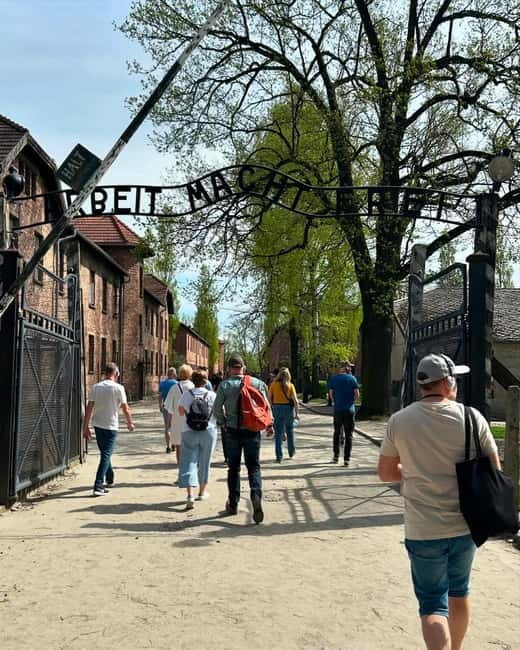
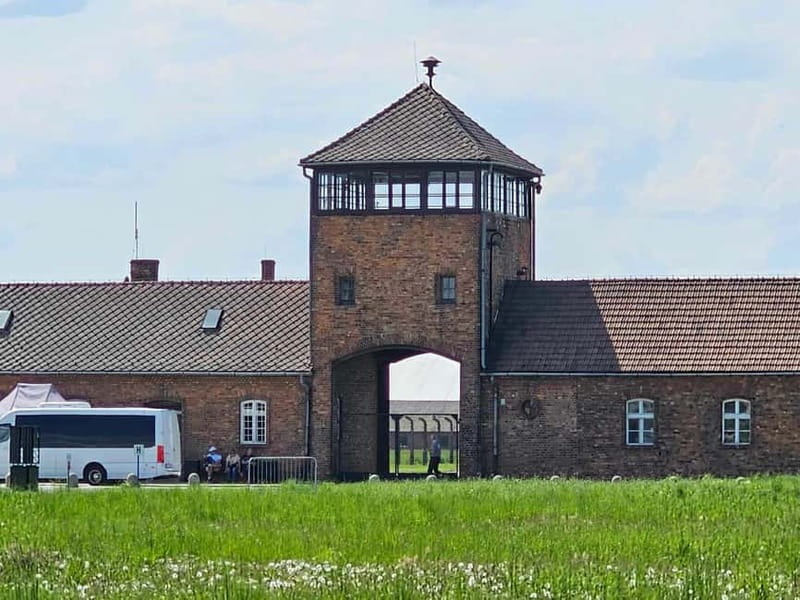
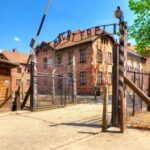
At Auschwitz-Birkenau, your tour starts with a guided visit focused on the former German Nazi concentration and extermination camp. This place isn’t just “a museum stop.” It’s a memorial site, and the way you move through it matters.
You’ll learn the camp’s history and why it became a global symbol of the Holocaust. The museum system you see today was created in 1947, and it was recognized as a UNESCO World Heritage Site in 1979. Even if you’ve read about Auschwitz before, having a guide translate what you’re seeing into a timeline and meaning is the difference between facts and understanding.
Practical tips at Auschwitz-Birkenau
You can bring a lot of curiosity into this site, but you should also bring rules-awareness:
- Wear comfortable shoes. You’ll be doing a lot of walking.
- Photography is allowed, but flash is prohibited.
- Backpacks and larger bags aren’t allowed inside the museum. Storage is available on-site.
- Food and drinks are not allowed inside the museum.
Also, since this is emotionally heavy territory, the tour’s guidance recommends preparing yourself mentally. That doesn’t mean you need to be “ready” in some heroic way. It just means you should expect the day to affect you, because it’s designed to.
Auschwitz museum photos and rules: keep it simple
This isn’t a place for gear headaches. Flash photography is forbidden, and larger bags don’t come inside the museum area. That means your best strategy is to travel light.
If you’re deciding what to carry for the day, choose essentials:
- A copy of your passport or ID card is accepted.
- Bring water (you’re told to bring it), but remember the museum itself doesn’t allow food or drinks inside.
- Skip the big bag. If you have one of those daypacks that feels like a suitcase, leave it behind.
The headsets are a comfort factor here too. Many memorial sites have sound that carries poorly when groups bunch up. With headsets, you get to stay present instead of constantly hunting for the guide.
Wieliczka Salt Mine: what it’s like to go 135 meters underground
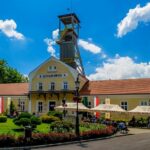
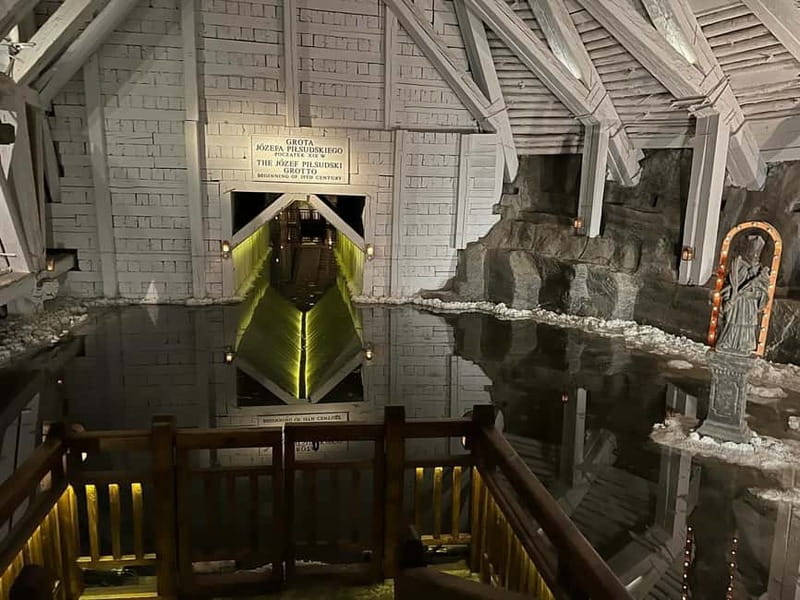
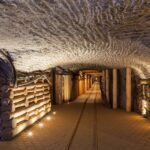
After Auschwitz-Birkenau, you head to the Wieliczka Salt Mine. Then comes the main physical shift of the day: you descend 135 meters underground with a professional guide.
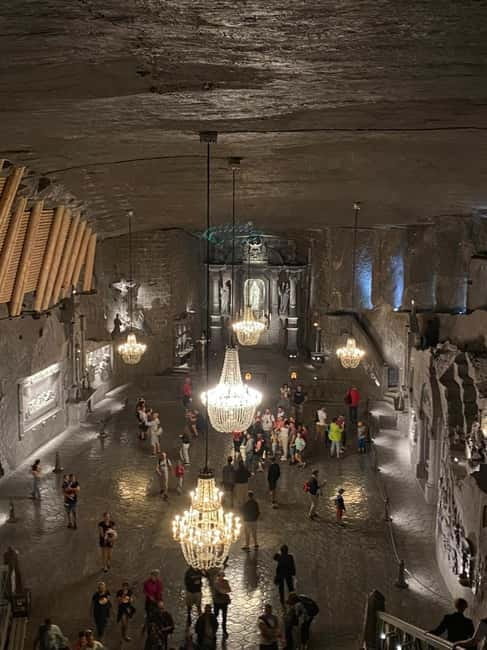
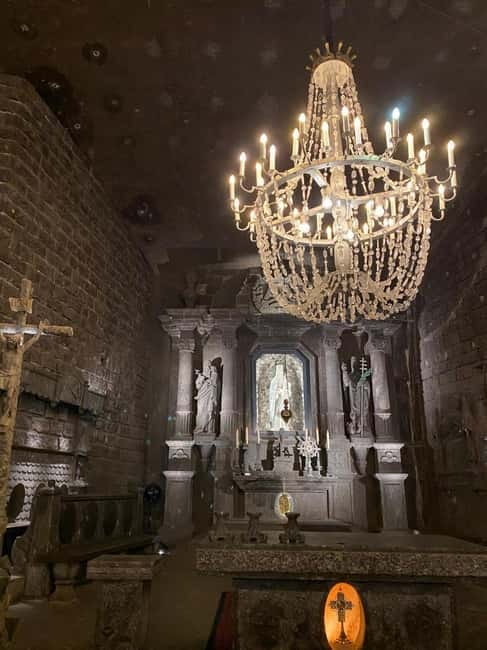
The salt mine is UNESCO-listed too, added in 1978. What makes it special is that it’s not just “a tunnel.” You’re walking through carved chambers, features built and sculpted over time, and areas that show how human work turned salt into something artistic and functional.
What you’ll see underground
Your guide will point out the big-ticket sights, including:
- chambers carved in salt
- underground lakes
- majestic wooden structures
- unique salt sculptures
It’s also colder down there than you’ll expect in Krakow. You’re told to bring warm clothing because the temperature underground is lower.
Photography and what not to do
Photography is allowed at the mine, but flash is still prohibited. So bring a camera that works well in low light without needing flash, or plan to rely on your phone’s normal exposure.
Getting value from the guide (and why headsets matter)
Both experiences are guided by a professional and conducted in English, with headsets included. That combination is quietly important.
At Auschwitz, the guide helps translate physical evidence into historical meaning—why certain areas exist, what you’re looking at, and how the site developed. At Wieliczka, the guide helps connect the underground artistry and practical engineering to the mine’s story, rather than leaving you with a sequence of pretty rooms.
And headsets matter because the day moves with groups. When you’re standing still, you want to hear clearly without craning your neck or waiting for the guide to repeat themselves.
Transportation and comfort: air-conditioned rides, long day energy
The tour includes transportation by air-conditioned car and bus, plus pickup and drop-off at your hotel or meeting point. For a 12-hour itinerary, that’s not a small detail. Heat, fatigue, and stress can creep in fast when you’re going from a major memorial to a deep underground site.
That said, this is still a full-day outing. You’ll likely spend hours on your feet and walking through sites with controlled pacing. A comfortable shoe choice is not optional. It’s the difference between remembering the day and only remembering your blisters.
Food and drink: plan your day like a grown-up
Food and drinks are not included. And there’s an additional limitation: food and drinks aren’t allowed inside the museum at Auschwitz.
So the practical plan is simple:
- Eat before the Auschwitz portion, if your schedule allows.
- Bring water as suggested, but expect restrictions inside museum areas.
- Have a plan for when you’ll eat after the sites, because you’ll finish this day tired.
If you’re the type who forgets lunch, don’t. This tour is long enough that hunger will start messing with your attention span at exactly the wrong moment.
Who this tour fits best (and who should skip it)
This tour has clear limits. It’s not suitable for:
- children under 10
- people with claustrophobia
- wheelchair users
The claustrophobia note makes sense because you’re going down 135 meters underground. Even if you’re okay with tunnels in general, the salt mine experience is still a controlled underground environment.
Good match if you want structure
You’ll probably enjoy this tour if you:
- want guided context at both sites
- prefer not to manage intercity logistics and ticket timing yourself
- like the convenience of pickup and drop-off in Krakow
- are traveling with enough stamina for a long day and lots of walking
Not a great match if you need total flexibility
Since the pacing and breaks are determined by the memorial site staff, you can’t expect to customize timing on the fly. If you’re the type who hates being on anyone else’s schedule, this may feel rigid.
A small real-world detail: helpful drivers can change the day
One of the standout practical impressions from the experience is the level of care from the local team. A driver named Marlena is mentioned as being especially helpful, including arranging an earlier entrance to the salt mine. That’s not something you should count on, but it’s a good sign that the operator pays attention to smooth timing once you’re on the ground.
In other words: the day isn’t just “transport + tickets.” It’s a coordinated service.
Is the $279 price fair for Auschwitz + Wieliczka in one day?
For many people, the big question is cost per experience. This tour rolls multiple value points into one fee:
- admission to both major UNESCO sites
- professional guides
- English language delivery
- headsets
- transport by air-conditioned bus/car
- pickup and drop-off in Krakow
- skip-the-ticket-line support
Food isn’t included, and you’re dealing with a long day. But if you factor in your time and the difficulty of stitching together a reliable Auschwitz-Birkenau visit plus a Wieliczka descent with correct timing, the price starts looking reasonable.
If you’re traveling solo or in a small group and want to remove planning friction, this is the kind of package that saves mental energy. If you’re already comfortable doing everything independently, you might find cheaper options—but you’ll spend time coordinating and you may lose the guided clarity that makes both sites easier to understand.
Should you book this Krakow Auschwitz-Birkenau and Wieliczka tour?
Book it if you want a guided, stress-reduced day that hits the two UNESCO anchors of the Poland itinerary. The headsets, admissions, and pickup/drop-off make it a low-friction way to get through a packed schedule without worrying about ticket logistics.
Think twice if:
- you’re sensitive to very early mornings (the pickup can run extremely early)
- you can’t handle underground spaces (claustrophobia)
- you need wheelchair access
- you’re hoping for lots of flexible breaks you can control
If you do book, pack smart: comfortable shoes, warm layers for the mine, water, and ID. Leave flash and bulky bags behind. Then give yourself permission to take the day seriously. Auschwitz isn’t just history on a map, and Wieliczka isn’t just sightseeing underground. Done well, this is a powerful, memorable one-day overview—without you fighting logistics the whole time.
FAQ
How long is the tour from Krakow?
It runs for 12 hours.
Does the tour include pickup and drop-off in Krakow?
Yes. Pickup and drop-off are included when you select the option and provide your pickup address.
Are admissions to Auschwitz-Birkenau and the Wieliczka Salt Mine included?
Yes. Admission to both Auschwitz Birkenau Museum and the Wieliczka Salt Mine is included.
Will I have a guide during both parts of the day?
Yes. You’ll have a professional English-speaking live tour guide for both the Auschwitz-Birkenau visit and the salt mine visit. Headsets are included to hear the guide clearly.
What should I bring?
Bring comfortable shoes, warm clothing (the salt mine is colder underground), water, and a passport or ID card (a copy is accepted).
Are flash photos allowed?
Photography is allowed, but flash photography is not allowed.
Is food included?
No. Food and drinks are not included, and food and drinks are not allowed inside the museum areas.
Is the tour accessible for wheelchair users or claustrophobia?
No. It’s not suitable for wheelchair users and it’s also not suitable for people with claustrophobia.
Can I cancel for a refund?
Yes. You can cancel up to 24 hours in advance for a full refund.