REVIEW · KRAKOW
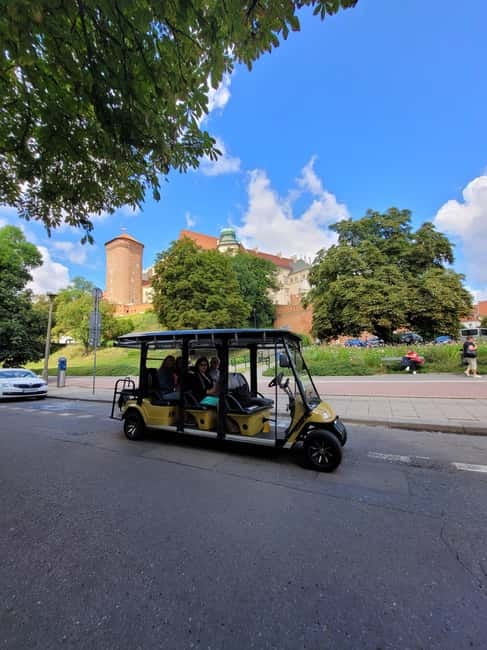
Cracow sightseeing tour by electric golf cart
Book on GetYourGuide →Operated by E-Tours · Bookable on GetYourGuide
A short ride, big stories. This Cracow electric golf cart tour turns key landmarks in medieval Krakow and WWII history into an easy, seated route. I love the multilingual audio guide (so you can go at your pace with the right language), and I also like that you’re in a small group with a helpful driver who can answer questions. One consideration: it is a fast, 1-hour overview, so if you want deep museum time, you’ll need to add that on separately.
You’ll cruise through the medieval capital and then cross into the Jewish Quarter of Kazimierz and the WWII-era area of Podgórze, including major stops tied to the ghetto and Schindler’s story. The carts are built for real weather—rain curtains, a sun roof, plus heating for colder days and air conditioning in warmer months. If you hate audio tours, this one may feel too story-driven for your taste, but for most people, the format is exactly the point.
In This Review
- Key highlights worth planning for
- Why an electric golf cart is the smart way to see Krakow fast
- Who this is best for
- Stop 2 in the real heart of medieval Krakow: what you see in an hour
- A small drawback to plan for
- Crossing into Kazimierz: the Jewish Quarter’s major landmarks and atmosphere
- Why the oldest tram depot is a smart detail
- Podgórze and the Vistula crossing: turning geography into WWII context
- How to handle emotionally heavy sites
- Schindler’s enamelware factory area: seeing the story beyond the movie
- A practical tip for this part
- Audio guide + driver Q&A: how to get the most from the format
- How to avoid audio-tunnel vision
- Comfort details that actually matter in Krakow weather
- Price and value: is $26 fair for what you get?
- A realistic way to budget your day
- Where you’ll end up and how to continue your Krakow day
- Who should book this Krakow cart tour (and who might skip it)
- Should you book this Krakow electric golf cart tour?
- FAQ
- How long is the Krakow sightseeing tour by electric golf cart?
- What is the price per person?
- Where does the tour start and is the pickup always the same?
- Is an audio guide included?
- Which languages are available for the audio guide?
- Is there a live guide or only audio?
- Does the tour include museum tickets?
- Is the tour wheelchair accessible?
- Is there space for strollers or wheelchairs in the carts?
- What weather protection is provided on the golf carts?
Key highlights worth planning for
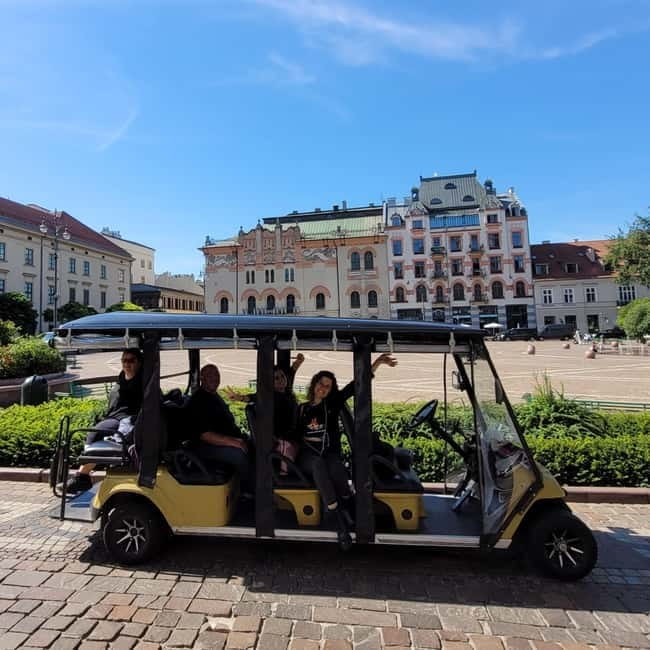
- Eco electric golf cart comfort with roof, rain curtains, and climate control
- Multilingual audio guide in your chosen language, plus a driver who can help
- Kazimierz in one sweep: synagogues, old market area, town hall, and the oldest tram depot
- Podgórze WWII stops like ghetto heroes square and the pharmacy under the eagle
- Schindler’s enamelware factory area and the Schindler’s List film connection
- Easy photos and breaks with time set aside for pictures
Why an electric golf cart is the smart way to see Krakow fast
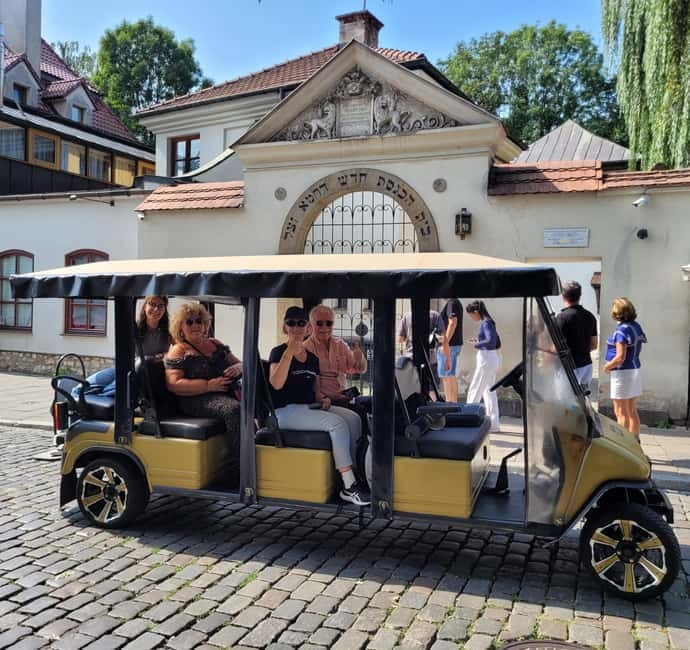
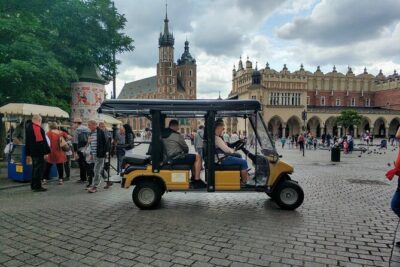
Krakow is a city where history is visible at every corner, but a classic walking tour can feel like a nonstop endurance event. This tour solves that problem with electric golf carts that keep you seated while you cover lots of ground. You still get the sights and street-level context, but you’re not constantly calculating routes, traffic, or how long your legs can handle.
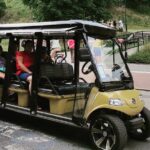
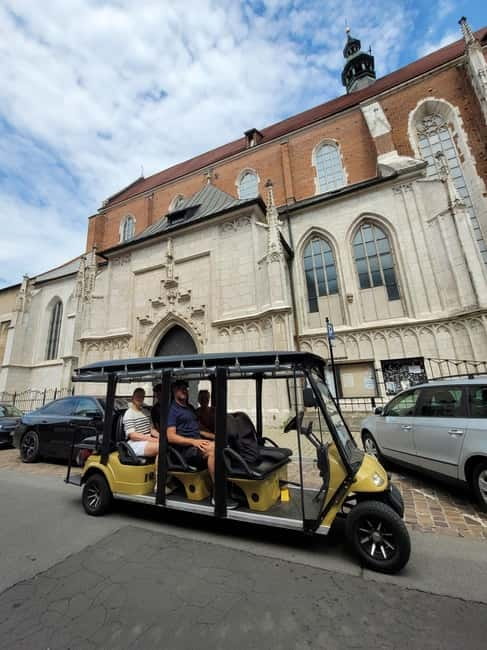
The carts themselves are practical. You get rain protection (curtains) and overhead sun coverage in summer, plus climate support: heating in winter and air conditioning. That matters more than you’d think, because if you’re chilled or sweaty, you stop listening and start rushing.
Then there’s the group size. It’s a small group, so you’re not stuck behind a wall of people or waiting in a long line at every viewpoint. And you’re not alone with the details either—your driver is there to give advice and handle questions.
You can also read our reviews of more tours and experiences in Krakow.
Who this is best for
This is especially good for first-timers who want orientation plus meaningful context, and for anyone who wants history without stacking an extra layer of fatigue on top.
Stop 2 in the real heart of medieval Krakow: what you see in an hour
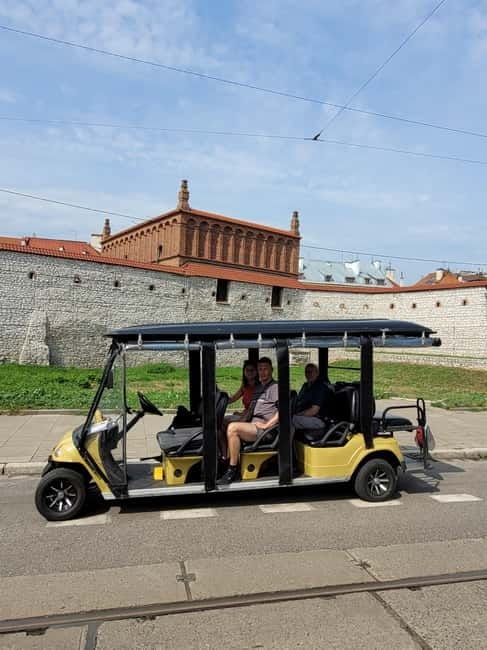
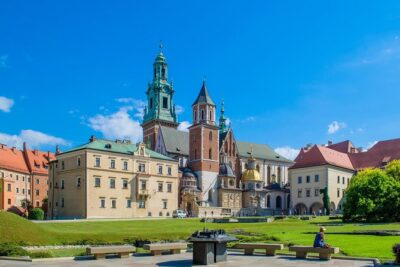
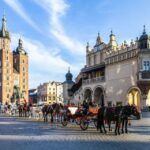
Your tour starts at a pickup point (the exact spot depends on the option you choose). From there, you’ll move through Krakow’s medieval core—the old streets of the royal capital—and you’ll do it with just enough guidance to understand what you’re looking at.
What you’re getting here is the big-picture framework:
- medieval fortifications and the way the city defended itself
- churches and palaces you can recognize as you pass
- architectural styles that show how Krakow changed over centuries
This part is a guided sightseeing stretch, built for orientation. You’ll likely feel like you’re getting your bearings fast, which makes the rest of your Krakow days easier. If you plan to wander on your own afterward, this gives you landmarks you can return to.
A small drawback to plan for
Because the whole trip is only 1 hour, you won’t have long, slow viewing time at each church or building. You’ll see a lot, but you’ll also move quickly—so it helps to come in with a few questions you care about, like how the city grew or why those buildings face the way they do.
Crossing into Kazimierz: the Jewish Quarter’s major landmarks and atmosphere
Kazimierz is one of the places in Krakow where you can feel the layers of time. Your tour enters the Jewish Quarter in Kazimierz, originally a separate town founded in the 14th century. That timeline matters: you’re not just seeing monuments—you’re seeing evidence of a long-lived community center and its street layout.
In Kazimierz, you’ll focus on key stops tied to everyday Jewish life and the town’s historic shape:
- the former market square and its civic importance
- the town hall
- Jewish synagogues in the area
- the oldest tram depot
- the general vibe of Kazimierz’s historic streets
You also cross this area as part of a single continuous route, which is the best way to understand how Kazimierz connects to the rest of Krakow. It’s not a separate day-trip bubble. It’s part of the city’s story.
Why the oldest tram depot is a smart detail
That mention isn’t random. It’s a reminder that Kazimierz wasn’t only about religion and tradition—it also had infrastructure and modern life elements woven into the neighborhood. It’s the kind of detail that makes your photos more interesting than generic skyline shots.
Podgórze and the Vistula crossing: turning geography into WWII context
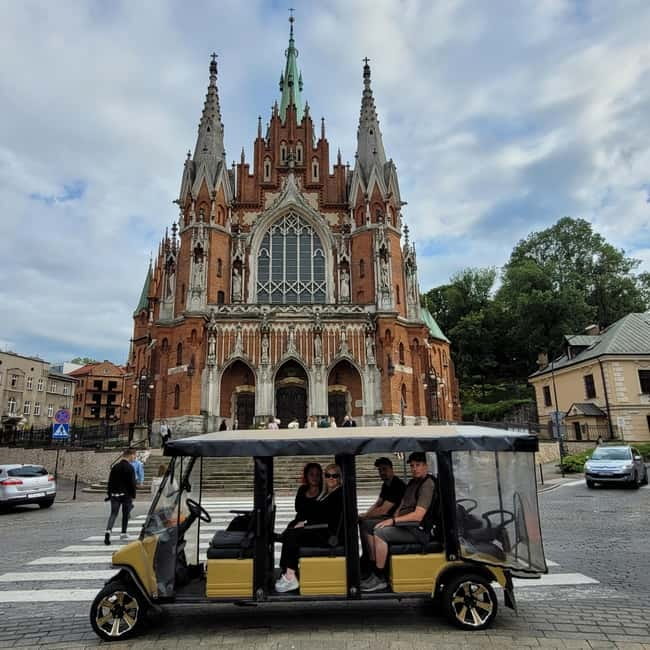
Next, you’ll cross the Vistula River via the oldest bridge over Poland’s largest river. That is a surprisingly helpful move, because it gives you a sense of how this area sits relative to the rest of Krakow.
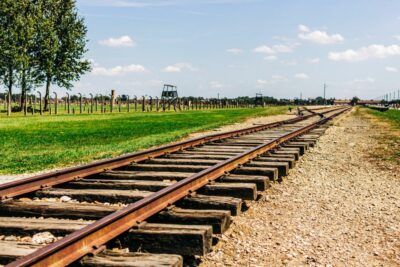
From there you learn about Podgórze, a town with a 19th-century history. And then the tour turns sharply to the WWII era. The Nazis created a ghetto for the Jewish population in this area, and you’ll see locations tied to that period.
Key WWII-related stops include:
- ghetto heroes square
- the pharmacy under the eagle
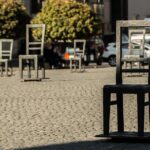
And there is a memorial component tied to the tragedy. On ghetto heroes square, you can see a monument made of 70 metal chairs, created in honor of those who suffered and were killed or deported.
How to handle emotionally heavy sites
Some parts of this tour involve very dark history. The format is still practical—you drive through and you learn from the guide/audio—but don’t treat it like a casual checklist. Give yourself a minute when you stop at memorial areas. Let the names and meaning land before you move on to the next photo spot.
Schindler’s enamelware factory area: seeing the story beyond the movie
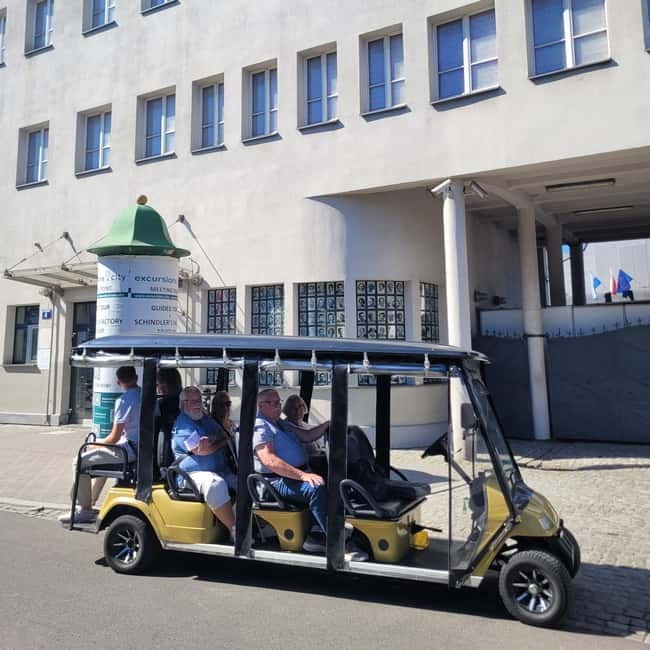
The tour also takes you through the former industrial area so you can see buildings connected to Oskar Schindler’s enamelware factory. This is where the route connects to one of the most well-known film stories about Krakow during WWII—Steven Spielberg’s Schindler’s List—including the fact that the film received seven Oscars.
Even if you already know the film, the value here is physical. You’re seeing the industrial environment and the locations linked to the narrative. That’s what makes this more than just a movie recap. The streets and buildings help you picture how an industrial site could become part of a life-or-death story.
A practical tip for this part
If you’ve seen Schindler’s List, go in with one or two moments you remember and listen for how the tour frames the real-life people behind the story. If you haven’t seen it, the audio guide and driver context will still help you connect the historical dots.
Audio guide + driver Q&A: how to get the most from the format
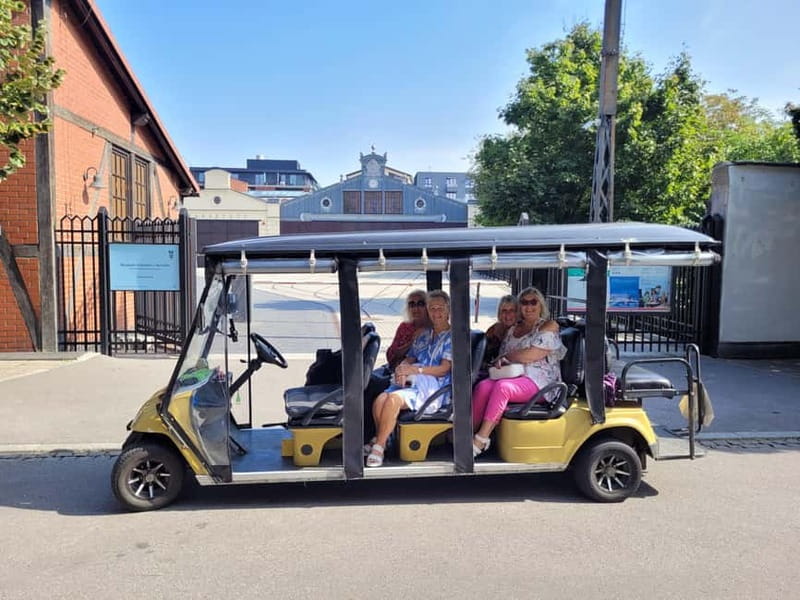
A big advantage here is that the tour is not just a passive drive-and-look. You get an audio guide in your chosen language, and there’s also a live tour guide listed for English and Polish. That combination is ideal if:
- you like hearing things explained in a structured way (audio)
- you want to ask questions on the spot when something clicks for you (driver)
The audio guide language list is wide. It includes: Arabic, Czech, Danish, Dutch, English, Finnish, French, German, Hungarian, Italian, Norwegian, Polish, Portuguese, Russian, Slovak, Spanish, Swedish, and Ukrainian.
How to avoid audio-tunnel vision
Try this: don’t play the audio at full speed the whole time. Pause briefly when you see a major building or square, then let the audio catch up as you orient yourself. You’ll remember more later and your photos will be better because you’ll know what you’re photographing.
Comfort details that actually matter in Krakow weather
This is one of those tours where the “small” comfort points make the experience smoother.
You’ll be in a comfortable, seated electric golf cart with:
- rain curtains
- roof for sun protection in summer
- heating system in winter
- air conditioning
- space for a stroller or wheelchair
- pet friendly policy
You don’t have to pack layers like you would for a long walking day, but it’s still smart to dress for real outdoor time because you’ll be looking at sites and stopping during the route. The climate system helps, though, and that reduces the stress of being miserable while you try to absorb history.
Price and value: is $26 fair for what you get?
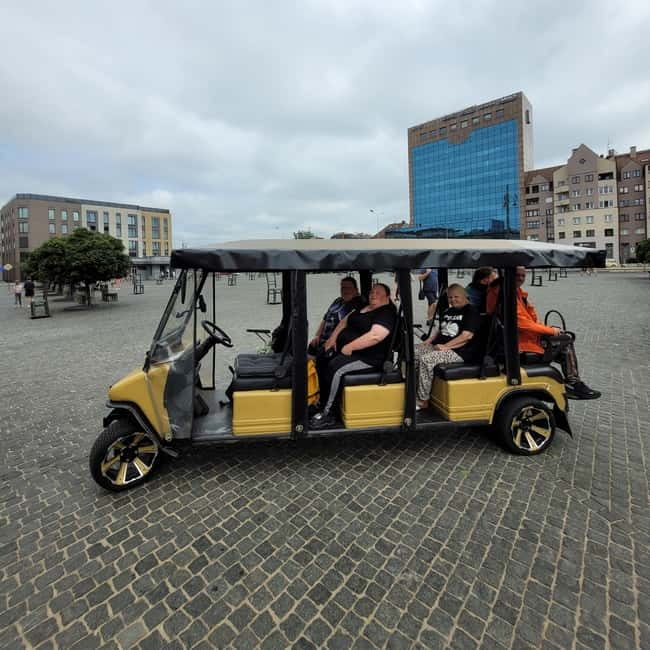
At about $26 per person for a 1-hour tour, the value comes from what’s included: transport in eco-friendly electric carts, small-group handling, a multilingual audio guide, and a helpful driver. In other words, you’re paying for a guided overview plus convenience.
What’s not included is also important. Tickets to museums and attractions are not part of the price. That means this tour is best seen as a strong introduction and context builder, not a replacement for museum visits.
A realistic way to budget your day
Plan to use this hour to decide what to explore later. After the cart tour, you’ll know which streets or themes you want to return to—medieval Krakow, Kazimierz, WWII memorial sites, or the Schindler connection.
Where you’ll end up and how to continue your Krakow day
At the end, the tour has two drop-off locations, including:
- Kraków Old Town, Mikołaja Kopernika 2
That’s helpful if you want to keep your day centered in the Old Town right away. From there, you can walk to nearby sights or head to a meal without feeling like you’re stuck crossing the city after a tour.
Who should book this Krakow cart tour (and who might skip it)
Book it if you want:
- a first-pass introduction to Krakow’s medieval center and the key districts that matter historically
- WWII context without turning your day into a long exhausting trek
- an easy format with multilingual audio and a driver to help with questions
- a comfortable ride with weather protection and climate control
You might skip it if you:
- want lots of museum time or long stops inside buildings
- dislike guided storytelling formats or prefer totally independent walking plans
Should you book this Krakow electric golf cart tour?
If your goal is to see a lot, learn a lot, and stay comfortable, this is an easy yes. The best part is the combination: electric carts + multilingual audio + targeted historical districts. For a one-hour window, you cover major ground—from medieval Krakow to Kazimierz and Podgórze, then to the Schindler-related area.
If you’re the type who likes slow wandering and deep museum immersion, treat this as your orientation and history primer, then build the rest of your day around what you want to revisit.
FAQ
How long is the Krakow sightseeing tour by electric golf cart?
The tour duration is 1 hour.
What is the price per person?
The price is $26 per person.
Where does the tour start and is the pickup always the same?
You meet at the pickup point, and the starting location depends on the selected option.
Is an audio guide included?
Yes. A multilingual audio guide is included, and you listen in your chosen language.
Which languages are available for the audio guide?
Arabic, Czech, Danish, Dutch, English, Finnish, French, German, Hungarian, Italian, Norwegian, Polish, Portuguese, Russian, Slovak, Spanish, Swedish, and Ukrainian.
Is there a live guide or only audio?
There is a live tour guide listed for English and Polish, along with the audio guide.
Does the tour include museum tickets?
No. Tickets to museums and attractions are not included.
Is the tour wheelchair accessible?
Yes, the tour is wheelchair accessible.
Is there space for strollers or wheelchairs in the carts?
Yes, there is space for a stroller or wheelchair.
What weather protection is provided on the golf carts?
The vehicles have rain curtains and a roof for sun protection in summer, plus heating in winter and air conditioning.
If you tell me what month you’re going and your languages (or top 1-2 priorities like medieval Krakow vs. WWII sites), I can help you pick the best timing and what to focus on during that one hour.