REVIEW · KRAKOW
Auschwitz-Birkenau Tour with Private Transport Altenative Tour
Book on Viator →Operated by ComFort Tours Cracow · Bookable on Viator
A day of hard facts, with zero seat-sharing stress. This private transport from Kraków plus lunch included makes the trip feel more controlled and humane, even when the subject is brutally not. I also like the way the itinerary links multiple parts of the camp system on one long day—Oświęcim, Brzezinka, the “Interest Zone” area, and then Auschwitz III (Monowitz). One possible drawback to plan around: the price does not include entry to Auschwitz I and Auschwitz II-Birkenau main camps, so you may need additional tickets if you want those core museum areas.
This is an English-speaking private tour run by ComFort Tours Cracow, usually around 7 hours. You’ll get round-trip rides, a guided visit focused on key surrounding sites, and a moderate level of walking. It’s emotionally heavy work, and you should come with a little background so you can follow what you’re seeing without feeling lost.
In This Review
- Key things to know before you go
- Auschwitz-Birkenau from Kraków: what this “alternative” actually means
- The drive and pickup rhythm: private transport with morning uncertainty
- Stop 1: Oświęcim (the extension, last executions, and mass graves)
- Stop 2: Brzezinka (crematoriums, Zyklon B storage, and ramps of arrival)
- Stop 3: From the “Interest Zone” story to the extermination zone
- Stop 4: Auschwitz III (Monowitz) and the sauna building
- Lunch, timing, and physical needs for a 7-hour memorial day
- Price and value: why $455.34 can be worth it
- Ticket realities: Auschwitz I/II entry and the risk of schedule squeeze
- Who this tour fits best (and who should choose differently)
- Should you book the private Auschwitz-Birkenau alternative tour from Kraków?
- FAQ
- How long is the Auschwitz-Birkenau private transport tour from Kraków?
- Do you pick me up from my address in Kraków?
- What time will pickup happen?
- Is lunch included?
- Is the entrance to Auschwitz I and Auschwitz II-Birkenau main camps included?
- Is this a private tour or do I share the vehicle with others?
- What language is the tour in?
- What’s the cancellation policy?
Key things to know before you go
- Private car for your group means no waiting for other guests and less time lost in logistics.
- Lunch is included, so you won’t spend a long day hunting food far from the memorials.
- You’ll focus on surrounding sites, not the full main-camp museum entries (Auschwitz I and Auschwitz II-Birkenau main camps are not included).
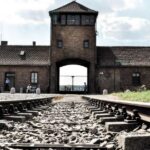
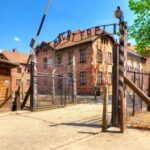
- Birkenau stops include major structures like the first crematorium and gas chamber, plus the Death Gate and SS barracks.
- The Monowitz (Auschwitz III) ending adds the labor-camp piece through the disinfection sauna and a victim memorial.
- Ticket timing can be sensitive during busy periods, so keep your day flexible and confirm details the day before.
Auschwitz-Birkenau from Kraków: what this “alternative” actually means
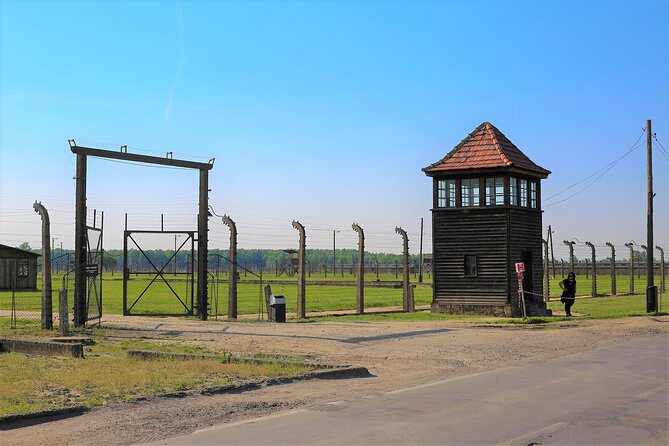
This tour is built to do a lot of Auschwitz-related ground in one day, without trying to cover every single museum room and gallery. What you get is a guided route through the camp system’s operational areas and key surrounding locations—places that explain how the machinery worked and how different parts of the camp complex related to each other.
The biggest practical difference is ticket scope. The tour includes access for the listed surrounding stops, but entrance to Auschwitz I and Auschwitz II-Birkenau main camps is not included in the price you pay. In plain terms: you may see important structures and areas tied to Auschwitz, but you shouldn’t assume you’ll automatically get the full “main camp” experience as people expect from the classic Auschwitz I + Birkenau package.
If you like a focused, site-based day—especially the labor camp angle at Auschwitz III—you’ll probably feel satisfied. If your top goal is to spend the longest time inside the main museum blocks, you’ll want to make sure you’re covering that separately.
You can also read our reviews of more private tours in Krakow

The drive and pickup rhythm: private transport with morning uncertainty
You start with pickup in Kraków. The pickup window is wide (possible between 7:00 AM and 1:30 PM), and the exact time is shared with you the day before by WhatsApp/email/text. The tour ends back in Kraków with round-trip transportation.
Here’s how to use that information wisely: treat the pickup time as a real variable. In busy seasons, changes can happen on short notice. One past booking described a pickup time shifting dramatically overnight, paired with a dispute about a promised refund. I’m not saying this will happen to you, but it’s a strong reminder: keep your morning hours flexible, and be ready for a very early start if your confirmed time lands near the beginning of that window.
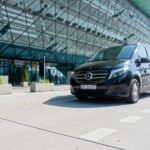
The value of private transport is obvious once you’re on the road: you’re not waiting for other couples or families, and you’re less likely to get stuck in the same traffic or timing squeeze with a group that’s running late. One driver experience also described a comfortable, clean car (an Audi) and extra care like a water stop, which is the kind of small thing that matters when you’re preparing for a long, emotionally intense day.
Stop 1: Oświęcim (the extension, last executions, and mass graves)
Your first major memorial stop is in Oświęcim, the town tied directly to Auschwitz. This area connects you to the camp’s later phase and the camp’s physical expansion and systems beyond the initial blocks most people picture.
You’ll visit the memorial to the final victims of Auschwitz and see a mass grave connected to prisoners shot during the January 1945 evacuation. That’s not just a grim fact; it sets a tone for the whole day. It shows how the camp continued to kill right up to the end, and how the chaos of the retreat still produced death.
Next you’ll explore the so-called camp extension area—new SS barracks, the last women’s camp site, and the place tied to the final public execution. This is a useful stop even if you already know general Auschwitz facts, because it adds the “how it evolved” layer. You start to see that Auschwitz was not one static space. It was a system that kept changing as the war shifted.
Practical note: this portion is typically scheduled as a 2-hour stop. That’s long enough to take photos only if you choose to (you should follow posted rules on site), read key markers carefully, and let the emotional impact settle. If you’re someone who needs breaks to process, plan to take them.
Stop 2: Brzezinka (crematoriums, Zyklon B storage, and ramps of arrival)
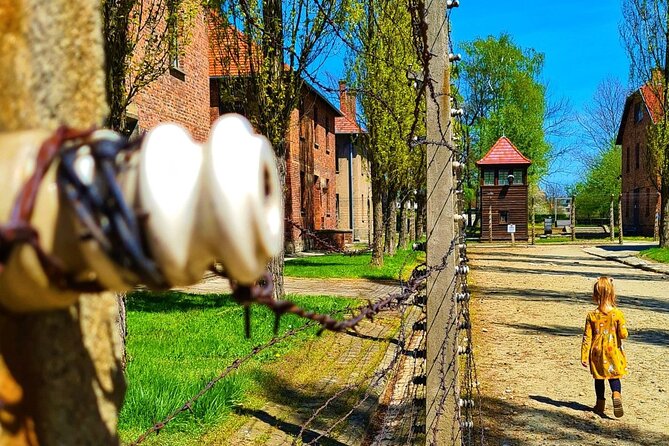
Brzezinka is where the tour leans hard into how the arrival and killing machinery worked at Auschwitz II-Birkenau. You’ll see the first crematorium and gas chamber, plus the former villa of the camp commandant.
Then you’ll move through other crucial “process” points:
- a pre-war theater building that was later used to store Zyklon B
- the Polish Ramp (the first prisoner transport platform)
- the Old Jewish Ramp (the main selection site for European Jews)
- gravel pits tied to punishment and execution for clergy and Polish intelligentsia
This is the kind of stop where the “structure names” matter. Even when you know the basics, seeing the actual locations connected to transport, selection, and execution helps your brain connect what you’ve read to real space. It’s heavy, but it’s also clarifying.
One drawback to consider: your day may feel fast at this point, especially if your guide is moving with a strong pace. In one described experience, the pace was challenging in heat, and the guide’s accent plus intensity made it harder to slow down. You can’t control that for every booking, but you can control how you prepare: wear comfortable shoes, and don’t cram your day with extra plans afterward.
Stop 3: From the “Interest Zone” story to the extermination zone
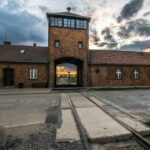
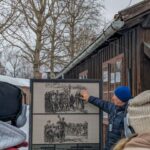
After Brzezinka, the tour shifts into the “why things were built where they were” explanation. You’ll learn about the “Interest Zone” through maps and aerial photographs from 1944, then move through key visual points in Birkenau like the Death Gate and main SS barracks.
The goal here is to help you understand Auschwitz not just as a camp fenced off from the world, but as a plan embedded in its surroundings. Those maps and aerial views are doing real work: they show how close civilian life and camp functions could be, and how the area was managed as part of the larger system.
From there, the extermination zone stops include:
- Bunker 1 (the Red House)
- Bunker 2 (the White House)
- remains of dressing rooms for victims
- a cemetery of Soviet POWs
If you’re the kind of person who wants the full logic trail—how victims were processed, where operations were concentrated, and what still remains—this part gives you that link. It’s also why this tour is worth considering even if you skip some main-camp museum entry: the emphasis is on key sites you can physically locate and connect.
Time here is listed as about 30 minutes for the “Oswiecim” segment and includes these major Birkenau views. That means you’ll be seeing a lot and reading less than you might on a slower, museum-heavy schedule. Plan to absorb the essentials, not every label.
Stop 4: Auschwitz III (Monowitz) and the sauna building
The day ends at Memoriale Auschwitz III (Monowitz). This stop is short on paper (about 30 minutes), but it changes the day’s meaning because it adds the labor-camp angle to the extermination-focused parts you’ve already seen.
You’ll view the sauna building used for prisoner disinfection and belongings processing. That’s important because it connects routine “processing” functions to the same overall system of control and exploitation.
You’ll then conclude at the memorial to victims of Auschwitz-Monowitz, which helps you step back and see scale across the different parts of the Auschwitz complex—not just the most famous sections.
If you only do the classic Auschwitz I + Birkenau circuit, you can still leave with a strong sense of the Holocaust’s horrors. Adding Monowitz makes the camp system feel more complete: it’s not only death factories; it’s also labor exploitation backed by terror.
Lunch, timing, and physical needs for a 7-hour memorial day
Lunch is included, and that’s a big practical win. Food can get expensive and chaotic around tourist-heavy memorial days, and you don’t want to burn mental energy searching for lunch when you’re already preparing for a serious visit.
That said, you should pack smart for the day’s reality:
- comfortable walking shoes (the ground can be uneven)
- a layer for changing weather
- water if you tend to get tired quickly (some drivers include a water stop; don’t assume it)
The tour is listed for moderate physical fitness. You don’t need to be an athlete, but you do need to be ready for long stretches and emotional pacing. If you’re prone to fainting or severe fatigue from stress, it’s worth reconsidering or arranging a more flexible schedule.
Also keep in mind the day’s structure: a private car can protect your time, but the memorial sites themselves set the pace. When the schedule is tight, you might spend less time lingering and more time moving to the next marked spot.
Price and value: why $455.34 can be worth it
At $455.34 per person, this is not a budget option. You’re paying for private transport, an all-in-one route, lunch, and a guided visit that tries to cover multiple key areas in one day.
Here’s the value logic I’d use if you’re comparing options:
- If you want a private car that keeps you out of group shuffles, the price can feel reasonable.
- Lunch included reduces one cost and one hassle on an already demanding day.
- Ending with Auschwitz III adds an extra layer that many basic “just Birkenau” tours skip.
You’re also paying for the guide’s ability to move you through the sites in an organized way. One described booking emphasized no waiting in lines, which can be a real quality-of-life boost on days when everyone is trying to enter at once.
The trade-off is that the ticket situation for main-camp areas can affect timing and entry quality. Some bookings reported issues with tickets not being secured in advance, which then shortened time on site. That doesn’t mean the tour isn’t good. It means you should treat this as a day where details matter.
Ticket realities: Auschwitz I/II entry and the risk of schedule squeeze
This is the section to read twice.
The tour data is explicit that entrance to Auschwitz I and Auschwitz II-Birkenau main camps is not included in the price. If your expectation is to walk the full classic main-camp museum areas, you’ll need to confirm what’s covered for your specific booking or plan to purchase additional entry if needed.
Separately, the reviews point to a real-world issue: private tickets can be hard to secure during peak periods, and in some cases the group ended up using camp staff guides or got a reduced entry time after pickup. That matters because it can shift how much time you have inside key sections.
My practical advice:
- Confirm what entry you’re actually getting for Auschwitz I and Auschwitz II main camps before the day arrives.
- If you’re traveling with limited flexibility, keep that in mind when you schedule other plans.
- Take the early pickup seriously. If pickup moves earlier, your whole day moves earlier, so protect it.
If everything aligns, you can get a smooth, efficient day with minimal waiting and strong guiding. If ticket timing goes sideways, the tour can still be educational, but your experience may feel more rushed.
Who this tour fits best (and who should choose differently)
This tour fits best if you want:
- a private transport day focused on major Auschwitz-related sites
- a route that includes Auschwitz III (Monowitz), not just the headline Auschwitz I and Birkenau areas
- a full-day schedule with lunch included and a clear end point back in Kraków
You might want a different option if:
- your top priority is spending the most time possible inside Auschwitz I and Auschwitz II-Birkenau main camp museum areas
- you’re very sensitive to schedule changes (pickup times can vary, and ticket timing can be tight)
- you need long, unstructured time at each museum building
Emotion matters, too. Auschwitz is emotionally difficult for everyone. If you’re new to Holocaust history, do some reading before you go so the site interpretation lands with less confusion.
One described driver experience also noted that guides may assume you have some context and focus on the specific camp angles of the sites you’re visiting. So come prepared, even lightly.
Should you book the private Auschwitz-Birkenau alternative tour from Kraków?
I’d book this if you want a well-organized private day that connects several critical parts of the Auschwitz system—especially the Monowitz ending—and you’re okay with the fact that Auschwitz I and Auschwitz II main-camp entry is not part of the price.
I would hesitate if your dream is the classic full main-camp museum run with lots of time inside those core areas, or if you can’t tolerate the possibility of entry-time changes during busy periods. In that case, it may be better to choose a tour that clearly includes the exact museum entries you want.
If you do book, be proactive: confirm entry scope for Auschwitz I and Auschwitz II, watch for the day-before pickup message window, and give yourself buffer time. When it goes right, the private transport and the tight route can make a brutal day feel more respectful and less chaotic.
FAQ
How long is the Auschwitz-Birkenau private transport tour from Kraków?
It’s listed as about 7 hours (approximately).
Do you pick me up from my address in Kraków?
Yes. Pickup is offered from your address in Kraków, and the tour ends back in Kraków with round-trip transportation.
What time will pickup happen?
Pickup time can be scheduled between 7:00 AM and 1:30 PM, and the exact time is shared with you the day before the tour via WhatsApp/email/text message.
Is lunch included?
Yes. Lunch is included, and you don’t need to bring food.
Is the entrance to Auschwitz I and Auschwitz II-Birkenau main camps included?
No. Entrance to Auschwitz I and Auschwitz II-Birkenau main camps is not included in the price.
Is this a private tour or do I share the vehicle with others?
It’s a private tour/activity. Only your group participates, and the transport is not shared.
What language is the tour in?
English is offered.
What’s the cancellation policy?
You can cancel for a full refund if you cancel at least 24 hours before the experience starts. If you cancel less than 24 hours before, the amount paid is not refunded. Changes made less than 24 hours before are not accepted.