REVIEW · KRAKOW
Auschwitz-Birkenau Guided Tour from Krakow with Hotel Pickup
Book on Viator →Operated by DISCOVER CRACOW · Bookable on Viator
One of Europe’s hardest sites is made easier to reach. This Auschwitz-Birkenau guided tour runs from Krakow with hotel pickup, headsets, and a licensed expert to help you understand what you’re seeing. You get a structured visit of Auschwitz I plus Auschwitz II-Birkenau, so the day feels organized instead of chaotic.
I especially like the hotel pickup in Krakow, which saves you from transit stress. I also like that you’ll have headsets during the guide-led walk, which makes it far easier to follow the story without craning your neck.
The only real drawback is the time and emotional weight: you’re out for about 7.5 hours, and breaks are short, so plan your energy and don’t schedule anything tight afterward.
Key points at a glance
- Hotel pickup in Krakow and a simple start-to-finish plan
- Licensed English-speaking museum guide to explain what you’re looking at
- Headsets to keep the narration clear during the visits
- Auschwitz I + Birkenau (Auschwitz II) so you see the full range of the complex
- All-weather operation with guidance to dress for conditions and bring rain gear
In This Review
- Why Auschwitz-Birkenau from Krakow Feels Manageable
- Pickup, Meeting Point, and Headsets That Keep the Day Moving
- Auschwitz I: What You’ll See and Why the Licensed Guide Matters
- Birkenau (Auschwitz II): The Open-Air Part That Changes How You See It
- Timing, Breaks, and What to Pack for a 7.5-Hour Day
- How the Guide Explains a System You Can’t Unsee
- Value for the Money: Is $69.68 Worth It?
- Who This Tour Fits Best (and Who Should Reconsider)
- Should You Book This Auschwitz-Birkenau Tour from Krakow?
Why Auschwitz-Birkenau from Krakow Feels Manageable
This is the kind of day trip that can either feel overwhelming… or feel doable. The difference is logistics. Here, you’re not responsible for figuring out transport, parking, or meeting the right people at the right time. You get picked up and you get back to Krakow after the tour, with the core museum time handled for you.
The overall timeline is about 7 hours 30 minutes. The drive time is roughly 3.5 hours total for both directions, so the rest of the day is the visits. That matters because Auschwitz-Birkenau isn’t a quick stop. It’s a place where your brain needs time to process what you’re seeing.
Also, you travel with a group size capped at 90 travelers. That’s not a tiny private tour, but it’s big enough to run efficiently without feeling like you’re stuck in a crowded shuffle all day.
Pickup, Meeting Point, and Headsets That Keep the Day Moving
The tour includes hotel pickup and drop-off in Krakow, which is one of the best value parts of the package. If you’ve ever arrived in a new city and tried to coordinate buses or trams mid-day, you’ll know how quickly that steals time and patience. This plan protects your schedule.
Your start and end are at Pawia 18B, 31-154 Kraków, Poland. The exact pickup location depends on your hotel or a meeting spot you choose, but the important thing is that you’re not left guessing how to connect with the transport portion.
Inside the museum areas, you’ll have headsets. For a site like this, clarity is crucial. You’re often reading exhibits while listening to explanations. Headsets make it much easier to follow an English guide without constantly stepping back to catch up.
You’ll also receive a mobile ticket, so you’re not worrying about printing anything in a rush. And since the guide is described as licensed by the Auschwitz-Birkenau Museum, you’re not getting a generic history lecture that wanders. This is meant to stay accurate and tied to the site.
You can also read our reviews of more guided tours in Krakow
Auschwitz I: What You’ll See and Why the Licensed Guide Matters
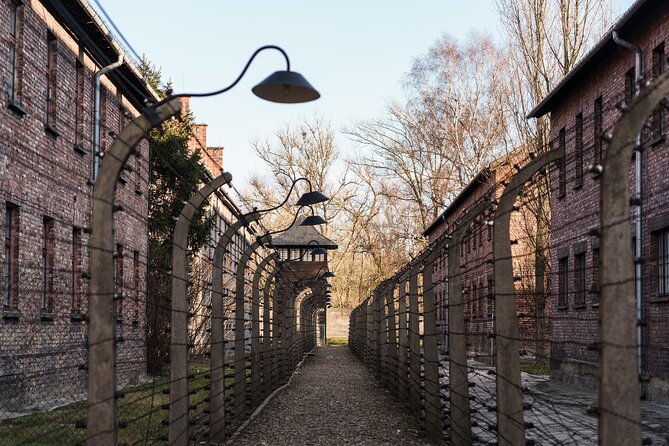
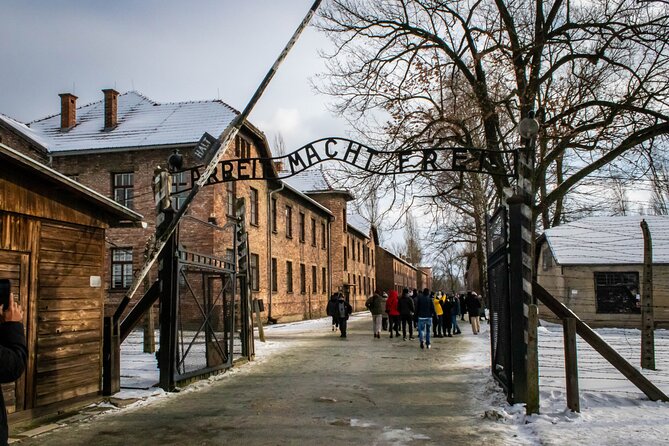
The first major stop is Panstwowe Muzeum Auschwitz-Birkenau for the Auschwitz I portion. Your time here is about 2 hours 30 minutes, and admission is included for this part.
Auschwitz I is where the camp system is explained in a concentrated way. You’re guided through original parts of the former concentration camp, and the tour focuses on the history of the genocide site. The complex is described as a network of German Nazi concentration camps operated in Poland during the Third Reich’s five years of operation.
The tour frames the scale in a direct way: approximately 1.5 million people were killed. It also lists groups among the victims as mostly Jewish, as well as Polish, Romani, Russian POWs, and people of other nationalities. That’s heavy material, and a good guide isn’t just reciting dates. A licensed museum guide can connect what you’re seeing to what those places meant, instead of treating the camp like a set of photo stops.
One practical thing I appreciate here: there’s a short pause before the guide meets you. After the drive into Oswiecim, you get a quick break for coffee or to look around outside. That small window helps you reset your body before you enter the more intense museum segments.
From what’s been shared about guide performance, clear communication is a standout. Names like Ilana and Michael show up in feedback as examples of guides who manage to be informative and human. If you get a guide with that kind of tone, it can make the facts easier to hold onto without turning the visit into a cold script.
Birkenau (Auschwitz II): The Open-Air Part That Changes How You See It
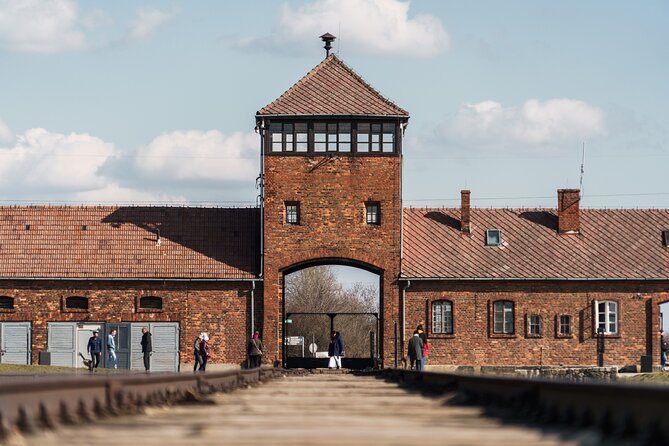
After Auschwitz I, you move to Brzezinka, also known as Auschwitz II-Birkenau. Your time here is about 1 hour 30 minutes. The itinerary notes that admission ticket is free for this portion, even though the overall package includes your museum admission.
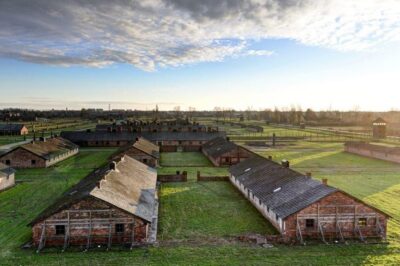
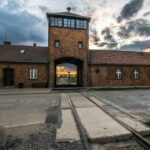
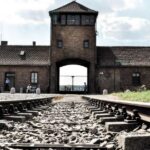
Birkenau is described as an open-air museum, and that’s exactly why it hits differently. Barracks, watchtowers, and the railway ramp where selections were made upon arrival are the key features you’ll walk through with the guide. Instead of being enclosed in museum buildings, you’re viewing the space as a whole.
That matters because the scale is part of the message. Birkenau’s vastness makes it harder to reduce the history to a single room or a single exhibit. You experience it as a system laid out in physical space. Even in a relatively short window, you’re meant to walk away understanding not just what happened, but how the place was arranged for the process.
The drawback of this portion is also simple: 1 hour 30 minutes can feel fast for such a large open-air site. If you want a longer, unhurried self-paced walk, a guided package may not feel like enough time. But if you want structure, context, and someone to keep the story accurate, this segment length is practical.
Timing, Breaks, and What to Pack for a 7.5-Hour Day
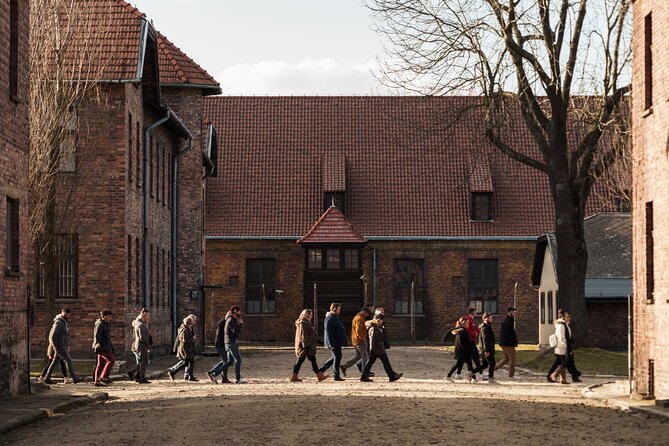
This trip lasts long enough that small comfort details matter. The tour runs about 7 hours 30 minutes, and you should expect no long lunch break. Food and drinks aren’t included, and the tour information specifically suggests bringing snacks and drinks.
Breaks are limited. The tour notes breaks during the day are no longer than 10 minutes. There’s that brief stop early on for coffee or looking around outside in Oswiecim, but once you’re inside the camp areas, it’s mostly guided time.
So pack like you’re doing a full workday, emotionally and physically:
- Snacks and drinks, because you may not get a meal stop
- A layered outfit you can adjust for weather
- Umbrellas or raincoats since the tour operates in all weather conditions
- ID or passport, because security asks for it before entrance
That last one is not just a formality. You’re told to bring an ID or passport because security checks it. If you forget it, you could lose time—or worse, be turned away.
Also, the site is serious and the views can be drastic. The tour notes that children are allowed but not recommended for kids aged 14 and under. If you’re traveling with younger teens, it’s worth thinking carefully about emotional readiness.
How the Guide Explains a System You Can’t Unsee
One of the hardest parts of Auschwitz-Birkenau is how many layers there are. The visuals can be stark. The history is complicated. And it’s easy to get lost if you’re trying to piece everything together on your own while reading and photographing.
This tour is designed to prevent that. It’s built around a licensed English-speaking museum guide, and the use of headsets supports that style of narration. You can listen while looking, which keeps you from constantly reorienting.
From feedback patterns, the guide’s tone matters. People singled out guides such as Ilana for mixing information with a more approachable style, and Michael for being especially strong at explaining the final solution. That doesn’t mean the subject becomes light. It means the guide can make the explanation clear enough that your brain can follow rather than freeze.
If you like learning with a human voice—someone translating what the space means—you’ll likely appreciate this format. If you prefer total silence and independent pacing, a guided tour may feel too directed.
Value for the Money: Is $69.68 Worth It?
At $69.68 per person, you’re not just paying for a bus ticket. You’re paying for several “hard-to-do-yourself” pieces:
- Hotel pickup and drop-off in Krakow
- Admission ticket included (with Auschwitz I covered)
- A licensed museum guide with explanations
- Headsets
The drive time from Krakow is about 1 hour 30 minutes each way. Doing that by yourself can be done, but it’s rarely cheaper once you factor in transport, timing, and the hassle of coordinating the exact entry experience. Here, the plan is built to keep the day on rails.
You also get a practical ceiling on crowding: maximum of 90 travelers. That’s relevant for value because too-large groups often mean you spend more time waiting than learning.
One more useful angle: this tour is commonly booked about 48 days in advance. That doesn’t guarantee availability, but it’s a clue that people plan ahead for this day. If you’re traveling at popular times, I’d treat early booking as a smart move.
Who This Tour Fits Best (and Who Should Reconsider)
This tour suits you if you want the Auschwitz-Birkenau experience with structure. You like having someone guide the story so you don’t miss key context. You also want the convenience of pickup rather than negotiating transport mid-trip.
It’s also a good match if English explanations and clear listening matter to you. With headsets and an English-speaking guide, you won’t have to rely on reading alone.
It’s less ideal if you need long breaks. The tour keeps breaks short and doesn’t plan a meal stop. If you’re someone who needs frequent bathroom or quiet time, think about whether you can handle a day with limited pauses.
And for families: children can participate, but it’s explicitly not recommended for kids aged 14 and under due to seriousness and drastic views. If you’re traveling with younger kids, you’ll want a thoughtful plan, not just a ticket.
Should You Book This Auschwitz-Birkenau Tour from Krakow?
Book it if you want a guided day that handles the big logistics for you: hotel pickup, licensed museum guidance, headsets, and access that’s organized around Auschwitz I and Birkenau. The price makes sense for what’s included, especially if you’d otherwise spend time figuring out transport and timing on your own.
Don’t book it if your schedule can’t handle a long emotional day. This is about 7.5 hours, with a lot of fixed pacing and only short breaks. Also, if you’re traveling without the basics like ID/passport, remember security can be a hard stop.
My checklist:
- You’re okay with a long, sobering visit with short breaks
- You want an English-speaking licensed guide and clear narration
- You’ll pack snacks, drinks, and rain gear
- You have your ID/passport ready for security
If those points fit you, this tour is a strong, straightforward way to see Auschwitz-Birkenau from Krakow without turning the day into a logistics puzzle.