REVIEW · KRAKOW
Schindler’s Factory and Jewish Ghetto Guided Tour
Book on GetYourGuide →Operated by INTERCRAC Ltd. · Bookable on GetYourGuide
Kraków’s WWII story is hard to forget. This 3-hour Schindler’s Factory and Jewish Ghetto guided tour connects one man’s choices to the daily reality of life under Nazi occupation. You start inside the factory museum, then walk through the wartime district where the ghetto walls still mark confinement and where places like Józefińska 41 and Ghetto Heroes Square shaped survival.
I especially like how the museum doesn’t just say Schindler’s name—it shows the broader setting, from fear and uncertainty to the everyday mechanics of occupation. And I love that the walking portion gives you physical, street-level context right after the exhibition, so what you just saw in rooms lands in real life on the pavement.
One thing to plan for: the museum is extremely popular, and the route is designed to be efficient. If you want slow pacing to absorb every photo and display, you may feel a bit rushed during the Schindler’s Factory part.
In This Review
- Key tour takeaways worth noting
- Schindler’s Enamel Factory Museum: context before you walk
- What you’ll see inside the exhibition (and why it matters)
- The ghetto walk starts with real leftovers: remnants and routes
- Józefińska 41 to Ghetto Heroes Square: how round-ups shaped the city
- Under the Eagle Pharmacy: help that happened in plain sight
- How the 3-hour schedule works (and where it can feel tight)
- Price and value: is $57 fair for this much ground?
- Who this tour suits best (and who might prefer something else)
- Practical tips for a smoother experience
- Should you book this Schindler’s Factory and Jewish Ghetto tour?
- FAQ
- How long is the Schindler’s Factory and Jewish Ghetto guided tour?
- Where do I meet the guide?
- Is ticket-line time included?
- Do I get into Under the Eagle Pharmacy?
- What languages is the live guide available in?
- What’s included in the price?
- What should I know about group size and tickets?
Key tour takeaways worth noting
- Schindler’s Factory plus the ghetto walk: you get context first, then geography
- Original artifacts and period-style reconstructions: personal objects and recreated street scenes help the story stick
- Preserved ghetto wall fragments: you can literally see where the enclosure line was
- Stops with real wartime roles: Józefińska 41 and the orphanage/welfare/hospital functions matter
- Under the Eagle Pharmacy from the outside: you learn the rescue network without going inside
- Guides can make or break it: people often highlight clear, calm instruction from guides such as Bartholomew, Joanna, Magda, Alicja, and Phil
Schindler’s Enamel Factory Museum: context before you walk
The tour begins at Schindler’s Factory Museum, right by the main entrance (look for the sign held on the right-hand side). Fast-track admission helps you skip the ticket line, which matters because this place can be crowded and timed entry is the norm.
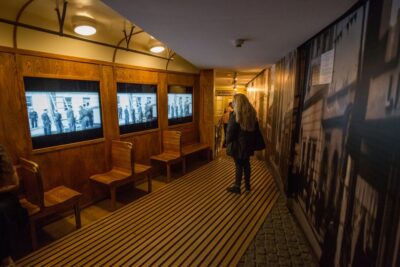
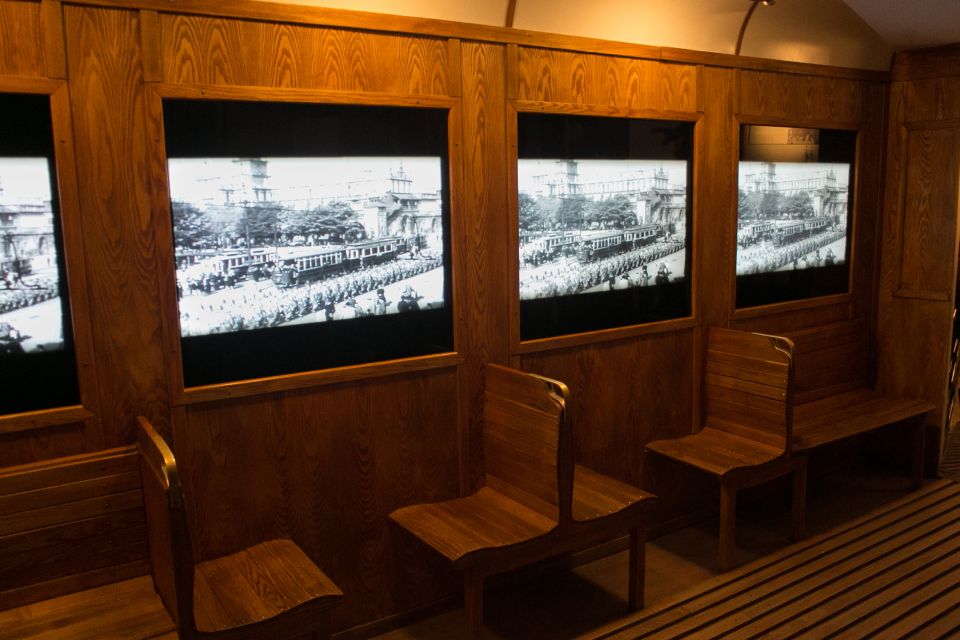
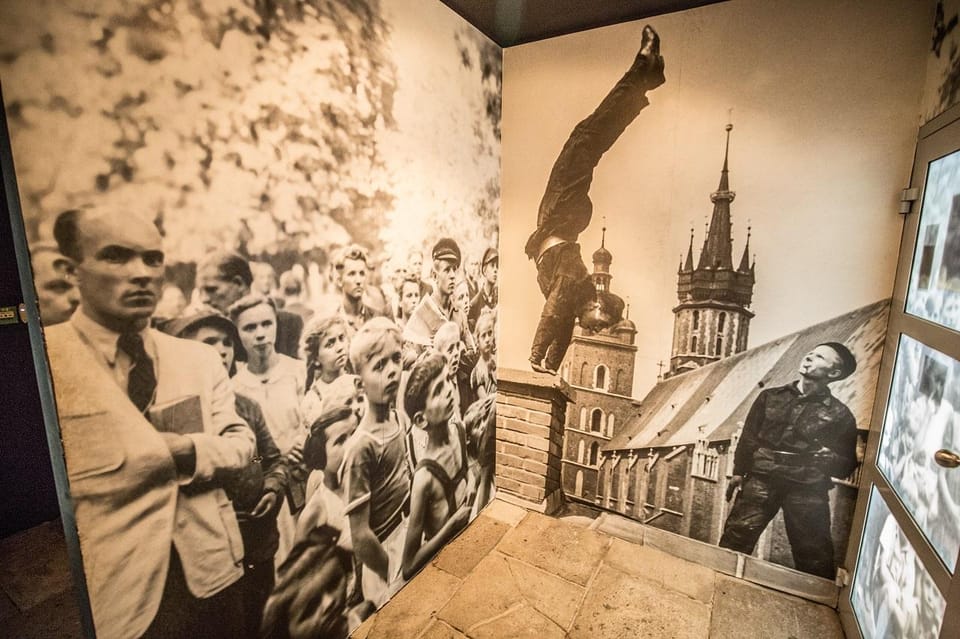
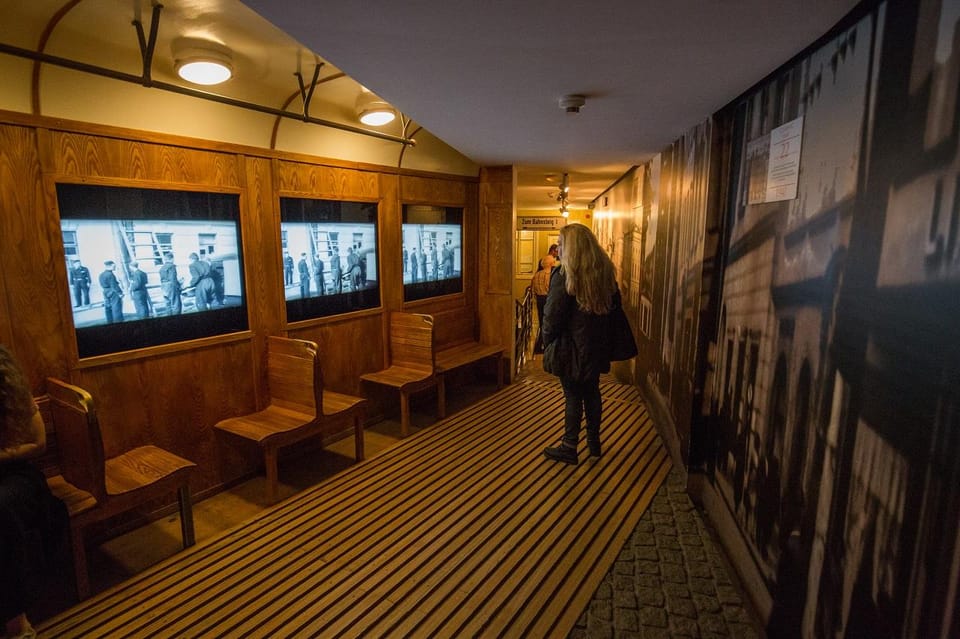
Once you’re inside, you’re not just touring an old building. The experience is built around Kraków under Nazi Occupation 1939–1945, and it’s designed to recreate the feeling of a city under pressure. Expect narrow passageways and an immersive layout that guides you through the atmosphere of wartime Kraków rather than treating the exhibits like a quick hit parade.
Even if you’ve seen photos of Schindler’s Factory before, the museum’s focus changes the tone. The story is anchored to Oskar Schindler’s actions—yes, but also to what the occupation did to ordinary people, Jewish and non-Jewish alike. That balance is one of the biggest reasons I think this tour works so well: it keeps Schindler from floating in a bubble of pure heroism and places him inside a brutal system.
You can also read our reviews of more guided tours in Krakow
What you’ll see inside the exhibition (and why it matters)
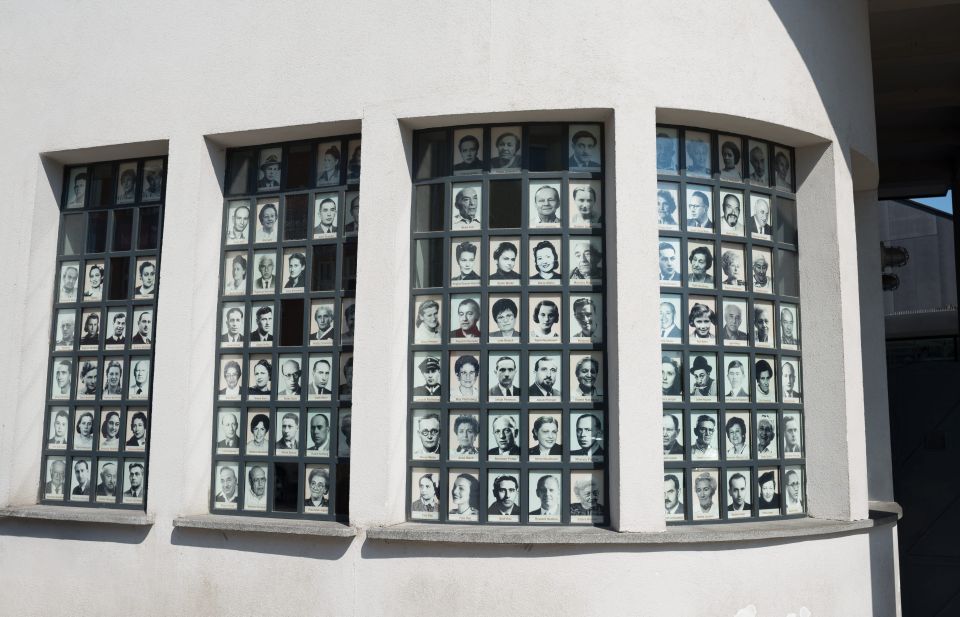
Inside the museum, you’ll move through a mix of photographs, personal objects, and reconstructed streets. That combination is powerful because it hits both sides of understanding: the facts of what happened, and the human scale of what it felt like day-to-day.
The exhibition layout also helps you build a timeline in your head. You see how life changed before the worst phases tightened, then what living under occupation looked like as conditions worsened, and how the city’s social fabric was strained. You’ll also learn how Schindler used his position, influence, and resources to protect Jewish workers—often identified historically as the Schindlerjuden—so more than a thousand people survived thanks to choices made in the middle of a collapsing world.
One practical note: although the building was once Schindler’s enamel factory, it no longer contains original production equipment. That’s not a downside—think of it as museum storytelling using the space, not a time capsule of machines.
If you like historical interpretation that ties people to place, this museum portion does that job well. It sets you up to make sense of what you’ll see outside in the ghetto district: walls, squares, and streets that weren’t symbols back then—they were boundaries and routes for daily survival.
The ghetto walk starts with real leftovers: remnants and routes
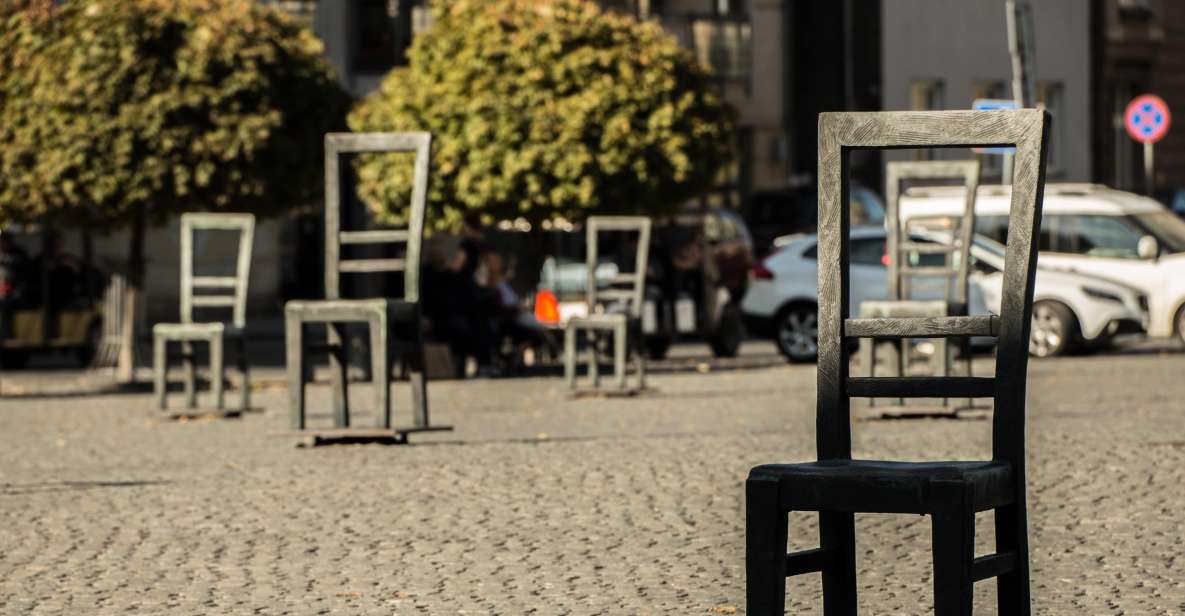
After the museum, the walking part begins among the remnants of the Kraków Ghetto. This is where I think many visitors get the real “click.” The information from the exhibition stops being something you remember and starts becoming something you can map.
As you move deeper into the district, one key stop is Józefińska 41. This wasn’t just an address on a street—it served functions crucial to life inside the ghetto: an orphanage, welfare offices, and a hospital. When you learn that, the site stops being abstract. You start understanding that survival wasn’t only about hiding—it also depended on institutional lifelines, even when the entire system was built to crush people.
You’ll also see preserved fragments of the ghetto walls. They’re stark for a reason. The wall didn’t just separate “inside” from “outside.” It shaped movement, access, work opportunities, and the simple ability to exist safely. Standing near those remnants makes the enclosure feel less like history and more like architecture.
This part of the tour is also a reminder that the story isn’t only about moments of deportation or dramatic headlines. It includes the daily endurance of Jewish and non-Jewish residents under constant threat—how people managed uncertainty, maintained routines where they could, and tried to protect one another when the rules allowed almost no protection at all.
Józefińska 41 to Ghetto Heroes Square: how round-ups shaped the city
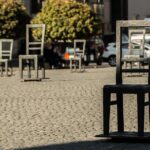
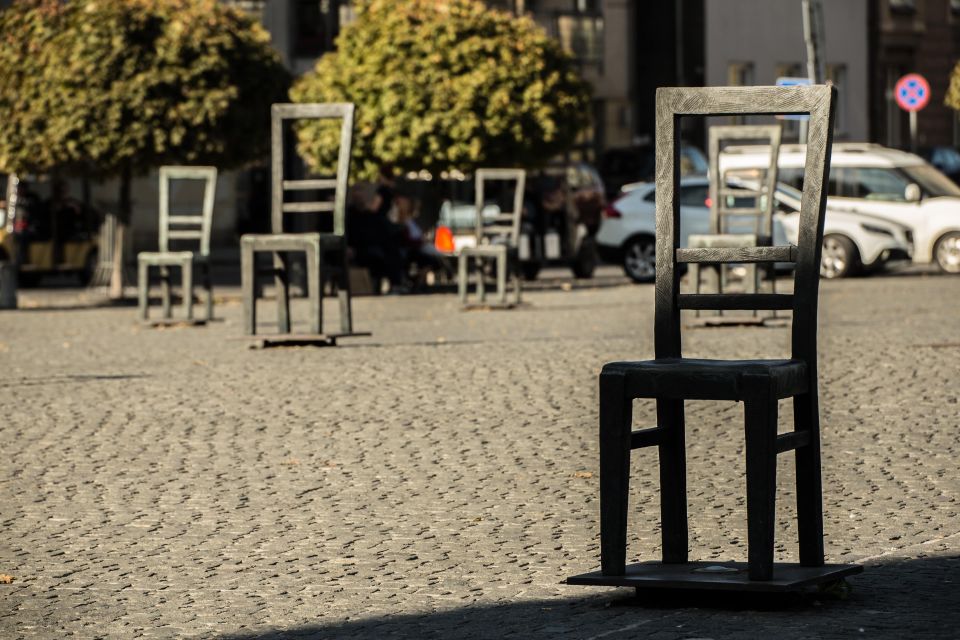
The tour continues to Ghetto Heroes Square, today marked by the Chair Memorial. The square is the kind of place that makes you slow down, because it used to function as an open staging area for round-ups and deportations to concentration camps.
Here’s the value of hearing the story in this specific location: the same space that now holds remembrance once played a role in the machinery of persecution. That connection helps you understand how the occupation used everyday urban space as a tool—turning streets and squares into checkpoints, holding areas, and departure points.
If you’re someone who likes to understand systems—how power worked, not just what happened emotionally—this is a meaningful stop. You can’t fully separate individual suffering from the organized processes behind it. The square helps explain that harsh reality without turning the experience into a cold lecture.
Under the Eagle Pharmacy: help that happened in plain sight
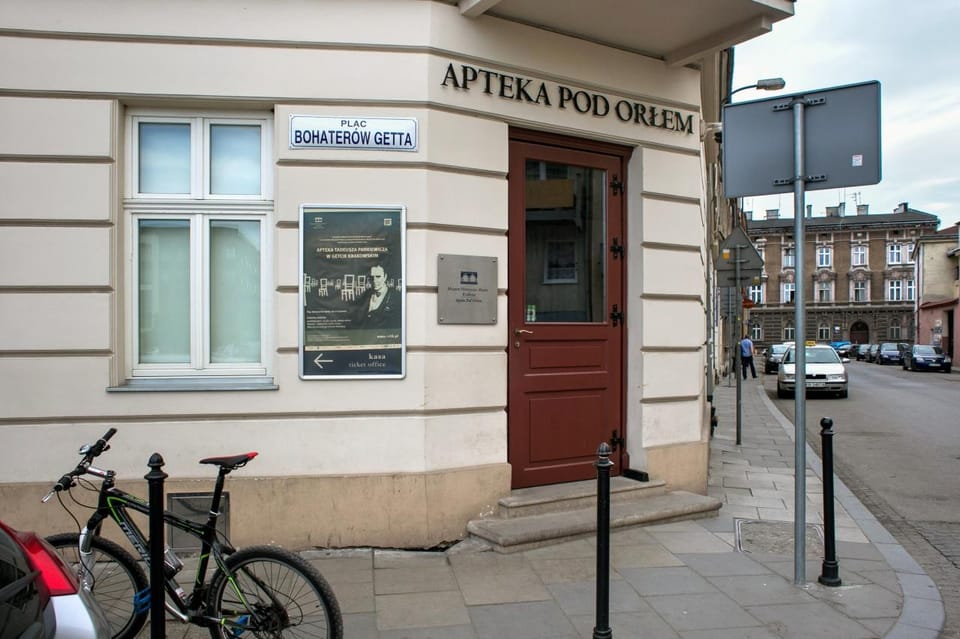
Across from the chair memorial area stands the Under the Eagle Pharmacy. You won’t enter the pharmacy—this is a stop designed for learning from the outside—but that limitation doesn’t dilute the point. The stories attached to the building are the point.
This is where Tadeusz Pankiewicz and his staff risked everything to aid Jewish residents. Their help included medicine, shelter, and hope. Even from outside, the stop adds something important to the overall narrative: it shows that rescue wasn’t only about one man with influence. It also included people taking practical action, often at personal cost, inside a city where even kindness could be punished.
If you find yourself wanting more time here, that’s a real consideration. The tour runs on a timed schedule, and while the pharmacy story is central, there isn’t a long sit-down inside. Plan to treat this moment like a focused chapter: listen closely, notice details, and let the meaning build with what you learned earlier in the museum.

How the 3-hour schedule works (and where it can feel tight)
The total duration is about 3 hours, with the museum portion and the wartime district walk combined. Fast-track entry and a licensed guide keep the momentum steady, and the group size is limited to 25.
That cap matters. Smaller groups make turns easier, help you hear the guide clearly, and reduce the “follow the crowd” feeling. Still, Schindler’s Factory is extremely popular. Even with fast-track, the museum can feel busy, and the tour route can feel like a guided sprint through material that deserves more time.
Two patterns you should keep in mind:
1) The factory section is packed with exhibits, so there’s less space for lingering.
2) The ghetto walk builds on themes already raised in the museum, so some context can feel repeated if you’re comparing notes.
The best workaround is mindset. Think of the museum as setup and the ghetto walk as location-based meaning. If you let those roles differ, the schedule feels less rushed and more intentional.
Price and value: is $57 fair for this much ground?
At $57 per person for roughly 3 hours, you’re paying for three things: a licensed guide, fast-track admission, and a structured walking tour in the wartime district.
If you tried to do this on your own, you’d quickly hit two friction points. First, you’d need to time museum entry and figure out how to connect the exhibition to the street-level sites. Second, you’d need someone to interpret what you’re seeing—why Józefińska 41 mattered, why the walls matter, and what the Chair Memorial signifies in the broader story.
That’s the value of a guided approach here: it turns a museum plus a walk into one coherent narrative. Is it “cheap”? No. But for Kraków, where many WWII-related experiences can be either very short or very self-guided, this price looks like it reflects the reality of a skilled guide and timed entry.
Food and drinks aren’t included. That’s fine—just plan your timing. If you’re sensitive to empty-stomach discomfort, consider eating beforehand so the tour stays focused.
Who this tour suits best (and who might prefer something else)
This is a strong fit if you want more than names and dates. You’ll get daily life in Nazi-occupied Kraków beyond Schindler’s story, plus specific stops tied to real wartime roles and endurance.
It also fits history-minded travelers who like clear structure: museum first, then outdoor locations. Some people even find the order helps them understand the walking portion because the groundwork is already set.
This tour might feel heavy if you prefer lighter sightseeing. The subject matter is difficult by nature, and the design of the museum plus the external stops like deportation-related sites will bring that heaviness to the front. If you’re coming during cold weather, comfort matters too—expect outdoor walking and dress for it.
Practical tips for a smoother experience
Here’s what helps most, based on how this kind of tour runs in real life:
- Arrive at least 10 minutes early. Once the group enters, late arrivals can’t be accommodated and tickets are non-refundable.
- Wear comfortable shoes. The route is a mix of museum space and walking through a district.
- Bring layers in cooler months. The ghetto walk is outdoors, and you’ll feel the cold more than you expect.
- Choose your language carefully. The tour runs in a single language, and you’ll need to select that when booking.
- Know the tickets requirement: museum tickets are personalized, and full names of all participants must be provided at booking.
If you want to get the most out of it, treat this as a guided learning experience rather than a photography marathon. You’ll remember the story more clearly when you listen and watch for how each stop connects to the last.
Should you book this Schindler’s Factory and Jewish Ghetto tour?
I’d book it if you want a guided, coherent way to understand WWII Kraków—one that links exhibition themes to the actual streets and boundaries where people lived, suffered, and tried to survive. The fast-track entry and the structured 3-hour flow make it realistic for a tight itinerary, and the combination of museum artifacts plus ghetto walking gives you depth that a single-site visit usually can’t match.
I’d think twice if you hate feeling rushed or if you know you want lots of unhurried time in a museum. In that case, you might consider pairing this with extra independent time later—because Schindler’s Factory can be the sort of museum you want to revisit slowly.
Overall, this is the kind of tour that helps you understand not just what happened, but how it operated day by day—and how help and resistance could still exist in a world built to destroy them.
FAQ
How long is the Schindler’s Factory and Jewish Ghetto guided tour?
The tour lasts about 3 hours.
Where do I meet the guide?
Meet in front of the main entrance to the Schindler’s Factory Museum, on the right-hand side, where the guide holds a Schindler’s Factory Guided Tour sign.
Is ticket-line time included?
Yes. You get fast-track admission to Schindler’s Factory.
Do I get into Under the Eagle Pharmacy?
No. The tour includes a stop at the pharmacy and its stories of help, but you do not enter.
What languages is the live guide available in?
The tour is offered with live guides in French, English, Spanish, German, and Italian.
What’s included in the price?
It includes a professional licensed guide, fast-track admission, and a walking tour of the Jewish wartime district.
What should I know about group size and tickets?
Group size is limited to 25 participants. Museum tickets are personalized, so you must provide the full names of all participants at booking.