REVIEW · KRAKOW
Krakow: Schindler’s Factory and Jewish Ghetto Guided Tour
Book on GetYourGuide →Operated by Thousand Miles Cracow Adventure Company · Bookable on GetYourGuide
Factory walls still hold echoes. This 3-hour Krakow tour pairs Schindler’s Factory Museum with a focused walk through Podgórze, plus major memorial stops like the 68 Empty Chairs.
I like the way the factory tour explains what Oscar Schindler did and how the workplace was used to protect Jewish workers, not just as a story, but as daily wartime reality. I also like that the second half slows down and gives you street-level context in the ghetto area—walking with your guide past places like the surviving wall and the Under the Eagle pharmacy. One thing to plan for: the museum can feel crowded in narrow corridors, and timing can make the outdoor walking part darker in winter.
In This Review
- Key points before you go
- Schindler’s Factory Museum: start where the story is physical
- Oscar Schindler inside the factory: what the guide makes real
- The short break that helps your brain reset
- Podgórze walking tour: street history you can actually feel
- Under the Eagle pharmacy and the memorials that frame the end
- Why the guide quality makes or breaks this tour
- Timing and daylight: your winter planning cheat code
- Price and value: what you’re really paying for at $58
- Who this tour is best for in Krakow
- Should you book this Schindler’s Factory and Jewish Ghetto tour?
- FAQ
- How long is the tour?
- What does the tour cost?
- Where do I meet the guide?
- What’s included in the price?
- Is food and drinks included?
- Which languages are offered?
- Do I need to bring a passport or ID?
- Is there a skip-the-ticket-line benefit?
- What stops are included in addition to the factory?
- Can I cancel for a full refund?
Key points before you go
- Schindler’s Factory + Podgórze in one ticket: a tight, 3-hour arc from workplace survival to neighborhood memory
- Stops that hit hard: the 68 Empty Chairs and Heroes’ Square, plus the Under the Eagle pharmacy
- Guides who explain clearly: praised for strong storytelling and smart, organized pacing
- A personal-feeling tone: many guides share emotionally grounded context that makes exhibits feel less abstract
- Winter daylight matters: evening light can make outside details harder to spot
Schindler’s Factory Museum: start where the story is physical
Your tour meets at the entrance to the Schindler Factory Museum. Look for a guide holding an excursions.city sign. From the start, the setup is practical: you get skip-the-ticket-line, and you’re not standing around trying to figure out which door leads where.
Once inside, the experience shifts from “museum wandering” to “guided meaning.” The factory isn’t just a collection of objects—it’s a real setting tied to wartime decisions, labor, and survival. The tour format also helps you stay oriented: you’ll have a guided museum segment first (around 1.5 hours), then you’ll get a short pause before heading into Podgórze.
A heads-up that matters for planning: you’ll want to bring your passport or ID for entry to the museum, and you need to provide full names for all participants when reserving. Times can be approximate because the museum schedule can shift, so don’t build the rest of your day around a razor-precise minute.
You can also read our reviews of more guided tours in Krakow

Oscar Schindler inside the factory: what the guide makes real
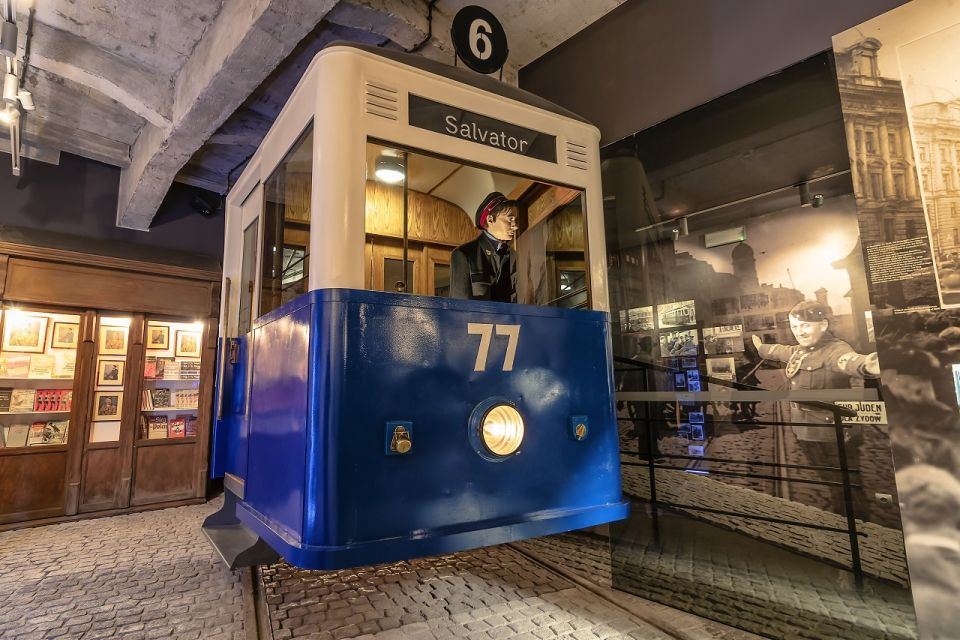
In the Schindler’s Factory portion, you’re learning the life and legacy of Oscar Schindler as a German entrepreneur caught in a brutal time—and how his actions became part of the events later linked to Steven Spielberg’s Schindler’s List.
What I find especially valuable here is that you don’t just hear a headline version of the story. The tour explains daily life around the factory: how work was organized, what Jewish workers faced, and how the factory’s role could mean protection rather than just danger. This is the kind of context that helps when you step out later into Podgórze and the ghetto history stops feeling like a separate topic.
The guides praised most often are the ones who can hold your attention in a museum setting—clear explanations, good pacing, and enough detail to make the exhibits click. In the past, names like Ela, Christopher, Helena, and Joanna have come up in this tour experience, with people highlighting strong storytelling. Even if your guide is different, the pattern you want is the same: you should feel you’re being guided, not merely escorted through rooms.
The short break that helps your brain reset
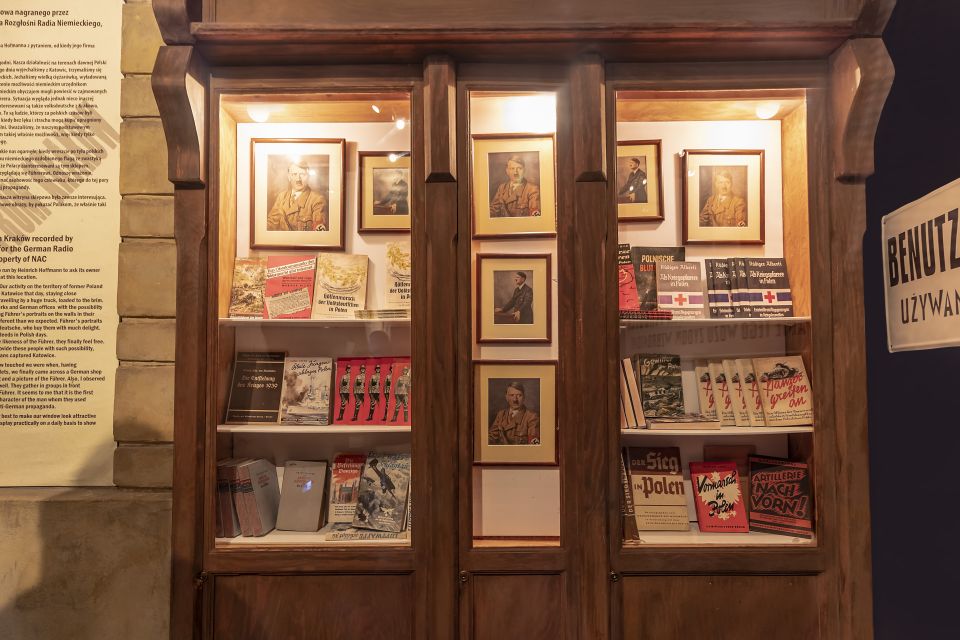
After the museum segment, you’ll get a break before the walking tour of Podgórze. One commonly mentioned rhythm is about 30 minutes between the two parts, with the ghetto walk taking roughly about an hour.
This pause isn’t just “time off.” It’s a smart buffer. Holocaust-related sites can be emotionally demanding, and a short reset keeps you from rushing through the outdoor portion in a fog. If you can, use the break to grab water and re-center. Then when you step into Podgórze, you’ll be better able to take in what your guide points out—especially the small things that don’t jump out at you at first glance.
Podgórze walking tour: street history you can actually feel
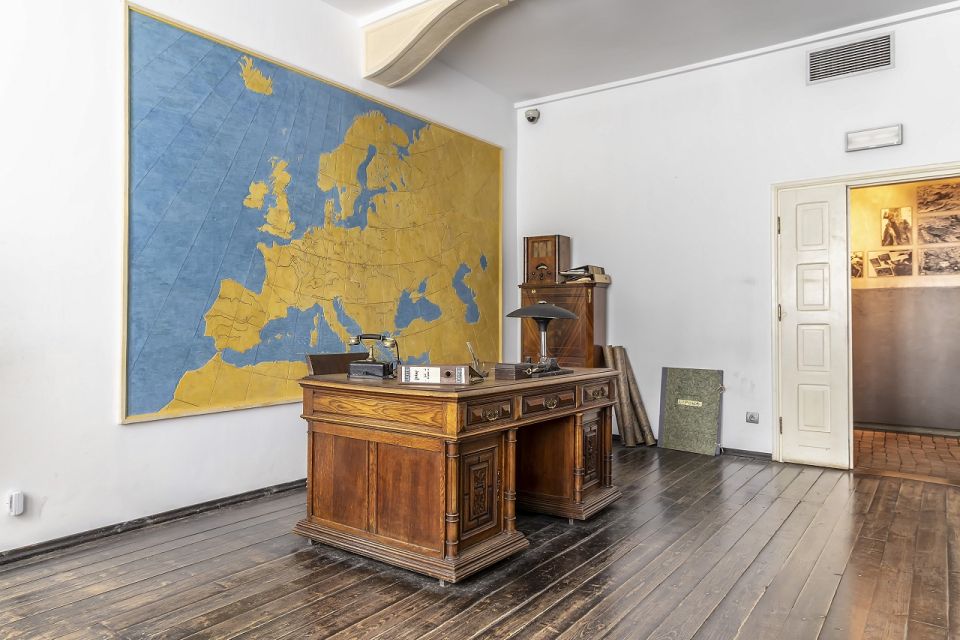
The Podgórze portion is where the tour becomes more than museum interpretation. You’ll walk through the area and hear about Nazi occupation in Krakow, with the goal of helping you understand what daily life looked like under threat and control.
This is also where the “location matters” lesson really lands. The guide doesn’t just describe events; they connect those events to physical places—so the story sticks in your memory. You’ll also get a sense that the city carries layers: some parts have changed, but the geography and the remaining structures still anchor what happened.
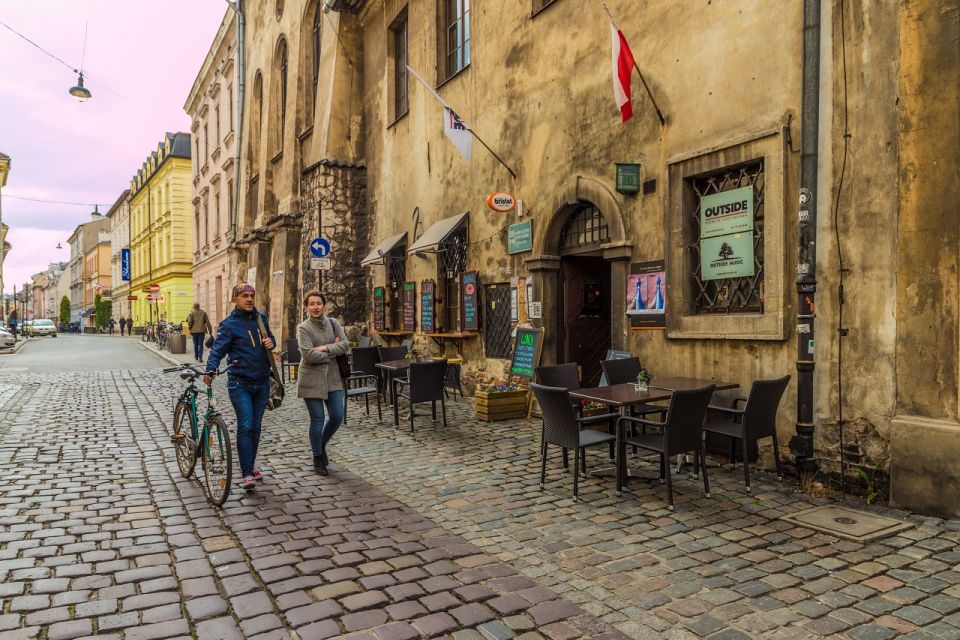
The walk typically focuses on the ghetto’s surviving environment, including a section of undestroyed wall around the ghetto and the houses where thousands of displaced Jews used to live. When you’re standing near walls that still exist, it’s easier to understand why the history feels immediate and not like something sealed in glass.
Under the Eagle pharmacy and the memorials that frame the end
A standout part of the route is a stop at the pharmacy called Under the Eagle. Even if you’re not a “pharmacy person,” this stop matters because it shows how ordinary services and daily needs intersected with survival. Your guide explains the role the place played in people’s lives, which gives you a more human picture than “just numbers” could.
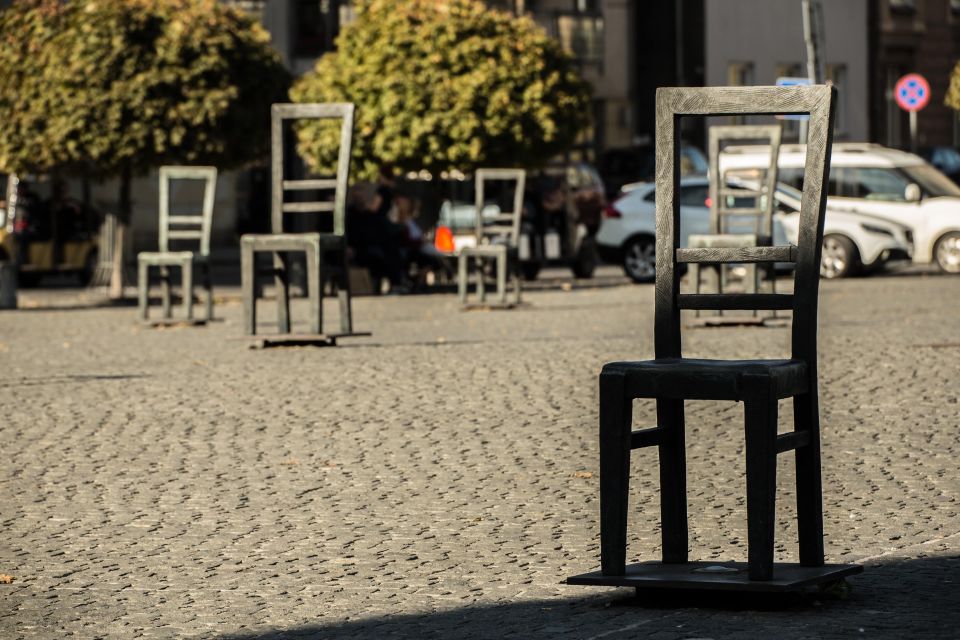
Then you’ll reach one of the tour’s major emotional anchors: the 68 Empty Chairs in Heroes’ Square. This memorial turns history into a visual statement. It’s not subtle, and that’s the point. The guide will explain the significance, and you’ll likely come away thinking about absence in a way that’s hard to shake.
This ending sequence—survival context first, then memorial framing—works well for most people. It helps you move from “what happened” to “how we remember,” instead of stopping abruptly after the museum.

Why the guide quality makes or breaks this tour
This kind of tour lives or dies on interpretation. The Schindler’s Factory Museum has a lot to process, and the ghetto walk has details that can be easy to miss if you’re just looking around on your own. That’s why your live guide matters so much here.
The strongest experiences come from guides who can:
- explain complex events clearly without turning the tour into a lecture
- connect exhibits to real-world impact
- add personal context without losing respect for the subject
- keep the pacing steady so you actually see the important parts
In the tour experiences shared previously, several guides were singled out for passion and knowledge, including people such as Ela, Christopher, and Helena. The emotional connection described by some guides can make the story feel more personal—and that can be moving in the right way.
One caution, though: if your group is large, even a good guide can’t change the building’s reality. Narrow museum corridors can slow movement and make you feel like you’re being pushed along. If that’s a worry for you, aim for the smaller-group feel when possible, and don’t expect endless time in every room.
Timing and daylight: your winter planning cheat code
This tour runs about 3 hours, and the schedule can shift slightly based on museum timing. That’s normal. But if you’re visiting in winter, plan for early darkness. One experience noted that it was already dark by the start of the walking portion in December, which made it harder to see some of the points highlighted by the guide.
So here’s the practical move: if you can choose a later-afternoon start versus a more evening-leaning start, do it. Even a bit of extra light makes it easier to connect what you heard with what you see—especially outdoors at the ghetto wall, streets, and memorial area.
Also remember: because times are approximate, treat your first appointment time as flexible. You’ll have a better experience if you don’t stack another time-sensitive commitment right after.
Price and value: what you’re really paying for at $58
At $58 per person, this tour isn’t cheap, but it also isn’t trying to be a bargain-basement history lesson. You’re paying for three practical things that add up:
- Guided time in the most important places: Schindler’s Factory isn’t just “look and read.” It’s built for interpretation, and guidance helps you focus on what matters.
- Entry included and ticket-line skipped: that’s time saved at the door, plus less stress.
- A second segment that most people underestimate: the Podgórze walk plus key stops (Under the Eagle and 68 Empty Chairs) would be harder to assemble into one coherent, meaningful route on your own.
Could you visit on your own? Yes, you can enter the museum without a guide in general. But this is where value shows: without a guide, you might walk through displays without knowing what to prioritize or how the story pieces connect. With a guide, the tour gives you a built-in framework.
If you’re the type who loves reading every label and taking your time, you might feel this is a lot to cover in 3 hours. If you want the fastest path to understanding and you care about guided context, the price starts to look fair.
Who this tour is best for in Krakow
I’d point you toward this tour if you:
- want Schindler’s Factory and Podgórze connected in one outing
- prefer a guided structure instead of piecing history together yourself
- care about memorial context, not just museum exhibits
- like your history explained clearly with real-world details
It’s also a strong fit if you’re visiting Krakow for a short time and want one concentrated, high-impact history morning/afternoon. If you’re traveling with teens or adults who get bored with long museum drifts, the pacing and guided stops can keep attention steady.
If, on the other hand, you’re sensitive to crowds and very slow movement through narrow spaces, you may want to consider whether you’ll prefer a smaller group option. And if you hate walking in the dark, choose a start time with more daylight.
Should you book this Schindler’s Factory and Jewish Ghetto tour?
Yes, I think this is a smart book for most first-timers who want more meaning than sightseeing checklists. The pairing of Schindler’s Factory with a Podgórze walk and major memorial stops gives you a more complete picture than either piece alone. The guides—often praised by name in past experiences—tend to bring the story to life in a way that helps you understand what you’re seeing, not just what you’re passing.
Book it if you want guided focus, practical time-saving, and a route that ends where the memory belongs at Heroes’ Square. Consider skipping this exact format only if you’re very crowd-sensitive in museums or if you’re visiting in deep winter and can’t manage reduced daylight for the outdoor portion.
FAQ
How long is the tour?
The duration is 3 hours.
What does the tour cost?
The price is $58 per person.
Where do I meet the guide?
Meet your guide at the entrance to Schindler Factory Museum, looking for a guide holding an excursions.city sign.
What’s included in the price?
You get a live guide, entry to Schindler’s Factory, a guided tour of Schindler’s Factory, and a walking tour of Podgórze.
Is food and drinks included?
No. Food and drinks are not included.
Which languages are offered?
The live tour guide can speak French, Spanish, English, German, or Italian.
Do I need to bring a passport or ID?
For museum entry, you must provide full names of all participants when reserving and bring a passport or ID for entry to Schindler’s Factory Museum.
Is there a skip-the-ticket-line benefit?
Yes, the tour includes skipping the ticket line.
What stops are included in addition to the factory?
The walk includes key areas in Podgórze and ghetto-related sites, plus stops such as the Under the Eagle pharmacy and the 68 Empty Chairs in Heroes’ Square.
Can I cancel for a full refund?
Yes. Free cancellation is available up to 24 hours in advance for a full refund.