REVIEW · KRAKOW
Kraków old town and jewish quarter®
Book on GetYourGuide →Operated by CHT Sp. z o.o · Bookable on GetYourGuide
Krakow makes sense with a real historian. This 3-hour walk uses a Geography and History graduate guide to connect the big events that shaped Krakow and Poland, not just point at buildings. I like how the story stays anchored to what you’re standing in front of, which makes the city’s World Heritage status feel earned.
My favorite part is the balance: Old Town monuments plus Kazimierz in the same outing, so you understand how the city grew and how different communities lived side by side. One thing to consider is that it’s a tight route with a lot of walking up to the Wawel hill complex, and food or drinks aren’t included, so you’ll want to plan a snack break outside the tour.
In This Review
- Key highlights worth your attention
- Krakow through two lenses: Old Town and Kazimierz in one 3-hour loop
- Meeting your Spanish guide with the grey umbrella
- Downtown monuments: theatre, walls, gates, and the Market Square area
- The university neighborhood: Copernicus and John Paul II context
- Wawel hill walk: Wawel complex, the cathedral, and the dragon sculpture
- Kazimierz Jewish quarter: synagogues, cemeteries, and memory monuments
- How the guide connects coexistence and conflict to real streets
- Price and value: $16 for a 3-hour historian-led walking route
- Who this tour suits best
- Practical tips so you enjoy every stop
- Should you book this Kraków Old Town and Jewish Quarter tour?
- FAQ
- How long is the tour?
- What language is the guide?
- Where does the tour start?
- What areas are covered?
- Is food or drinks included?
- Is the tour wheelchair accessible?
- Can I cancel and get a full refund?
- Can I reserve now and pay later?
Key highlights worth your attention
- Historian-led explanations that tie streets and buildings to major historical forces
- Old Town and Kazimierz together, so the Jewish quarter isn’t treated like an add-on
- Major Krakow anchors on foot: Market Square area, Wawel complex, and top synagogues/sites in Kazimierz
- Practical guide style with maps for the meeting point and use of photos or drawings
- Clear pacing for a 3-hour format, with frequent spatial changes between areas
- Spanish-language live guidance with wheelchair accessibility
Krakow through two lenses: Old Town and Kazimierz in one 3-hour loop
This tour is built around two of the most important Krakow areas: the historic center and the Jewish quarter, Kazimierz. You’ll start in the downtown core, then shift toward the university neighborhood, keep heading up to Wawel, and finally cross into Kazimierz for the Jewish heritage sites.
The goal isn’t sightseeing for sightseeing’s sake. The guide frames Krakow as a city shaped by historical events, choices, and coexistence, which is exactly what you need if you want the place to click instead of blur.
And yes, you’ll see the landmarks people come for. But the value is the linking: why these places matter together, and how the city’s architecture mirrors those changes over time.
You can also read our reviews of more tours and experiences in Krakow.
Meeting your Spanish guide with the grey umbrella
The tour is in Spanish, with a live guide. If you’re using the meeting point to orient yourself, this detail helps: the guide carries a grey umbrella.
One reason this tour tends to work well is that you’re not left guessing once you arrive. You should expect clear guidance to get you started and keep you moving between areas.
You’re paying for more than routes between monuments. The guide is a graduate in Geography and History, and that background shows in how explanations connect urban form, politics, and culture.
Downtown monuments: theatre, walls, gates, and the Market Square area
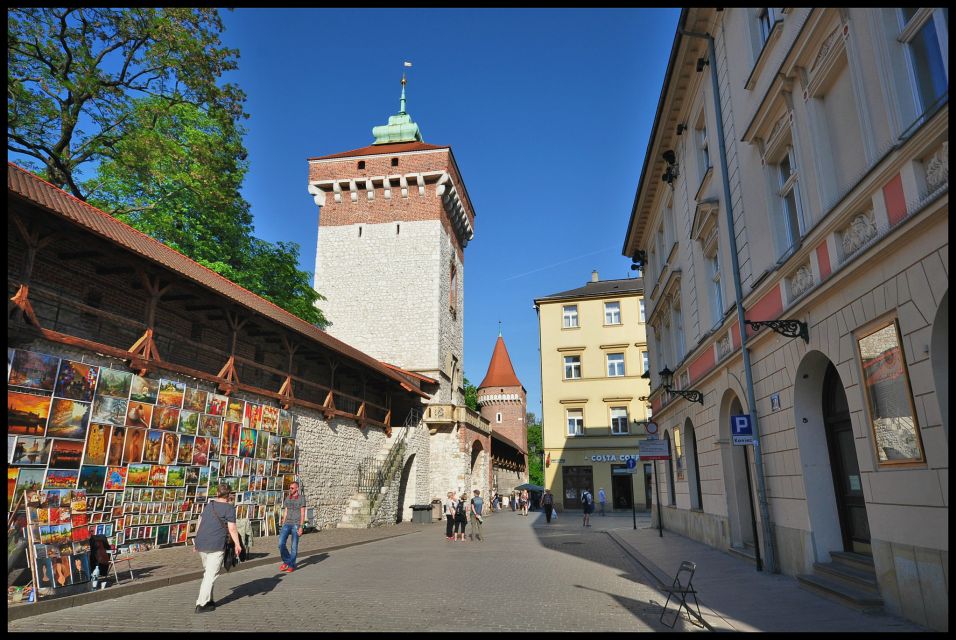
You begin in Krakow’s downtown zone with big architectural and historic anchors. The first stops in this mood are the Juliusz Słowacki Theater, the medieval walls, and other defensive or city structures you’ll see around the historic fabric.
This part matters because it’s the foundation of how you’ll read the city later. When you understand the city’s early layout and fortifications, you stop treating the old center like a postcard backdrop.
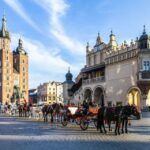
From there, the walk pushes you toward the Market Square area, the place where the city’s monumental weight becomes obvious. You’ll spend time around major Market Square sights, including the Basilica of Saint Mary and the Sukiennice area, plus the Tower of the Old Town Hall.
Here’s the practical payoff: in a short tour, the Market Square zone helps you anchor the rest of the day. Once you know where the city’s public life sits, the Wawel hill and Kazimierz quarter stop feeling like separate worlds.
Also, it helps that the pace stays orderly. One of the most useful things in a history walk is avoiding the feeling that you’re always “behind” the story. This route keeps moving, but the explanations are timed to the view in front of you.
The university neighborhood: Copernicus and John Paul II context
After the Market Square area, the route heads into the university neighborhood. This section highlights how Krakow education connects to major Polish figures, including Copernicus and John Paul II.
Even if you know those names already, this stop can change how you picture them. You’re not learning as trivia. You’re linking academic training to the city’s role in shaping ideas and public life in Poland.
You’ll also visit a key historic academic building: the Collegium Maius. Since the tour frames these points as part of Krakow’s larger historical story, you’ll likely understand why the city’s universities are more than old stone. They’re part of how influence travels through generations.
If you like places where history and geography connect—how a city produces scholars and leaders—this neighborhood segment is a strong reason to book.
Wawel hill walk: Wawel complex, the cathedral, and the dragon sculpture
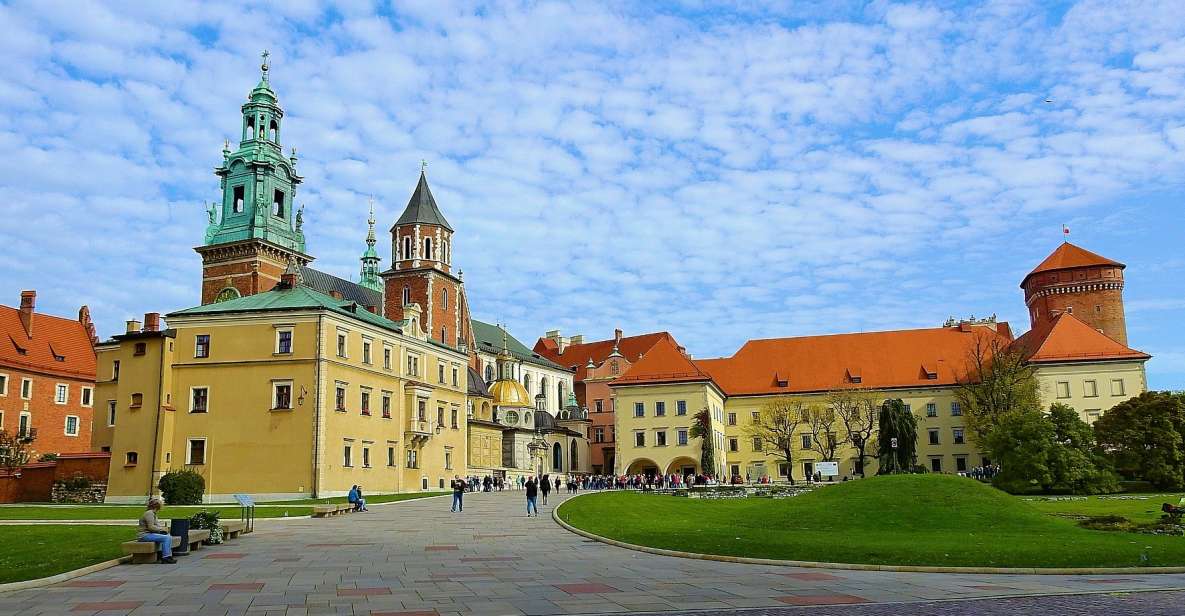
Then comes the uphill part: the route visits the entire Wawel complex. You’ll ascend the hill to analyze the city cathedral and the buildings that belong to this architectural complex.
This is where Krakow’s skyline logic makes sense. Standing on the hill helps you understand why power and ceremony historically clustered in this spot. Even without getting lost in details, you can feel how the city’s layout points attention upward.
The tour also includes the Cathedral dragon sculpture, which is one of those items that keeps the day from turning into only solemn weight. It’s a reminder that even iconic places have layers—symbolic and human—depending on how you read them.
Depending on the time and routing, you may also pass highlights like the Archbishop’s Palace or the Basilica of the Franciscans. Either way, the point is the same: you’re walking through a set of sites that explain Krakow’s architectural diversity and political-religious history in one concentrated section.
A fair consideration here: Wawel takes time and stairs/terrain. This tour is listed as wheelchair accessible, but anyone sensitive to uphill walking should still plan for effort and comfortable shoes.
Kazimierz Jewish quarter: synagogues, cemeteries, and memory monuments
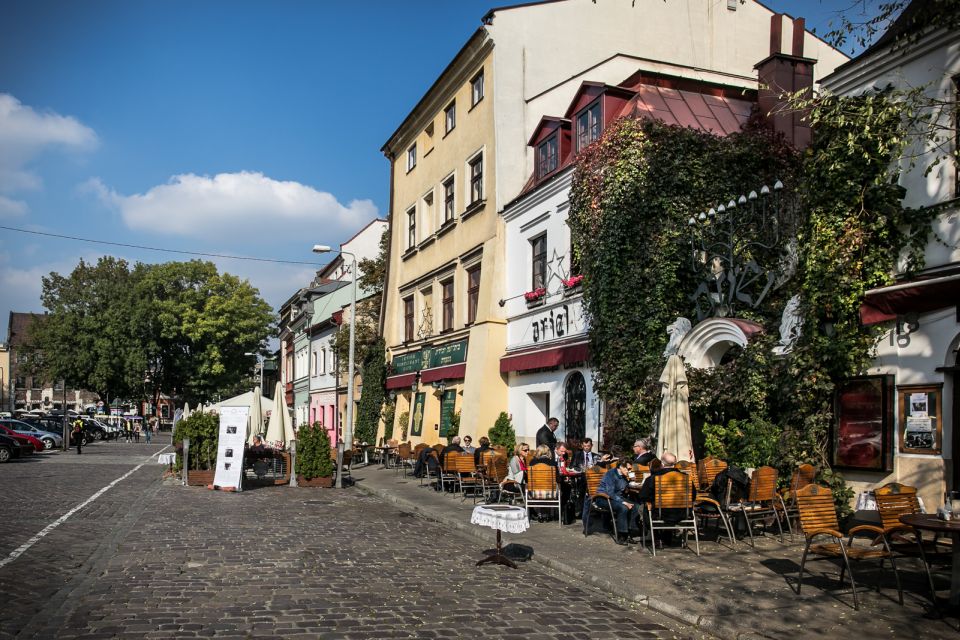
Kazimierz is the emotional core of the tour. You’ll learn why the first Jewish communities settled here, and the guide connects that to broader conditions in Krakow and Poland. You’ll also hear how coexistence between Jews and Catholics worked, along with the tensions that made parts of this history controversial.
The itinerary doesn’t treat Kazimierz as one stop. It strings together religious sites, remembrance sites, and neighborhood spaces so you can build a mental map of the community’s life and memory.
Key Kazimierz sights on the route include the Tempel Synagogue and the Stara Synagogue. You’ll then move into the areas of memorial and historical weight, including the Monument to the victims of the Holocaust, the Monument to the Righteous among the Nations, and the Monument to Polish victims during the occupation.
That cluster of monuments is powerful because the tour frames them as part of a broader timeline, not isolated markers. You’re guided to understand why this corner of Krakow carries both remembrance and debate.
You’ll also visit the old Jewish cemetery. Cemeteries change how you listen. It’s a place where the guide’s historical connecting matters even more, because you’re not just looking; you’re recognizing the human scale behind the events.
Then you’ll explore squares and boundaries within Kazimierz, including the New Square, the medieval square of the Jewish quarter, and the walls of the Jewish quarter. Ending up near the walls works well, because it brings you back to the theme of the day: how place shapes history.
How the guide connects coexistence and conflict to real streets
A great history tour does more than cover dates. This one focuses on how Krakow functioned as a city with multiple communities and changing power structures.
You’ll learn the reasons behind settlement in Kazimierz and how coexistence between Jews and Catholics was managed in practice. The tour also points out that the Jewish community’s legacy in the city is both hugely important and also historically controversial, which is exactly the balanced framing you want.
One of the best ways to judge this kind of tour is to see whether it turns real geography into real understanding. Here, the guide uses architectural diversity and neighborhood transitions to help you connect the dots: downtown power, university influence, the Wawel complex, then Kazimierz with its religious and memory sites.
It’s also a nice touch that the guide approach is described as engaging, with photos and drawings used to make ideas easier to hold. For me, that’s the difference between hearing history and understanding history.
Price and value: $16 for a 3-hour historian-led walking route
At about $16 per person for three hours, the value is strong for what you’re getting. You’re paying for a live guide in Spanish with a formal background in Geography and History, plus time in two major Krakow zones that would each take a lot longer on your own if you wanted real context.
The route is also well-structured for short attention spans. It’s not a single long corridor of walking. It changes spaces repeatedly—walls, gates, Market Square landmarks, university sites, Wawel hill, then Kazimierz synagogues and memorial stops.
The main value trade-off is what’s not included: no food or drinks. You won’t get a built-in break with snacks. If you’re the type who needs to refuel during a walk, plan a water bottle and a pre-planned stop nearby.
Who this tour suits best
This tour is a good fit if you:
- Want a guided way to connect Krakow’s landmarks to the larger story of Poland
- Like architecture, but only when it comes with explanation
- Prefer a structured route rather than wandering and hoping it all clicks
- Enjoy Jewish history presented with context across neighborhood spaces and memorial markers
- Want a Spanish-language experience without dealing with self-guided guesswork
It may feel like a lot if you’re looking for a relaxed, sit-down pace. Three hours covering Old Town, Wawel, and Kazimierz is efficient, and the day includes a hill ascent.
Practical tips so you enjoy every stop
Wear shoes that handle historic streets and uphill sections near Wawel. Even with wheelchair accessibility listed, the nature of the route suggests you should expect some uneven terrain and time moving on foot.
Bring a water bottle. Since food and drinks aren’t included, you’ll feel better if you can take small sips without cutting into the tour.
If weather is an issue, the grey umbrella detail is more than a cute clue. Consider bringing your own light layer or rain cover so you’re comfortable in transition points.
And when you get to the synagogues and memorial stops, slow down mentally. This is where the tour’s storytelling matters most, because the sites are part of memory and historical debate, not only architecture.
Should you book this Kraków Old Town and Jewish Quarter tour?
I’d book it if you want Krakow to make sense quickly—historic center and Kazimierz in one guided arc, with a guide who connects events to place. At $16 for three hours with a specialist guide and a Spanish live format, it’s strong value, especially if you’d otherwise spend more time trying to piece the story together yourself.
Skip it only if you want a very relaxed pace, or if you know you’ll need a food break built into the schedule. Otherwise, this is the kind of tour that leaves you with more than photos: it leaves you with a map in your head.
FAQ
How long is the tour?
It lasts 3 hours.
What language is the guide?
The live tour guide speaks Spanish.
Where does the tour start?
The meeting point is where the guide is carrying a grey umbrella.
What areas are covered?
You’ll focus on the historic center and the Jewish quarter (Kazimierz), including key sights around Old Town, the university neighborhood, the Wawel complex, and major Kazimierz sites.
Is food or drinks included?
No. Food and drinks are not included.
Is the tour wheelchair accessible?
Yes, it is listed as wheelchair accessible.
Can I cancel and get a full refund?
Yes. You can cancel up to 24 hours in advance for a full refund.
Can I reserve now and pay later?
Yes. The option to reserve now & pay later is available.