REVIEW · KRAKOW
Krakow: Jewish Quarter and Former Ghetto Tour by Golf Cart
Book on GetYourGuide →Operated by See Cracow Tours · Bookable on GetYourGuide
A ride through Krakow’s wartime sites can feel surprisingly close. This Jewish Quarter and former Ghetto tour uses a golf cart and a guided audio story to connect Kazimierz, the ghetto area, and Schindler’s Factory in just an hour.
What I like most is the way it keeps you moving without turning it into a blur. You get clear context on daily life before and during WWII, and you see major landmarks like the synagogue complex area, Ghetto Heroes Square, the Eagle Pharmacy, and wall fragments.
One possible drawback: it’s short. If you want lots of time inside Schindler’s Factory Museum, you’ll need your own ticket and your own schedule, because the tour ends right in front and you set the pace after.
In This Review
- Key things to know before you go
- Golf cart touring: the practical way to cover the sites fast
- A quick logistics reality check
- Kazimierz: where Jewish life centered before the war
- What you should watch for here
- Ghetto Heroes Square and the empty-chairs monument
- How to make this stop work for you
- Pharmacy Under the Eagle: Eagle Pharmacy and the wall fragments
- A gentle note on expectations
- Schindler’s Factory: where the tour ends and your choices begin
- A practical heads-up
- Price and value: what $34 buys you (and what it doesn’t)
- The emotional balance: why the pacing matters in WWII sites
- Who should book this tour, and who might prefer walking
- Tips to get the most from the tour without overthinking it
- Should you book? My take
- FAQ
- How long is the Krakow Jewish Quarter and Former Ghetto tour?
- How much does it cost?
- Where does the tour start?
- Where is the meeting point?
- Does the tour include Schindler’s Factory Museum entry?
- What happens at the end of the tour?
- Is an audio guide included?
- Is there a live guide?
- Is luggage allowed?
- What if Schindler’s Factory Museum is closed on holidays?
Key things to know before you go
- Golf cart for tight timing: see a lot without long walking between districts
- Max group size of 12: small enough to keep the story from feeling rushed
- Every stop has a “why”: the audio guide explains what you’re looking at, not just where it is
- Ghetto Heroes Square details: the empty-chairs monument is a standout emotional stop
- Eagle Pharmacy and wall fragments: these physical remnants help the history land
- Finish at Schindler’s Factory: you choose museum time after the tour
Golf cart touring: the practical way to cover the sites fast
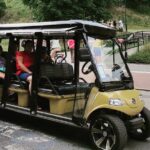
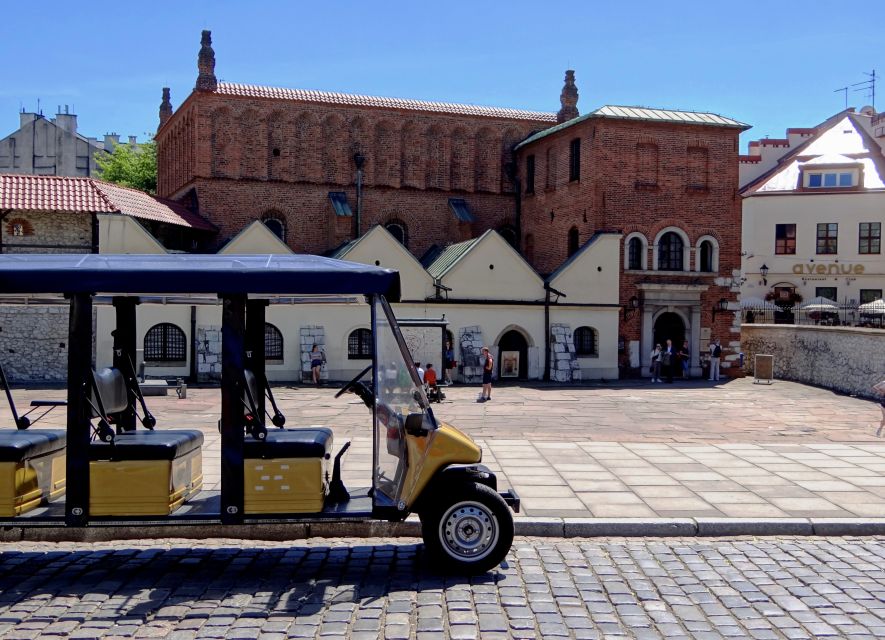
This tour is built for people who want meaning, not just sightseeing. You’re in a golf cart, and the schedule is designed to link the Jewish Quarter areas to the former ghetto zone efficiently.
The format also helps. You’ll have a live guide in English and Polish, plus an audio guide that covers many languages (including English). So even if the live portion is brief at each point, you still get consistent narration as you pass key sites.
Because the group is capped at 12 people and the ride runs about one hour, you won’t get stuck waiting in a long line or losing time to a big crowd. It’s a good match for a day when you want other plans later, too.
You can also read our reviews of more tours and experiences in Krakow.
A quick logistics reality check
The tour starts at Sekret Smaku Restauracja Kuchnia Polska and meets you near the tourist bus stop labeled K+R BUS. Arrive about 15 minutes early so you’re not juggling a late-start scramble.
Also note the rule: no luggage or large bags. If you’re traveling light, you’ll be fine; if you’re not, plan ahead.
Kazimierz: where Jewish life centered before the war
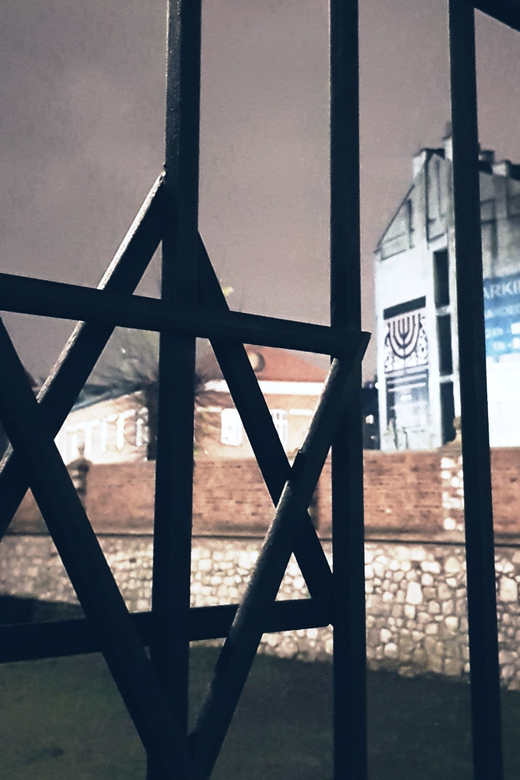
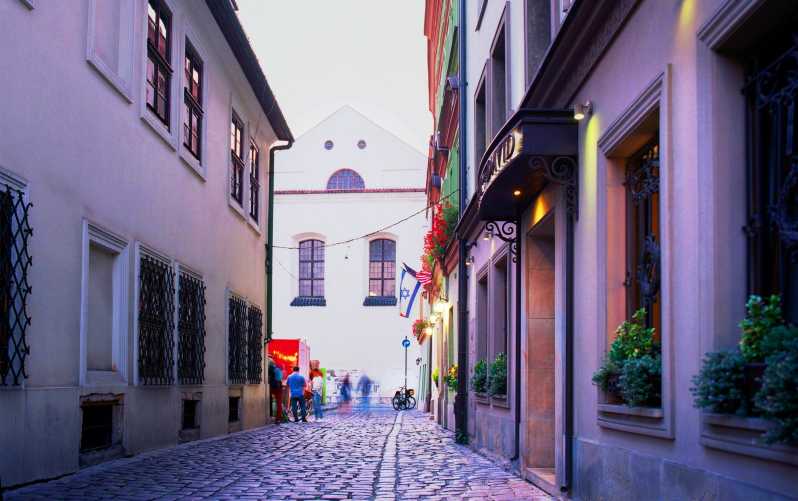
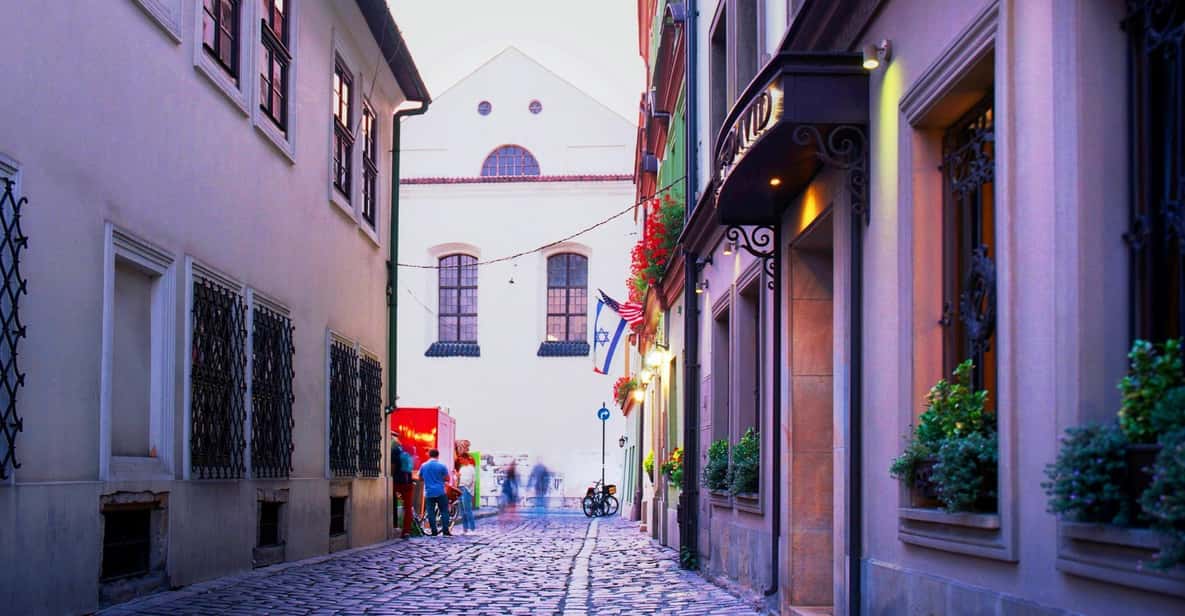
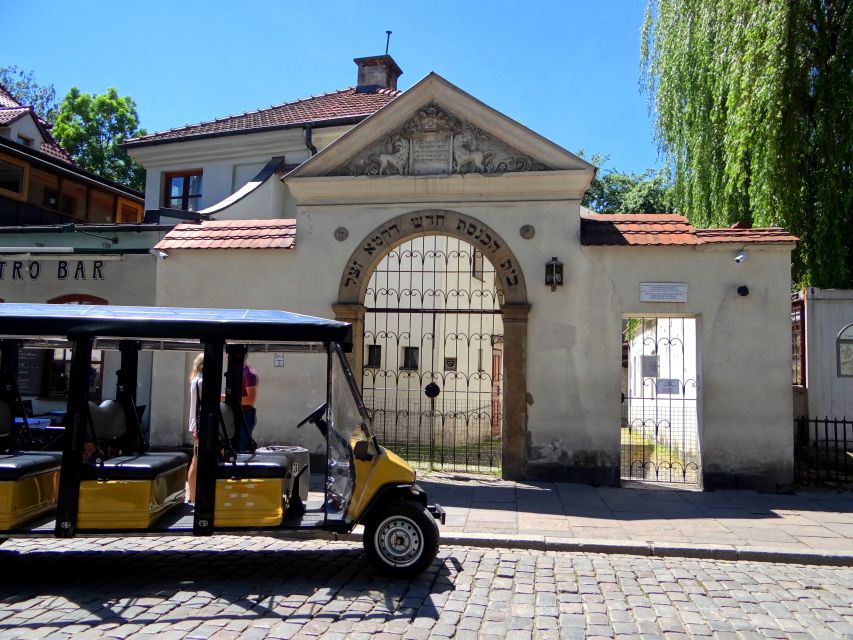
You begin in Kazimierz, the neighborhood that was the heart of Jewish life up to the beginning of WWII. Even before you hit the most somber stops, the goal here is to understand what existed before the Nazi occupation changed everything.
About 30 minutes in Kazimierz gives you more than a quick look. You’ll explore the neighborhood and learn about one of the largest synagogue complexes in Europe. You’re not just reading names off plaques. The story is framed around everyday community life and how that life was disrupted.
What I like about this start is the emotional pacing. If you jump straight to WWII tragedy without context, it can feel like a list of horrors. Starting with Kazimierz makes the contrast sharper: you can see what was taken away, not only what replaced it.
What you should watch for here
Look for the sense of a lived-in quarter rather than a museum zone. As you pass through, keep your mind on how community spaces functioned—places for worship, gathering, and daily routines—before the occupation.
If you care about understanding how neighborhoods work socially, this first segment does a lot of that heavy lifting.
Ghetto Heroes Square and the empty-chairs monument
Next you head toward Podgórze, the district where the Jewish ghetto was located. This is the shift from “before” to “during,” and the tour leans into what changed and what became harder and harsher.
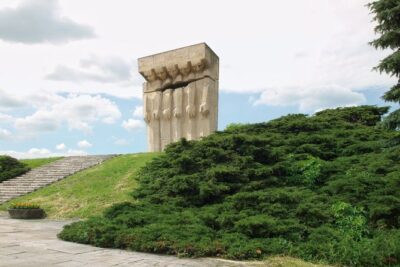
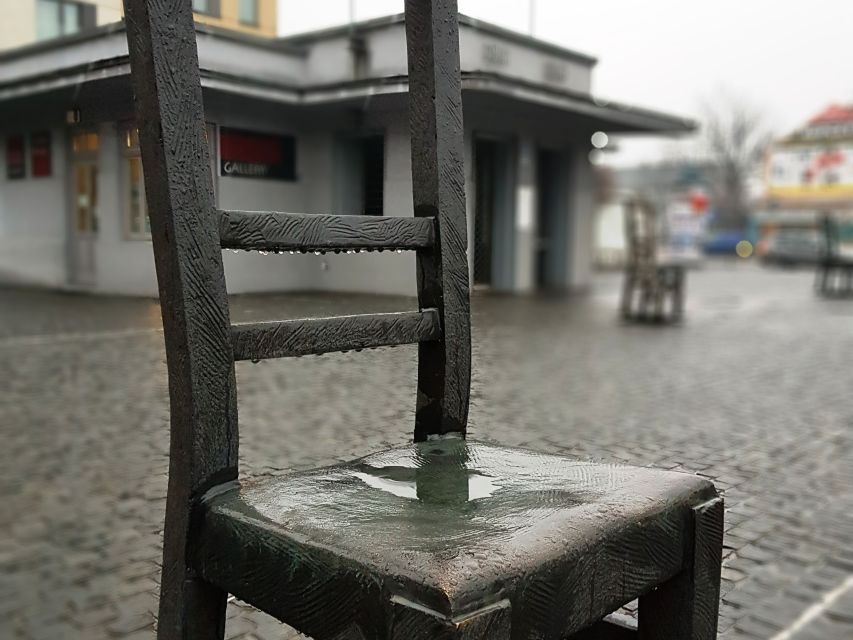
You’ll stop at Ghetto Heroes Square and take about 10 minutes to see the area and its memorial. The key feature is the monument of empty chairs, described as meaningful in the context of the lost community.
This is one of those stops where you don’t need extra explanation to feel it. Still, the narration matters because it connects the monument to the lived reality behind it—people forced from normal routines into confinement and constant uncertainty.

How to make this stop work for you
If you tend to rush, slow down here. Give yourself the full time. Read what you can, then look around the square as if you were trying to picture how it might have felt during those years.
Pharmacy Under the Eagle: Eagle Pharmacy and the wall fragments
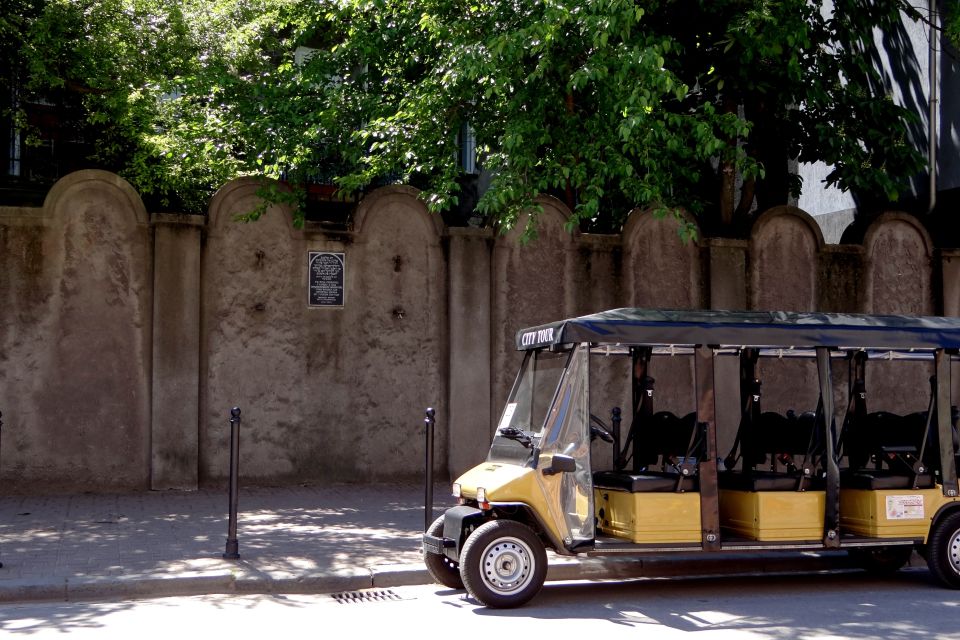
A short ride later, you pass the Pharmacy Under the Eagle—often called the Eagle Pharmacy. The timing is brief (about 5 minutes), but the stop is specific: you’re learning how ordinary places became part of the ghetto story.
The tour also points out fragments of the ghetto wall as you go. That’s valuable because history doesn’t have to be abstract. Wall pieces are physical reminders that the city’s geography became a cage.
Even though this segment is quick, it’s a smart use of time. It’s hard to notice the right details on your own if you’re not sure what you’re looking for. With the narration, you pick up the significance immediately.
A gentle note on expectations
This isn’t a slow walking tour with long museum-style interpretation at every step. It’s a guided overview using the cart to reposition you efficiently. If you like short, focused stops with story context, you’ll enjoy this pace.
If you need lots of reflection time at multiple points, you might want to plan a self-guided follow-up walk later.
Schindler’s Factory: where the tour ends and your choices begin
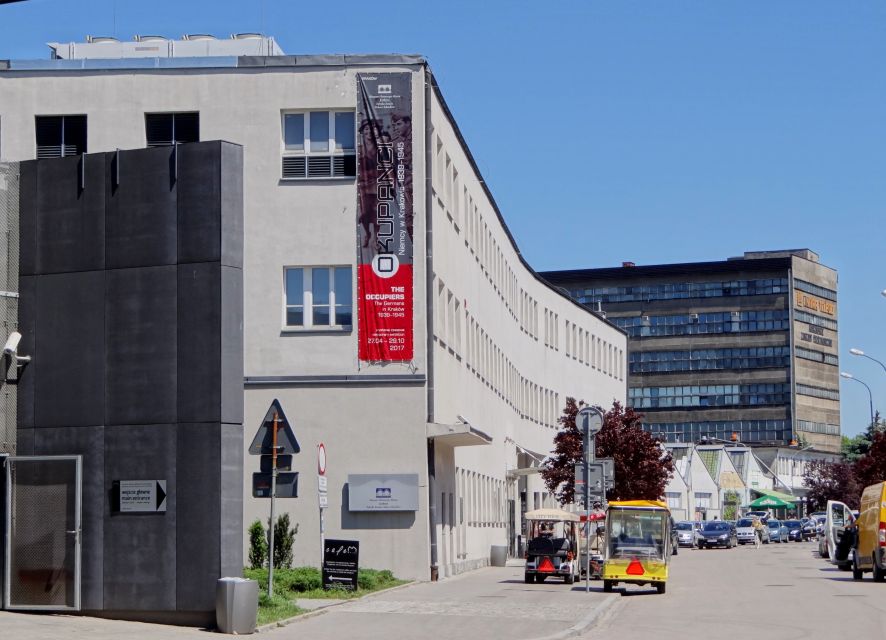
The final part of the tour brings you to Oskar Schindler’s Factory. You’ll spend about 10 minutes passing by and learning the background of Schindler’s role in saving lives during the war.
Then the tour ends in front of the factory, right where you can do the next logical step: visit the Historical Museum of Kraków inside (if you choose). The key detail for planning is that entry tickets are not included in the tour price.
I like that the tour doesn’t try to force you into museum time you might not have. You get the orientation, the context, and then you control how long you stay.
A practical heads-up
The museum might be closed on holidays, so check ahead if your travel dates overlap with holiday periods.
Price and value: what $34 buys you (and what it doesn’t)
At $34 per person for about one hour, this tour sits in the “worth it for orientation” category. You’re paying for a driver plus an audio guide (with narration in many languages), plus a small-group approach.
What you don’t get is long museum time. Schindler’s Factory Museum entry is not included, and food and drinks are also not included. That’s not a deal-breaker. It just means you should treat this as a guided corridor through the key sites, then plan your own time for museum details if you want them.
So the real value question becomes simple:
- If you want the story and the main sites in a tight, organized hour, this is a solid buy.
- If you want mostly museum time and deep independent exploration, you may decide you’d rather spend that money on museum tickets and self-guided wandering.
There’s also a small-group benefit. Being capped at 12 people keeps the audio and pacing from turning into a herd situation.
The emotional balance: why the pacing matters in WWII sites
Tours through WWII locations can go one of two ways: either they feel like a checklist, or they slow down so much you run out of energy (and patience) before the story finishes landing.
This one tries to balance both. You get context on daily life before and during WWII, including how Nazi occupation began, the early resettlements, and the harsh conditions inside the ghetto. You also move efficiently between sites so you’re not stuck in transit wondering what you’re supposed to feel.
That matters because understanding comes from connection. The tour’s structure links neighborhood → ghetto space → surviving markers → the turning point story associated with Schindler. It helps your brain hold the narrative in one place instead of scattering it across a half day.
Who should book this tour, and who might prefer walking
This is a good fit if:
- you want major WWII landmarks without spending hours in between
- you enjoy audio-guided explanations while you move
- you’re short on time but still want meaningful context
- you prefer a small group (max 12 people)
You might rethink booking if:
- you strongly prefer museum-first time and don’t want to schedule your day around a short overview
- you already know you want to walk everything at your own rhythm and skip structured passing stops
One more angle: if you’re the kind of traveler who loves lingering in one place, this tour can feel like a fast handoff to your next stop. The good news is you do get the handoff—right in front of Schindler’s Factory—so you can slow down right after.
Tips to get the most from the tour without overthinking it
A few practical things will make the hour feel more rewarding.
First, treat the audio guide as part of the experience, not background noise. Put it on and listen for what each stop represents, especially when the narration mentions occupation and resettlements. That’s where the tour’s “why” shows up.
Second, give yourself time after you end at Schindler’s Factory. If you want the museum, plan to buy the entry ticket and go in when you’re still in story mode.
Finally, if you’re spending time in Kazimierz beyond the tour, plan a meal in the area. I’ve heard people rave about adding music like Klezmer-style Kletzma in the old square, and also about a Jewish meal at ARIEL. Those are the kind of add-ons that help the neighborhood feel like a place people actually lived, not only a set of wartime references.
Should you book? My take
Book it if you want a tight, respectful introduction that connects Kazimierz to the former ghetto area and finishes at Schindler’s Factory. The structure works, the small-group size helps, and the audio guide means you’re not guessing what you’re seeing.
Skip it (or at least pair it differently) if your main goal is deep museum time. Since Schindler’s Factory Museum entry is not included, you’ll likely end up spending your money twice: once for the guided overview, and again for the museum.
If your schedule is limited but your curiosity is strong, this tour is a practical way to get the story straight and then decide how long you want to stay with the biggest site of all.
FAQ
How long is the Krakow Jewish Quarter and Former Ghetto tour?
The tour lasts about 1 hour.
How much does it cost?
It costs $34 per person.
Where does the tour start?
It starts at Sekret Smaku Restauracja Kuchnia Polska.
Where is the meeting point?
You should arrive at the tourist bus stop with the sign K+R BUS.
Does the tour include Schindler’s Factory Museum entry?
No. Entry tickets to the museum are not included.
What happens at the end of the tour?
The tour ends in front of Schindler’s Factory. You can explore the museum on your own, or you can be dropped off back at the starting point.
Is an audio guide included?
Yes. An audio guide is included, and it’s available in many languages.
Is there a live guide?
Yes, there is a live tour guide in English and Polish.
Is luggage allowed?
No luggage or large bags are allowed.
What if Schindler’s Factory Museum is closed on holidays?
The museum might be closed on holidays, so it’s smart to check the museum’s website or call ahead.
If you tell me your travel dates (and whether you plan to visit the museum inside), I can help you decide how to pair this with the rest of your Krakow day.