REVIEW · KRAKOW
Electric Scooter Tours Kraków
Book on Viator →Operated by eScooters Tours · Bookable on Viator
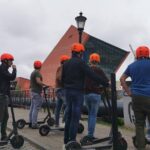
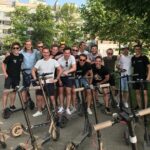
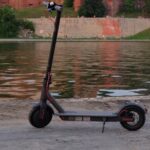
Electric scooters turn Krakow into a fast story. This 3-hour private ride pairs helmet-and-scooter rental with a free obwarzanek snack, so you’re comfortable and fueled before you even leave the office. Guides such as Sabina and Dominik keep things upbeat and clear while you cover major sights without spending your whole day on foot.
One possible drawback: the tour requires good weather, and the schedule is built to fit a lot into a short window. If you’re the type who wants long, quiet museum pauses, you may find the pace a bit brisk.
In This Review
- Key highlights you’ll care about
- Why an electric scooter tour fits Krakow so well
- Price and value: is $69.32 a smart deal?
- Meeting up and getting comfortable on the scooter
- Old Town highlights: Barbican, walls, Collegium Maius, and Rynek Glówny
- Churches and Wawel: St. Peter and St. Paul to river-side castle views
- The fun stop you shouldn’t skip: Wawel Dragon
- WWII Krakow: footbridge to ghetto squares and the last wall fragments
- Jewish Quarter stops and Kazimierz food time
- Pacing, timing, and what the route feels like in real life
- Should you book this Kraków electric scooter tour?
- FAQ
- FAQ
- How long is the Electric Scooter Tours Kraków ride?
- Where is the meeting point in Kraków?
- What time does the tour start?
- Is the tour private?
- What’s included with the scooter?
- What is the minimum age?
- What happens if the weather is bad?
- Can I get a full refund if I cancel?
Key highlights you’ll care about
- 3 hours, lots of Krakow: you’ll see big landmarks across multiple neighborhoods without burning daylight.
- Included gear: helmets are provided, and warm gloves show up on colder days.
- Fuel included: a free local snack (obwarzanek) keeps you going between stops.
- Wawel views without the stress: you get a classic river viewpoint and the stories around the castle.
- WWII-focused stops, handled respectfully: ghetto-related sites are part of the route, with context from your guide.
- Guides with strong English: English is offered, and guides like Dominik are reported as fluent.
Why an electric scooter tour fits Krakow so well
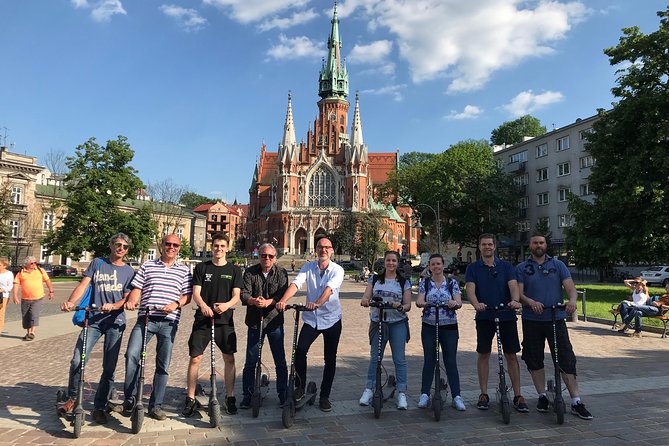
Krakow has a layout that rewards movement. The core old town is compact, but the neighborhoods with different stories sit close enough that you’d normally walk for hours just to connect them. An electric scooter solves that problem. You still get the street-level feel of the city, but you cover ground fast enough to actually enjoy your time.
The best part is that the tour doesn’t feel like a speedrun. You start with a briefing and a practice ride, then roll out with a guide who explains what you’re seeing as you go. That combination is why this style of tour works so well for first-time visitors: you get orientation plus history, without the legs getting wiped out.
You can also read our reviews of more tours and experiences in Krakow


Price and value: is $69.32 a smart deal?
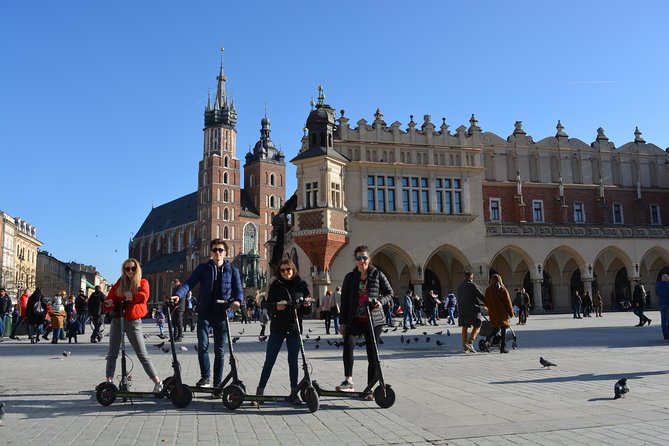
At about $69.32 per person for roughly 3 hours, you’re paying for three things: transportation, guiding, and included extras. Since helmet and scooter rental are part of the package, you’re not adding on the usual costs that pop up when you rent gear on your own.
Then there are the small-but-real value items: warm gloves for colder days and a free obwarzanek snack. That matters because scooters are outdoors and stop-and-go. Even a basic snack helps you stay in the tour rhythm rather than hunting for food.
The other value lever is efficiency. This ride hits a long list of landmarks in one go, so you’re less likely to spend your limited vacation time bouncing between half-finished plans.
Meeting up and getting comfortable on the scooter
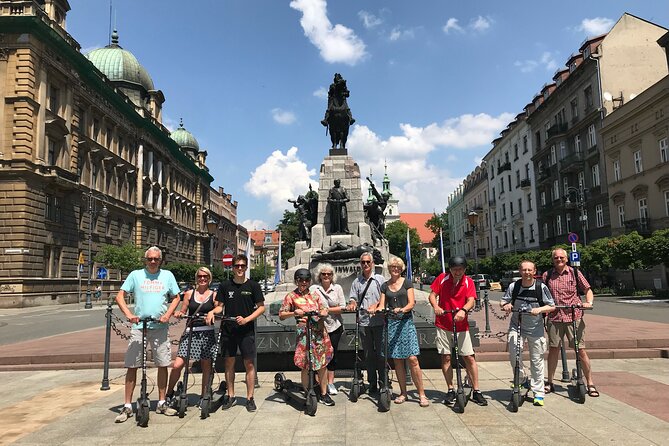
You meet at Librowszczyzna 4, 31-030 Kraków, with tours starting around 10:30 am. The activity ends back at the same meeting point, so there’s no awkward guessing where to regroup.
Before you head out, you’ll get a health-and-safety briefing and a quick practice run. That’s a big deal if you’ve never tried a scooter tour before. You learn how the scooter feels in real conditions before you’re riding with the group.
A few practical comfort notes:
- Minimum age is 12, so it’s set up for older kids and adults.
- English is available, which makes the storytelling much easier to follow at each stop.
- Mobile ticket is used, so you’re not scrambling for paper on your phone.
- The tour uses outdoor time, so your best friend is weather planning.
Old Town highlights: Barbican, walls, Collegium Maius, and Rynek Glówny
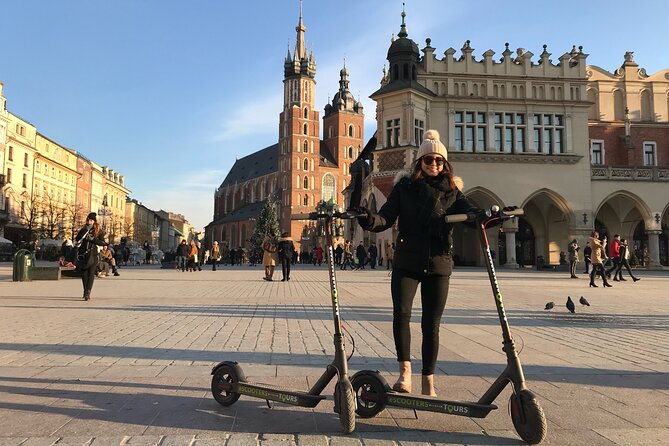
The first stretch is all about Krakow’s defenses and early identity. You begin at the scooter office area, get oriented, then head to the Kraków Barbican. This is where you learn how the city was protected and how Krakow changed during and after the partitions of Poland. It’s the kind of stop that makes the rest of the old town feel more intentional, because you’re not just looking at pretty buildings—you’re seeing why they mattered.
Next comes St. Florian’s Gate, described as the last remaining fragment of Krakow’s wall. You’ll hear what happened to the wall and what you might find from the inside. Even if you’ve seen walls in other European cities, this one hits differently because it’s tied to a specific surviving piece of Krakow’s fortifications.
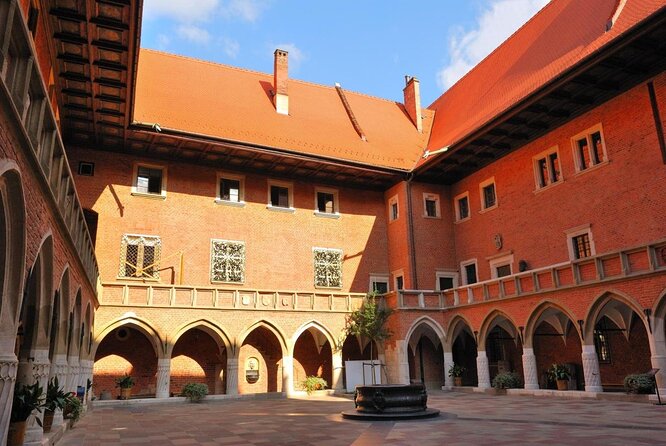
After that, you ride along Planty Park, the green ring around Krakow’s old town. The plan includes a stop at Muzeum Uniwersytetu Jagiellońskiego Collegium Maius, the building connected to Poland’s oldest university. The value here is pacing: Planty Park gives you a calmer ride and a break from dense streets, while Collegium Maius anchors the “old town story” with education and legacy.
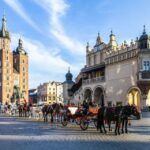
Then you reach Rynek Glówny (Central Square). This is Krakow’s classic hub, and the guide’s job here is to give you a map for what you’ll see: St. Mary’s Church and the Cloth Hall area come with local legends. It’s a great moment to slow down mentally and let the city’s layers click into place.
Churches and Wawel: St. Peter and St. Paul to river-side castle views
From the square, the tour moves to Church of St. Peter and St. Paul. This stop is short on paper, but it’s described as a standout for many guides because there’s plenty to point out and explain. You get a focused look without losing time.
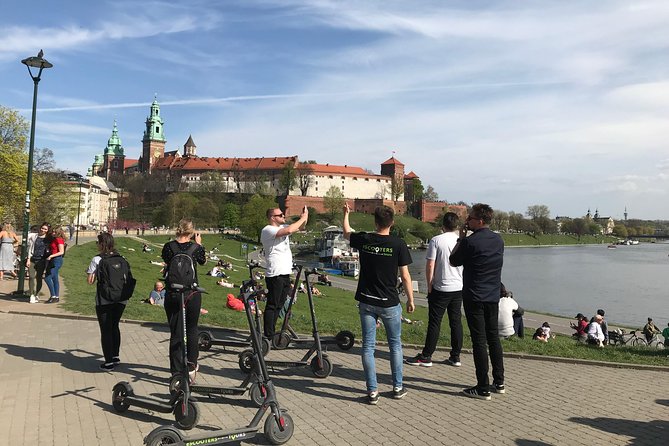
Then comes one of the biggest “wow” moments: Wawel Royal Castle. Instead of treating Wawel like just another exterior stop, you’re taken to a viewpoint by the Vistula (Wisła) river where you can see the castle in a memorable way. Your guide shares stories about the kings and queens of Poland, so you’re not just seeing a fortress-looking building—you’re understanding why it became a symbol.
If you’re trying to place Krakow in Polish history, this is a high-return section. You’ll leave with a better mental picture of the city’s importance long before modern tourism signage.
The fun stop you shouldn’t skip: Wawel Dragon
Before you fully move away from Wawel, you’ll pause for the Monument of the Wawel Dragon. This isn’t just a statue moment. The legend is a core part of Krakow’s cultural playbook, and it’s popular with children for a reason: it’s memorable and easy to retell later.
Even as an adult, you’ll likely enjoy this stop because it breaks up the heavier history with something lighter. It also helps you transition from “court and castle” into “stories that live in the streets.”
WWII Krakow: footbridge to ghetto squares and the last wall fragments
This part of the tour is emotionally heavier, and the route treats it that way. You cross over Father Bernatek Footbridge from the Kazimierz area toward Podgorze. The guide explains how, during the war, this crossing area connects to the Jewish ghetto story. It’s one of those places where a small physical route becomes a big historical connection.
Next is Plac Bohaterów Getta. Here you learn what WWII looked like in Krakow for the Jewish community, including what happened in the ghetto. There are also details about the heroes represented in the square and what the statues of chairs are about. This stop works best when you let your guide lead the meaning, because the symbolism isn’t always obvious from the street view alone.
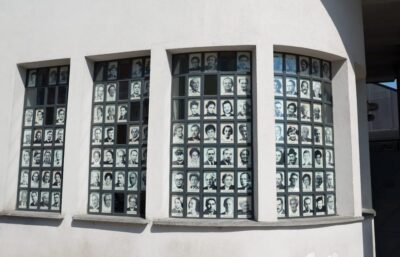
Then you visit the remains of the Ghetto wall—one of the last fragments left from the wall that surrounded Podgorze during the war. Seeing physical remnants like this changes the tone of the tour. It’s harder to treat the story as something abstract.
There’s also a stop tied to Oskar Schindler’s Enamel Factory, where you hear what happened there and how wartime looked in Poland. The value here is context: the ghetto story doesn’t sit alone. It connects to broader wartime reality, and the guide ties those threads together as you move.
Jewish Quarter stops and Kazimierz food time
After the WWII-focused sections, the tour pivots back toward cultural landmarks and daily life.
You’ll stop at the Old Synagogue, described as the oldest synagogue in Krakow. Your guide explains what the Jewish community was like before the war, so the story isn’t only about loss. It also includes how a community lived, built culture, and contributed to the city.
Then you ride toward Market Square in Kazimierz. This is where the tour turns practical and tasty. You get time to meet the local feel of the neighborhood and try zapiekanki, Poland’s fast-food classic. You may not be able to eat at every stop, but this is the point where you can turn the tour’s background into something you actually taste.
Even if you don’t buy a snack immediately, you’ll leave with a short list of what to look for later: where to go next, what to prioritize, and what to skip if you’re short on time.
Pacing, timing, and what the route feels like in real life
The whole ride is about 3 hours, and you’ll have multiple short stops plus riding time between them. The schedule is tight, but guides are trained to keep you moving without turning every corner into a lecture.
This format is ideal if:
- You only have a half-day in Krakow.
- You want big landmarks without planning multiple separate tours.
- You like history but don’t want hours of standing in museums.
It’s less ideal if:
- You want slow walking time and lots of free-roam wandering.
- You dislike riding outdoors for extended stretches.
- Your trip is flexible only on days that might be rainy, since the tour depends on weather.
Should you book this Kraków electric scooter tour?
I’d book it if you want the best “first pass” through Krakow. The mix of royal Wawel viewpoints, old-town icons, and WWII-era context gives you a rounded introduction that’s hard to replicate with a single walking day.
I’d think twice if you’re coming mainly for quiet, in-depth museum time. This ride is designed for motion and explanation, not lingering. Also, plan around weather because the tour requires it and you may need an alternate date if conditions are poor.
If you do book, my practical advice is simple: schedule this early in your visit. It helps you understand what you want to return to on foot later, and it gives you smart food and sights guidance while your map in your head is still forming.
FAQ
FAQ
How long is the Electric Scooter Tours Kraków ride?
The tour lasts about 3 hours, and it can be adjusted depending on what you want to see.
Where is the meeting point in Kraków?
The meeting point is Librowszczyzna 4, 31-030 Kraków, Poland. The tour ends back at the same location.
What time does the tour start?
The start time is listed as 10:30 am.
Is the tour private?
Yes. It’s a private tour, and only your group participates.
What’s included with the scooter?
You get a scooter and helmet rental included, plus warm gloves for colder days. A free obwarzanek snack is included.
What is the minimum age?
The minimum age is 12 years.
What happens if the weather is bad?
The tour requires good weather. If it’s canceled due to poor weather, you’ll be offered a different date or a full refund.
Can I get a full refund if I cancel?
Yes. You can cancel up to 24 hours in advance for a full refund. If you cancel less than 24 hours before the start time, the amount paid won’t be refunded.