REVIEW · OSWIECIM
Auschwitz-Birkenau – Skip the Line Tickets
Book on Viator →Operated by Time4Poland · Bookable on Viator
Four hours, one unforgettable lesson in human cruelty. This Auschwitz-Birkenau skip-the-line tour gives you a licensed guide plus headsets, so you’re not guessing what you’re looking at as the day moves fast.
I love the skip-the-line entry and the smart time split, with about 1.5–2 hours at Auschwitz and 60–75 minutes at Birkenau. I also like the small-group setup (up to 30) and the fact that your guide keeps you on the official route.
One drawback to consider: a few reports point to issues like rushing through parts, headset static, or occasional meeting hiccups. If you’re the type who wants to read everything slowly, this is something to plan for.
In This Review
- Key highlights to know before you go
- Auschwitz-Birkenau skip-the-line: what $48 actually buys you
- Meeting point vs ticket redemption: the easiest way to stay calm
- Auschwitz I: how a guided route changes what you see
- Birkenau (Auschwitz II): more space, more walking, less room for slow reading
- Headsets and group size: why you should care
- Guide quality can make or break the day
- Price and value vs going it alone
- Transportation isn’t included: plan your route to Brzezinka
- A realistic packing list for a heavy, long walking day
- When problems happen: what to watch for before you go
- Who should book this Auschwitz-Birkenau skip-the-line tour
- Should you book this tour?
- FAQ
- How long is the Auschwitz-Birkenau tour?
- Is admission to Auschwitz-Birkenau included?
- Does the tour include a guide and headset?
- Does the tour include transportation?
- Where is the meeting point?
- Do I need to worry about lines at the museum?
- What group size should I expect?
- What is the cancellation/refund window?
Key highlights to know before you go

- Skip-the-line entry to cut waiting and start the visit without wasting precious daylight
- Headsets included, so you can actually hear the guide even in busy areas
- Timed route: about 3.5 hours on-site, split between Auschwitz I and Birkenau
- Group size capped at 30, which helps the guide manage questions (when the pace is right)
- Meeting point meets the moment, with a local host guiding you to the official guide
Auschwitz-Birkenau skip-the-line: what $48 actually buys you
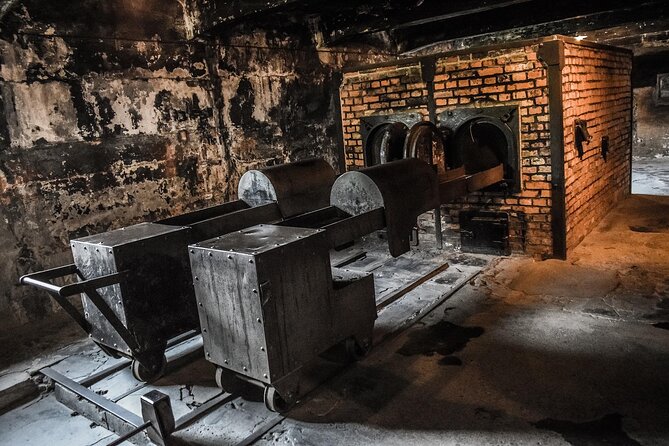
This tour is built for a simple goal: get you into Auschwitz-Birkenau faster and explain what you’re seeing in plain, human terms. Admission is included, and you’re not left to figure out meeting points, routes, and context by yourself.
For about $48 per person, the value isn’t just the ticket. It’s the time. At a site like this, time doesn’t mean comfort—it means focus. Waiting in a long line can turn the visit into a stressful blur before the first exhibit even starts.
You also get a licensed local guide plus headsets, which matters more than many people expect. When crowds swell, sound carries poorly and accents can make details hard to catch. With a headset, you’re more likely to follow the facts and dates without straining.
The tour runs about 4 hours total, with roughly 3.5 hours inside the memorial route. The rest is essentially getting oriented and keeping the group moving safely.
You can also read our reviews of more tours and experiences in Oswiecim



Meeting point vs ticket redemption: the easiest way to stay calm
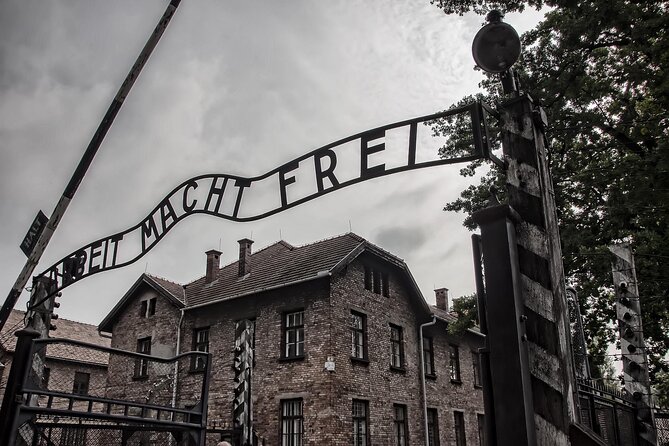
The tour starts at Męczeństwa Narodów 14, 32-600 Brzezinka, Poland and ends back at that same meeting point. You’ll also see a separate redemption point listed at Memorial and Museum Auschwitz-Birkenau, Więźniów Oświęcimia 55, 32-600 Oświęcim, Poland.
That split can confuse first-timers. Here’s the practical approach: go by the meeting point for the group start, and use the redemption point only as the place tied to your ticket entry instructions. If you’re arriving by public transport, this helps because you can navigate once, not twice.
One more thing I’d take from the real-world feedback: meeting-point uncertainty happens. Bring your booking confirmation and be ready to ask staff on-site where your group is meeting. The difference between stressed and calm can be as simple as arriving a little early and having your phone ready.
Also plan on a day with walking. The tour expects moderate physical fitness, and you’ll cover ground across both sites.
Auschwitz I: how a guided route changes what you see
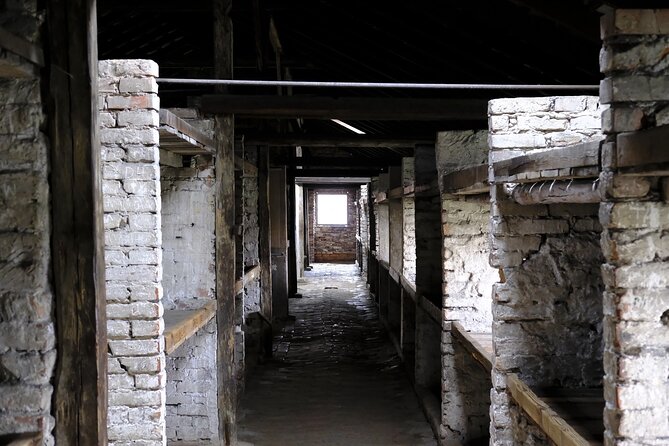
Auschwitz I is where the story starts in the most structured, document-heavy way. With this tour, you’re guided through the core areas with an authorized official Auschwitz-Birkenau guide—not just a general talk.
The benefit is that you don’t have to translate the site into meaning by yourself. You’ll get historical context in the order that makes the place understandable: what you’re standing on, how parts of the camp functioned, and what certain structures represent.
The tour’s timing gives you about 1.5–2 hours at Auschwitz I. That’s enough to see the major areas without the visit dragging into an endless crawl. It’s also a reminder: if you want to pause at every photo caption, this is a tough place to do it perfectly within a set schedule.
A practical note: some people want a slower walk. If that’s you, it’s smart to speak up early. The group is capped at 30, but the pace can still feel brisk if the guide is managing time tightly.
Birkenau (Auschwitz II): more space, more walking, less room for slow reading
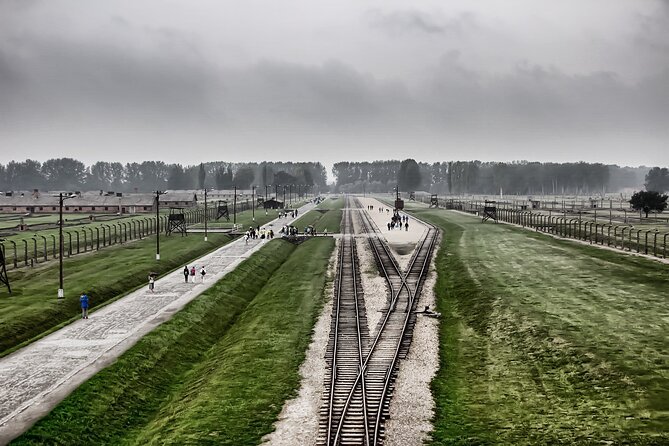
Birkenau is the hard part in a different way. Auschwitz I feels dense and structured. Birkenau is bigger, more open, and more emotionally demanding. In the same tour, that shift happens quickly.
You’ll get about 60–75 minutes at Birkenau. In that time, you’ll follow the guided route so you don’t miss the landmarks that matter for understanding what the camp system looked like in practice.
The upside of doing it with a guide here is that the site can feel overwhelming. Without context, you might walk past key points because they don’t look like what you expected. With a guide, you’re pointed toward what to notice.
The potential drawback is speed. A handful of reviews mention being rushed through parts of the visit. That can be extra frustrating in Birkenau because the terrain and crowds already slow your ability to take everything in. If you’re the type who wants to stop often—bring that instinct into the day. Expect that the guide may not slow down for every moment.
Headsets and group size: why you should care
This is one of the most practical parts of the offer. Headsets are included, and your guide can be heard clearly even when the group gets spread out.
If you’ve ever tried listening to a guide in a museum with background noise, you know the problem: you miss the details that make things stick. Here, the headset setup is designed to prevent that.
The group size is capped at 30 travelers, which is a meaningful ceiling. Smaller groups generally mean fewer logistical headaches and more chances for questions. Still, “small” isn’t the same as quiet. It’s a famous memorial with high demand, so expect crowds and regulated movement.
On the negative side, some reports mention headset static or difficulty hearing. That’s not guaranteed, but if sound quality matters a lot to you, arrive early so you can get settled quickly and alert the staff if your headset isn’t working properly.



Guide quality can make or break the day
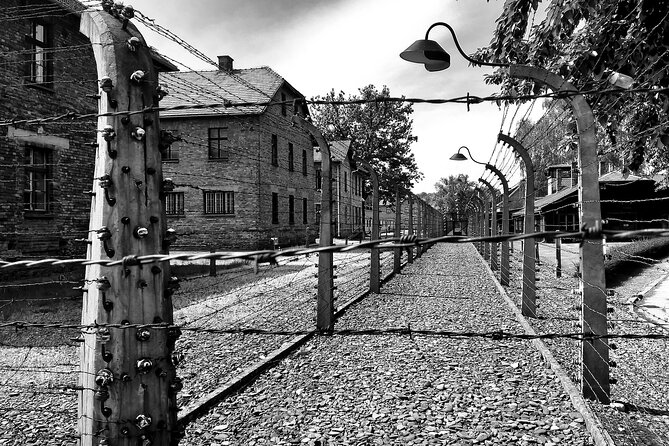
Most experiences with this tour come down to one thing: how your guide handles pace and explanation.
There are also real examples of what works. One positive review highlighted a guide named Halina, praised for clear German explanations and answering questions. Another praised a guide named Magdalene for keeping the group’s attention and helping connect parts of the visit smoothly.
There are also negative notes you should take seriously. A few reviews describe a guide who felt too fast, or headsets that made listening difficult. Others describe organizational confusion, including cases where the operator couldn’t match the booking.
Here’s how I’d think about it as a practical decision:
- This tour gives you the structure (tickets + guide + headset).
- But human delivery matters. If your group ends up with a pace that’s too quick for your comfort, you’ll feel it.
So when you book, set expectations that the visit is guided and timed—not a self-paced museum stroll.
Price and value vs going it alone
Yes, you can visit Auschwitz-Birkenau independently. But for many people, the hard part isn’t getting inside. It’s knowing what you’re looking at in the right sequence.
This tour gives you:
- Skip-the-line entry
- A licensed guide
- Headsets
- A managed split between Auschwitz I and Birkenau
That combination is the difference between learning facts and understanding the place. It also reduces stress on your schedule. If you show up and get stuck in lines, the day can start off emotionally charged and immediately feel chaotic.
At the same time, independent visits can be better for slow readers. If you already know a lot and you want to control your own pace, you might prefer solo. But if you want to leave with clarity—this kind of guided structure is a strong bargain.
One more value angle: the tour is designed to last around 4 hours. That’s a realistic chunk of time you can fit into a day from Kraków or local stays without turning your schedule into a marathon.
Transportation isn’t included: plan your route to Brzezinka
The tour does not include transportation. That means you need to handle getting to Brzezinka (where the meeting is) yourself.
This is where many people either feel prepared—or regret it. Since your tour ends back at the same meeting point, you’ll want a plan for afterward too.
The good news: the meeting area is described as near public transportation. That helps if you’re not renting a car.
Still, I’d build in buffer time for local roads, connections, and the emotional heaviness of the day. Don’t schedule the next major activity immediately after your tour.
A realistic packing list for a heavy, long walking day
Because this is a memorial tour with walking and regulated movement, bring practical things that keep you comfortable enough to focus.
I’d pack:
- Water (and a simple snack, if it fits your own plan)
- A fully charged phone (for confirmation + maps)
- A hat or sunglasses if you’re visiting in warm months
- Layers (museums and memorials can feel cool even when the weather doesn’t)
- A valid ID (one review specifically calls out bringing a passport or ID)
You don’t need to overthink it. The point is to avoid the annoying distractions that steal attention at the worst possible time.
When problems happen: what to watch for before you go
It’s fair to say the overall rating is mixed. Most positive notes praise the guide, the organization, and the emotional impact delivered in a respectful way. The negative notes are about failures that can ruin the day: no-shows, confirmation mismatches, rushing, and headset problems.
So what do you do with that?
- Double-check your booking details and operator confirmation before the day.
- Arrive early enough to solve problems quickly.
- If your guide or headset isn’t working, raise it immediately on-site rather than hoping it improves later.
The tour also notes it uses group movement rules on the memorial site. One detail that can affect your expectations: group rules can limit shuttle options, so you may need to rely on walking as the guide moves you through the areas.
Who should book this Auschwitz-Birkenau skip-the-line tour
This is a good fit if you want:
- Context rather than just sightseeing
- A guided route that keeps your visit coherent
- Skip-the-line entry to reduce start-up stress
- Headsets so you can actually follow the guide
It’s especially suitable if you’re visiting for learning and reflection, and you’d rather spend effort on understanding than on figuring out logistics under pressure.
I’d rethink it if:
- You need a very slow, self-paced experience
- You’re sensitive to faster group movement
- You rely heavily on crisp audio and don’t want to risk headset static
And if you’re bringing someone with limited mobility, consider carefully. Even when a tour is listed as moderate fitness, pace and terrain still matter.
Should you book this tour?
If you’re weighing solo vs guided, I’d book this if you want your money to buy clarity. The combination of skip-the-line entry, licensed guidance, and headsets is exactly what turns a first visit into a meaningful one.
Just go in with eyes open. The site is emotionally intense and the day is timed. If you want to read every caption slowly, you might feel rushed. If you want the facts explained in an ordered way, this is the easier path.
If you do book, arrive early, keep your confirmation handy, and be ready to ask the guide to slow down if your group needs it. That’s the difference between a stressful hour and a visit that actually lands.
FAQ
How long is the Auschwitz-Birkenau tour?
The tour lasts about 4 hours total, with around 3.5 hours on-site.
Is admission to Auschwitz-Birkenau included?
Yes. The admission ticket is included as part of the tour.
Does the tour include a guide and headset?
Yes. You get a licensed local guide and a headset.
Does the tour include transportation?
No. Transportation is not included.
Where is the meeting point?
The meeting point is Męczeństwa Narodów 14, 32-600 Brzezinka, Poland, and the tour ends back there.
Do I need to worry about lines at the museum?
You should not, since this option includes skip-the-line entry.
What group size should I expect?
The group is capped at a maximum of 30 people.
What is the cancellation/refund window?
You can cancel for a full refund up to 24 hours before the experience’s start time. After that, no refund is available.