REVIEW · ARCHAEOLOGICAL MUSEUM OF KRAKOW
Archaeological Museum of Krakow Entrance Ticket
Book on GetYourGuide →Operated by Discover Cracow · Bookable on GetYourGuide
Krakow is layered—this museum lets you see it. I love how the building’s past shifts from monastery to prison to archaeology, so you feel history changing roles as you walk. I also love the centerpiece, the Światowid statue, because it turns the idea of pagan beliefs into something you can actually stand in front of. One drawback to plan around: it’s self-guided, and the museums operate on set opening hours, so you’ll want to time your last entry carefully.
If you have even a half-day to spare, this ticket can stretch into something more. You’ll be able to move through the main museum and consider branch stops depending on which sites are open when you go, all with a single entrance ticket included in the booking.
In This Review
- Key highlights I’d plan around
- Where a monastery’s shadow became archaeology
- Światowid: the 9th–10th century statue you came for
- The Lesser Poland treasures beyond the headline
- St. Wojciech’s Church underground: Krakow’s Main Square, under your feet
- Nowa Huta-Branice: where early construction sparked archaeology
- Price and logistics: why $2.13 can still feel like value
- Self-guided by design: how to make it work without a guide
- Who this ticket suits best (and who might feel rushed)
- Should you book the Archaeological Museum entrance ticket?
- FAQ
- Where is the Archaeological Museum of Krakow located?
- How much does the entrance ticket cost?
- How long is the ticket valid?
- Is a guide included with the ticket?
- What time should I plan my visit to avoid missing entry?
- Does the ticket include access to more than one museum location?
- Are there any rules during the visit?
Key highlights I’d plan around
- Światowid statue: a four-faced pagan god (9th–10th century) discovered in 1848 in Zbrucz
- A building with multiple lives: monastery site → St. Michael’s Prison → Archaeological Museum
- Underground context at St. Wojciech’s Church: remnants of wooden/stone floors and Romanesque walls
- Nowa Huta-Branice archaeology: discoveries tied to early construction work starting in 1949
- Self-paced flexibility: you control your route across the branches during your 1–2 day validity
Where a monastery’s shadow became archaeology
The main Archaeological Museum in Krakow occupies a site that has been repurposed again and again. For decades it was tied to the Monastery of St. Michael, linked with the Barefoot Carmelites. Later, the Austrians stationed in Krakow established a prison there, and the place effectively carried forward the old St. Michael name, becoming St. Michael’s Prison.
That sequence matters because it changes how you read the space. Even before you focus on artifacts, you’re walking through layers of function—religious to punitive to educational. It also helps you understand why the museum experience can feel both historical and specific: this isn’t archaeology in the abstract. It’s housed where power, faith, and everyday life have all left traces.
After WWII, the prison closed and the Archaeological Museum took over. So when you buy this entrance ticket, you’re not just paying to see objects—you’re stepping into a structure whose identity has been rewritten, more than once.
Światowid: the 9th–10th century statue you came for
The star attraction is the statue of Światowid, described as a four-faced pagan god. The museum places it in the 9th–10th century range, and it was discovered in 1848 in Zbrucz. Seeing a figure like this in person does something simple but important: it turns “pagan beliefs” from a label into an actual presence.
What I like about this focus is that it’s not vague. You’re given a clear hook (four faces, pagan deity), plus a time frame (9th–10th century), plus a discovery detail (1848, Zbrucz). That combination makes the museum feel more grounded than many displays where the context is only partially explained.
Also, the museum’s theme works especially well if you enjoy contrasts. In Krakow, it’s easy to get pulled toward medieval churches and Christian-era stories. Here, the museum balances that by pointing you to earlier belief systems connected to the broader Lesser Poland region.
Practical note: since the museum is self-guided, you’ll get the most out of Światowid if you slow down for a few minutes around the statue area. Don’t treat it like a quick photo stop. Let the information about its features and origin sink in first.
The Lesser Poland treasures beyond the headline
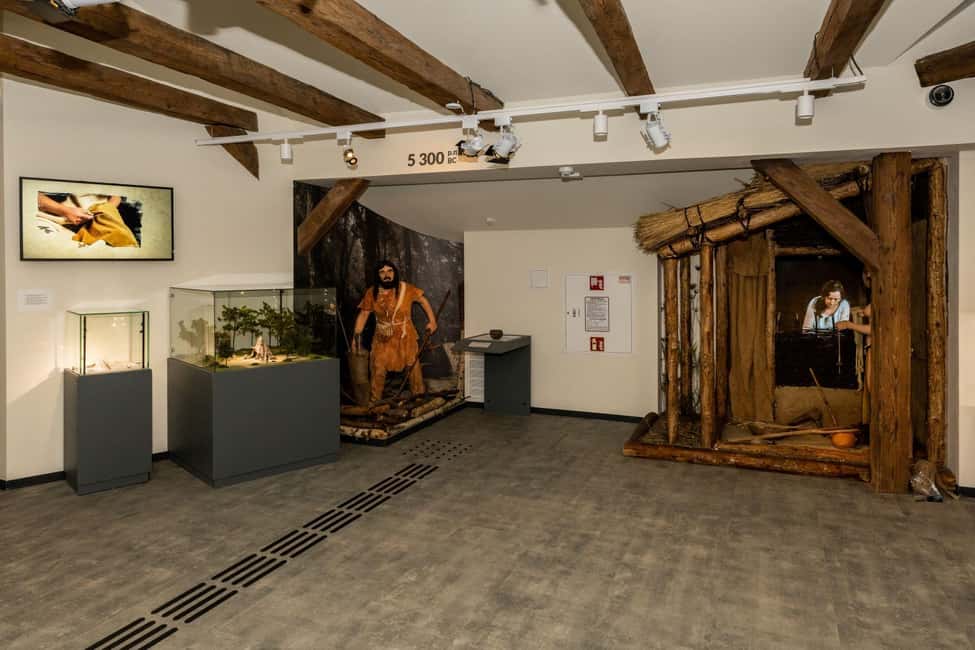
The museum highlights archaeological treasures found in the Lesser Poland region, and that broader scope is where the experience can become genuinely rewarding. If you’re only chasing one famous object, you can technically do that quickly. But if you like seeing how one artifact connects to a wider landscape of finds, the rest of the displays are where you’ll feel the payoff.
I’d think of it like this: Światowid gives you the emotional anchor, while the other objects fill in the “how did people live, believe, and build?” side of the story. Because you’ll be moving at your own pace (no guide included with this ticket), you can spend extra time on the pieces that catch your attention and skip what doesn’t.
Just keep your expectations realistic. This is an archaeology experience, not a hands-on workshop. You’ll gain more by reading thoughtfully and paying attention to how objects are presented and grouped than by trying to “do” the history through activities.
St. Wojciech’s Church underground: Krakow’s Main Square, under your feet
One of the best ways to make this ticket feel like more than a single room is to take advantage of the museum’s branch at St. Wojciech’s Church on Krakow’s Main Square. Here, an underground exhibition focuses on the history of the square, the church, and Saint Wojciech.
This branch has a different vibe than the main museum. Instead of centering on a pagan god, it centers on place—how the Main Square became what it is and how the church ties into that story. If you like city history that explains why buildings are where they are, you’ll probably enjoy the underground format.
What I’d pay attention to are the physical remnants: visitors can see remains of wooden and stone floors, plus Romanesque walls. Those details are the kind of evidence that make a historical narrative feel tangible. You’re not just told that the square changed over time; you can point to surviving material that reflects older building layers.
Tip for planning: since this is on the Main Square, it’s a convenient stop while you’re already walking around that area. If you’re trying to fit multiple branches in a single day, this is often the easiest one to pair with your other sightseeing.
Nowa Huta-Branice: where early construction sparked archaeology
The other branch is the Nowa Huta-Branice location, closely linked with the Nowa Huta district and the metallurgical plant. This branch is tied to real-world building activity: archaeological discoveries began in 1949 during early construction works.
That origin story gives the branch a different kind of interest. It’s not just a museum space containing artifacts; it’s a record of what happens when major construction encounters buried remains. If you like archaeology that grows out of engineering, urban expansion, and real timelines, this branch can be a strong complement to the main site.
You’ll likely find the context helpful if you’re thinking about Krakow as an evolving city, not only a medieval postcard. Nowa Huta is often discussed for its industrial-era identity, and linking that setting to 1949 discoveries gives you a concrete way to connect industrial growth and the archaeological record.
Because the tour ticket is entrance-only and self-paced, your best strategy is to check what’s open during your visit window and decide how much time you want to spend at each branch rather than forcing everything into one hurried circuit.
Price and logistics: why $2.13 can still feel like value
At $2.13 per person, this entrance ticket is priced so you can afford to be flexible. The real value isn’t only the low cost—it’s that you can stretch your visit across multiple museum locations if you have the time and if openings match your schedule.
The ticket is valid for 1–2 days, and you’ll want to check availability to see starting times. Plan on using that window to avoid the classic mistake of trying to see everything in one go. If you’re dividing your time across the main museum plus a branch or two, you’ll enjoy the experience more when you’re not rushing between sites.
A key rule to keep in mind: the last entrance is 90 minutes before closing. That matters more than you might think. If you show up late, even if you’re standing right outside, you can miss the cutoff and lose the value of paying for entry.
One more value point: if you hold a Krakow City Card, entrance is listed as free of charge. That can make this museum an easy “yes,” especially if your city card covers multiple attractions and you’re building an efficient day plan.
Finally, opening hours might differ from what you see on a product page due to circumstances. The safest move is to confirm exact hours on the local operator’s official website before you lock in your day.
Self-guided by design: how to make it work without a guide
This ticket includes admission, but it does not include a guide. That’s not a deal-breaker—self-guided museums are often the best fit for independent travelers because you can decide what to read slowly and what to skim.
But it does change how you should approach your visit.
- If you’re the type who likes context, spend extra time at the points where the museum gives dates, locations, and names (like the statue’s 1848 discovery in Zbrucz).
- If you’re the type who prefers broad impressions, start with the major highlights (especially Światowid) then branch out.
- If you’re visiting with limited time, you’ll do better picking one branch plus the main museum than trying to force both branches plus every room.
Also, remember the museum has clear house rules: no smoking and no alcohol or drugs. It’s a small thing, but it helps you plan your comfort level and timing.
One practical caution: there’s at least one reported issue where the ticket office wouldn’t let a visitor in without a QR code. So don’t assume staff can find your entry without it. Have your QR code ready on your phone or in whatever format the provider supplies before you reach the ticket desk.
Who this ticket suits best (and who might feel rushed)
This experience tends to work best for people who like history that’s more layered than “one era only.” If you enjoy how one site can shift from monastery to prison to museum, you’ll likely find the setting engaging from the start.
It also suits you if you’re curious about pagan-era material culture and not only medieval Christian Krakow. The focus on Światowid and other Lesser Poland archaeological finds gives a clear reason to come even if you’ve already toured a few churches.
On the other hand, if you want a narrative spoken to you step-by-step by a guide, this ticket may feel too quiet. Since no guide is included, your experience will depend on how much you’re willing to read and interpret on-site.
If you’re traveling with very young kids or you dislike indoor museum time, you might consider pairing this visit with a more active outdoor plan. The museum experience is largely about artifacts and historical interpretation, so it’s best when you’re in the mood for that kind of slow attention.
Should you book the Archaeological Museum entrance ticket?
Yes, I think you should book it if you want strong value and you like seeing Krakow from an unexpected angle. The ticket price is low, the main attraction (Światowid) is specific and memorable, and the building’s layered past adds extra interest even before you reach the displays.
Book it with confidence if:
- you want self-paced sightseeing with flexible time
- you’re curious about archaeology tied to Lesser Poland
- you’re willing to do a bit of reading to connect the objects to their context
- you can arrive in time for the last entrance cutoff
Skip it (or plan differently) if:
- you need a guide for context and interpretation
- you dislike museum pacing and prefer strictly outdoor routes
- you’re trying to cram multiple Krakow attractions with tight timing, since the closing cutoff can shrink your margin for error
If you treat this as a thoughtful stop—main museum first, then add St. Wojciech’s Church underground or Nowa Huta-Branice depending on hours—it can become one of the more distinctive cultural experiences in your Krakow visit.
FAQ
Where is the Archaeological Museum of Krakow located?
It’s in Lesser Poland, Poland, and the museum’s main site is connected to the former monastery/punishment history of the St. Michael area. It also has branch locations including St. Wojciech’s Church on Krakow’s Main Square and the Nowa Huta-Branice site.
How much does the entrance ticket cost?
The price is listed as $2.13 per person.
How long is the ticket valid?
The ticket is valid for 1–2 days. You’ll need to check availability to see starting times.
Is a guide included with the ticket?
No. The ticket includes museum entrance, but a guide is not included.
What time should I plan my visit to avoid missing entry?
The last entrance is 90 minutes before closing.
Does the ticket include access to more than one museum location?
The museum has two branches in addition to the main building: St. Wojciech’s Church (with an underground exhibition) and Nowa Huta-Branice. What you can visit depends on opening hours.
Are there any rules during the visit?
Smoking is not allowed, and alcohol and drugs are not allowed.